
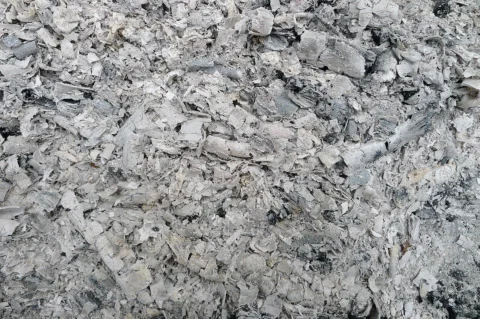
Wood ash contains mineral residues from burning. It can change soil chemistry, including pH, so it should be treated as an amendment with a purpose and a measured dose rather than a harmless filler for every compost heap.

From the Namibian discussions
Namibian growers questioned adding ten percent ash to compost. Others suggested smaller proportions or separate application and pointed out that ash can become more concentrated as organic material decomposes. That is a useful local insight. The percentage and degree of concentration depend on the materials and whether measurements use mass or volume; there is no universal compost recipe here.
Know what produced the ash
University of Wisconsin guidance explains that clean wood ash can supply nutrients and raise soil pH. Ash from treated timber, mixed rubbish, plastics or unknown fuels should not be used in a food garden. Biochar is a different material, and mixing it with contaminated ash does not certify that mixture as safe.
Check whether your soil needs it
- Record the ash source and keep it separate from ordinary compost ingredients.
- Test soil pH and seek advice on relevant nutrients and salinity before application.
- Tell the laboratory or adviser about previous ash, manure and fertiliser additions.
- If an application is justified, obtain a rate for the measured area and the actual material, and record the amount used.
Keep a compost heap understandable
A heap contains shrinking, decomposing organic material, while mineral residues behave differently. Adding a percentage by eye makes it difficult to know what the finished compost contains. A separate labelled ash store and a written amendment plan can be more useful than repeatedly adding ash to every new layer.
Handle it without creating dust or fire risk
Only handle thoroughly cooled ash, keeping in mind that embers can persist. Avoid breathing dust or getting it in eyes, and store it securely away from children and wind. Do not dump concentrated ash against seedlings or into watercourses. More potassium or a higher pH is not automatically an improvement.
Namibian climate and microclimate
Soils and irrigation water in Namibia can already be alkaline or saline. Advice developed for acidic soils in a wetter country may be inappropriate. Low rainfall also means salts may not be washed out in the same way.
Your first practical step
Pause unmeasured additions, label the ash source and arrange a soil test. Keep a small amendment record so future plant problems can be interpreted.
Watch and adapt
Publisher: International Center for Biosaline Agriculture
Country and context: United Arab Emirates-based institute; exact filming location not confirmed.
A supporting sampling lesson. Ask the receiving laboratory how it wants your soil or compost samples collected.
The sampling lesson helps you obtain a useful soil result. Ask your local laboratory for the correct sampling depth and tests; the film does not prescribe an ash rate.
Keep exploring
Sources and further reading
- University of Wisconsin: using wood ash in the home garden
- University of Minnesota: problems from excessive amendments
Have you tried this in Namibia? Share the site conditions, method and result—including what did not work—with the Living Earth community. Local observations help the next person adapt the idea.