
Compost that looks dark is not necessarily suitable for a seed tray or concentrated planting mix. Maturity, salts, texture and the intended use all matter. Treat a new batch as a material to assess, especially when young plants have previously struggled.
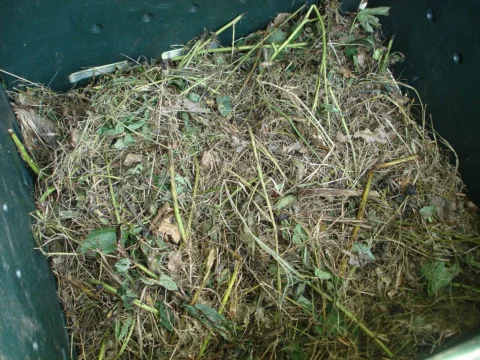

From the Namibian discussions
Namibian growers discussed pig-manure compost, rapid hot-compost methods and seedling losses in rich wicking-bed mixtures. The experiences justify checking ingredients and plant response. They do not establish that every pile becomes suitable after the same number of days.
Check the batch history
Record what went into the pile and whether it was managed, turned and allowed to cure. A cool pile might be mature, too dry or too small to heat. Smell, appearance and temperature are useful observations together, but none is a complete safety or quality certificate.
Test the intended use on a small scale
- Keep a labelled sample of the batch.
- Compare a few seedlings in your proposed mix with seedlings in a known suitable growing medium.
- Keep seed lot, containers, light and watering as similar as possible.
- Record emergence, root condition and growth before preparing a large number of trays.
Ask about laboratory tests
Compost testing can identify concerns such as high salts or nutrient concentrations. Tell the laboratory whether the material will be a mulch, a field amendment or a container ingredient. Those uses are not equivalent. A strong garden compost may be inappropriate as the main ingredient around delicate roots.
Keep food safety separate
A successful seedling test shows plant response, not absence of pathogens. Manure-containing compost intended for food production needs an appropriate process and handling protocol. Keep finished material separate from raw feedstocks so it is not contaminated again. Do not use a fixed rapid-compost claim as proof of safe handling.
Namibian climate and microclimate
Namibian piles may stop decomposing when they dry out, while a shaded wicking bed may stay wetter than expected. Assess the compost and the final growing environment. Increasing compost concentration cannot substitute for checking aeration, drainage and irrigation-water quality.
Your first practical step
Run a small side-by-side seedling comparison before committing a new compost batch to all your trays.
Watch and adapt
 Watch videoWatch: How to make great compost
Publisher: ABC Gardening Australia
Country and context: Australia; exact filming locality not confirmed.
A household composting demonstration. It is not a validated pathogen-reduction certificate for a particular manure batch.
Observe how the presenter manages moisture and mixing, then adapt the approach to local drying conditions and the materials actually available.
Keep exploring
- Compost
- Hot compost: use a temperature record, not a countdown
- Wicking-bed problems: test the growing medium before adding more
Sources and further reading
Have you tried this in Namibia? Share the site conditions, method and result—including what did not work—with the Living Earth community. Local observations help the next person adapt the idea.