
A community savings group lets members organise small contributions and agreed uses of a shared fund. Clear records and decisions matter as much as the amount saved.
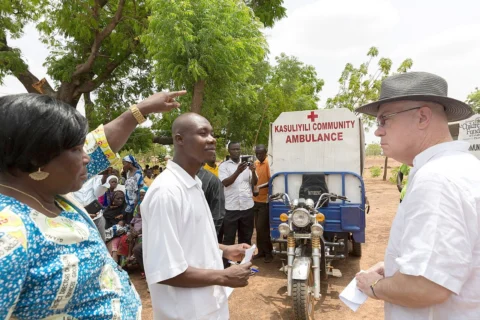
Photo: official photographer of the US Embassy in Ghana · Original image · Public domain. Wikimedia display-size version; no crop or content edits.

From the Namibian discussions
The Namibian collection included an article about savings groups in Uganda as an alternative to conventional banking. This is an idea brought into a local conversation, not evidence that the same arrangement has already been tested by the group in Namibia.
Where it fits
Neighbours, growers or an existing community organisation may want to explore saving for seasonal needs. Begin with an information meeting rather than immediately collecting funds. Participation should be voluntary, and members should understand what could happen if money is lost or a loan is not repaid.
Learn the basic model
CARE’s VSLA guidance describes member-run groups that save regularly, lend according to agreed rules and distribute funds at the end of a cycle. It emphasises elected leadership and recording transactions openly. These are design principles to discuss, not a claim that a group is a bank, insured deposit account or guaranteed investment.
Write down decisions together
- Agree the purpose, membership and an affordable contribution in NAD.
- Decide how records and cash or account access will be checked by more than one person.
- Define any lending rules, repayment dates and approach to missed payments.
- Separate any emergency-support fund from money expected to be repaid.
- Agree how members leave, resolve disputes and close the cycle.
Before handling money or offering financial services, check the proposed arrangement with an appropriate local adviser. An overseas manual does not establish the legal position in Namibia.
Practise without real money
Run a paper meeting using imaginary NAD contributions and a missed repayment. Ask each participant to explain their balance and obligations. A rule that people cannot understand in a rehearsal will be harder to resolve when real savings are at stake.
Namibian conditions and microclimate
Here adaptation concerns livelihoods rather than plant microclimate. Seasonal farm income, drought, school costs and travel can affect contributions and repayment. Discuss what happens when a widespread drought affects many members at the same time; do not assume everyone’s risks are independent.
Try it locally and share what happens
Hold one open planning meeting and record questions, not deposits. Bring in experienced local group members or a facilitator and revise the draft rules together.
Watch, understand, adapt
CARE: digital savings-group experiences
Country and context: Uganda — the page includes awareness and learning videos from CARE’s pilot projects.
Shows experiences with records and digital participation; choose the Uganda awareness video.
Apply it locally: Phone access, fees, privacy, local rules and literacy must fit the group. Digital tools do not replace shared understanding and independent checking.
Keep exploring
Community coordination · Community gardening