
Bird plum is a southern African fruit tree worth considering where local examples show that it can thrive. Its older name, Berchemia discolor, remains common in nursery and reference material; Kew now accepts Phyllogeiton discolor. Keep both names in your planting records.
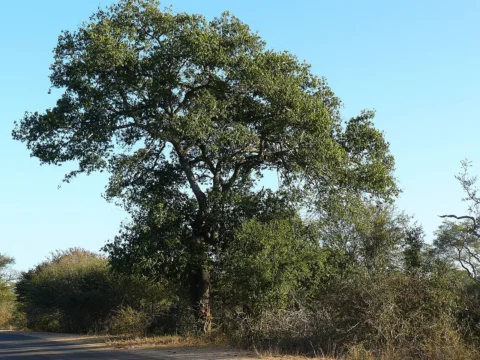

From the Namibian discussions
Namibian growers included this tree in a planting wish list. That establishes local interest, not a documented yield or irrigation trial. A useful next contribution would record where a tree grows, how it was established and when it actually bears fruit.
Learn from an established tree
SANBI describes a tree of warmer bushveld and river-associated habitats, bearing edible yellow to orange fruit. Its presence in southern Africa does not mean it will succeed on every dry, exposed plot. Find a correctly identified local specimen and compare its soil, shelter and access to moisture with your proposed planting place.
Choose a long-term position
Make space for the mature crown and access to collect fruit. Do not squeeze a potentially substantial tree into a narrow vegetable bed merely because the seedling is small. Sketch the shade it may eventually cast on winter crops, roofs and neighbouring plots. Existing trees can be part of a food landscape without being moved or heavily pruned.
Plan establishment before obtaining a tree
- Ask a nursery for the scientific name, origin of the planting material and the conditions in which it was raised.
- Inspect the root system and choose healthy stock rather than a tall plant confined in a small bag.
- Prepare protection from browsing and accidental trampling, and decide who will check soil moisture.
- Record planting date, water supplied and survival through the first hot and cold seasons. Adjust watering to the soil and weather rather than copying a calendar.
Observe the fruiting season
World Agroforestry links flowering to rains and describes fruit development over several months. Treat this as a reason to record local timing, not as a fixed Namibian harvest date. Note flowering, developing fruit, wildlife use and the amount collected. Identify fruit confidently before eating; an unfamiliar tree should be checked by a knowledgeable local botanist or grower.
Namibian climate and microclimate
A riverbank, a sheltered homestead and an exposed inland plot can offer very different growing conditions at the same latitude. A tree reaching deeper moisture in its natural habitat is not evidence that a newly planted seedling needs no water.
Your first practical step
Visit one established bird plum and start a one-page record of its site, flowering and fruiting. Use that evidence before buying several trees.
Watch and adapt
Watch: Build a Nursery & Grow Trees
Publisher: Community Forests International
Country and context: Exact filming country not confirmed; Swahili with English subtitles.
A general seedling-care lesson, also catalogued by World Agroforestry. It is not a species-specific growing demonstration.
The nursery lesson is about handling seedlings and organising propagation. It does not demonstrate bird-plum germination or establish the species’ water needs in Namibia.
Keep exploring
Sources and further reading
Have you tried this in Namibia? Share the site conditions, method and result—including what did not work—with the Living Earth community. Local observations help the next person adapt the idea.