
Sesbania plants can attract interest as fast-growing support vegetation. Species differ in habitat, persistence and toxicity, so a riverbank plant and an introduced ornamental should not be managed as though they were the same crop.
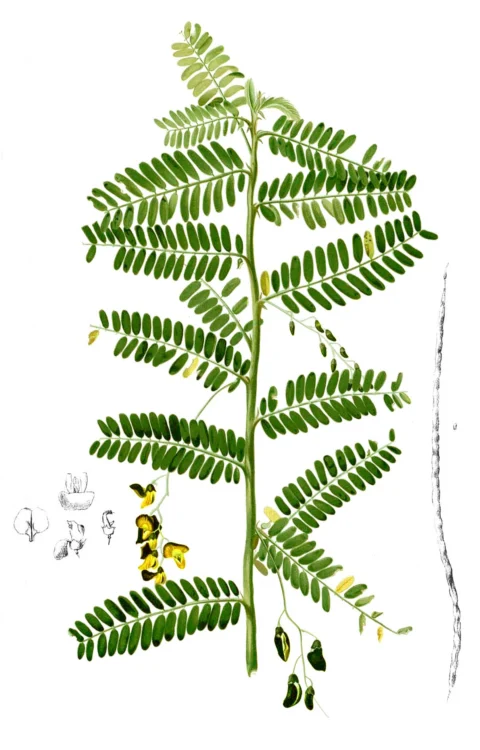

From the Namibian discussions
A Namibian discussion identified Sesbania sesban along the Kavango and Zambezi and noted its association with water. Contributors also described other Sesbania-like plants as invasive or spiny. Preserve those observations as identification leads; the informal names and spellings do not confirm each species.
Start with an accurate name
Tropical Forages describes S. sesban as a fast-establishing shrub or small tree with particular forage uses and important toxicity limits. It reports toxicity concerns for birds, rabbits and pigs. Do not offer pods, seeds or foliage to animals simply because another grower calls the plant a nitrogen fixer.
Choose a clear role
- Decide whether the planting is for temporary shelter, managed biomass or a professionally planned forage use.
- Get the plant identified before sharing seeds. Photograph flowers and pods as well as leaves.
- Check water availability through the full growing season and the likely position of roots relative to food crops.
- Begin with a small, contained planting where unwanted seedlings can be detected and managed.
Observe performance instead of assuming it
Record establishment, height, stem strength, pruning response and irrigation. A plant that grows quickly beside a river may be a poor choice for a dry boundary. If using it to support another crop, keep notes on the crop’s light and water needs too: the support plant should earn the resources it uses.
Keep feed and garden experiments separate
Mulch production, livestock browsing and poultry feeding are different uses. Ask an agricultural adviser for a species- and animal-specific plan before considering feed. Avoid mixing unidentified seed into a forage patch or allowing animals to test it for you. Remove unwanted recruits before they spread beyond the trial.
Namibian climate and microclimate
Natural river margins have a moisture regime that a small irrigated garden may not reproduce. A frost pocket can also cut short the growth expected from a warm tropical example. Plan for both water demand and winter behaviour.
Your first practical step
Visit a correctly identified local plant with a knowledgeable grower. Note where its water comes from and whether seedlings are spreading nearby.
Watch and adapt
 Watch videoWatch: Build a Nursery & Grow Trees
Publisher: Community Forests International
Country and context: Exact filming country not confirmed; Swahili with English subtitles.
A general seedling-care lesson, also catalogued by World Agroforestry. It is not a species-specific growing demonstration.
Learn how to label and manage seedlings. Use local identification and Sesbania-specific guidance for seed treatment, placement and any proposed animal use.
Keep exploring
Sources and further reading
Have you tried this in Namibia? Share the site conditions, method and result—including what did not work—with the Living Earth community. Local observations help the next person adapt the idea.