
Brachiaria is a familiar name for forage grasses now often classified under Urochloa. Species and cultivars differ. Start with the exact planting material and the conditions in which it has performed.
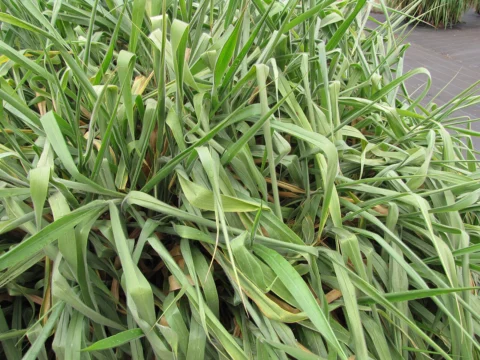
Photo: Forest and Kim Starr · Original image · CC BY 3.0 us. Wikimedia display-size version; no crop or content edits.
.jpg)
From the Namibian discussions
A Namibian group contribution described Mulato II as productive, long-lived, easy to propagate and resistant to drought and frost. That recommendation deserves a local trial. The saved note does not give the farm, irrigation, minimum temperature or measured harvest. Preserve the claim as a grower recommendation and record those conditions when testing it.
Where it fits
A protected fodder strip or a small cut-and-carry trial can help assess suitability before converting pasture. Compare it with an existing local forage, using the same area and a clear account of the water and inputs each receives.
Confirm the cultivar
Do not treat Urochloa brizantha, a Mulato hybrid and every grass sold as “Brazilian grass” as interchangeable. Request a label and provenance. Tropical Forages describes substantial cultivar and environmental differences; its brizantha account is primarily for humid and sub-humid tropical production, with some adaptation to drier settings.
Record more than green appearance
- Measure the trial area and record planting date and seed or planting-material source.
- Record rain, irrigation, fertiliser and labour separately.
- Weigh each cut and note the regrowth interval.
- Record winter browning, frost damage, survival and spring recovery.
- Have feed quality and the complete ration assessed before relying on the grass for a livestock class.
Interpret the results fairly
ILRI reports farmer-participatory forage evaluations in Kenya and Rwanda, supporting the value of local comparisons. Fresh-weight yield alone can reward watery material; dry-matter yield and animal use are more informative. Avoid assuming that an overseas yield or dairy response will follow from simply buying the same seed.
Namibian conditions and microclimate
An irrigated northern plot and a frost-prone central plateau farm pose different tests. A grass may survive a dry season while producing little usable feed. Frost survival and active winter growth are also different outcomes. Record both instead of reducing the result to “resistant”.
Try it locally and share what happens
Plant a manageable labelled strip alongside a familiar forage. Keep a full-season record before expanding, including the hardest dry or cold period you can observe.
Watch, understand, adapt
Kenya: the pioneers of Brachiaria grass
Country and context: Kenya — interview with ILRI/BecA and KALRO researchers in Nairobi.
Introduces the forage-development work and the importance of matching material to farmers’ conditions.
Watch video▶ Watch at the source
Apply it locally: Kenyan rainfall, soils and livestock systems vary and may be wetter than yours. Ask specifically about cultivar, frost exposure and water supply before transferring a result.
Keep exploring
Grazing management · Lucerne · Saltbush