
Bird damage near harvest can threaten household food. The useful response starts with knowing which birds are feeding, when they arrive and where losses occur. Removing every nearby tree can sacrifice shade and habitat without solving the grain problem.
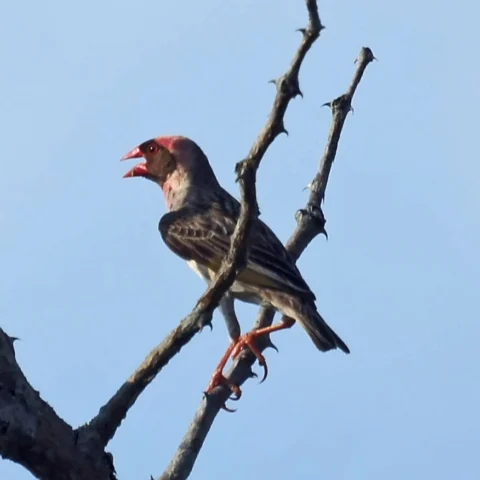

From the Namibian discussions
A saved Namibian question asked how to protect mahangu when people cut trees because birds roost in them. It suggested looking for a different approach, but did not report a tested deterrent. This guide turns that question into a practical observation and protection plan.
Measure the problem
Compare several marked grain heads at the field edge and inside the crop. Record bird visits and the crop stage. Separate bird feeding from insect damage, poor grain filling and losses during harvest. A tree containing birds is not, by itself, evidence that those birds caused the measured loss.
Concentrate effort at the vulnerable time
- Agree a watching rota with neighbouring growers when grain begins to become attractive.
- Use visible, moving or audible deterrents only where lawful and considerate, and move or vary them as birds become accustomed to them.
- For a small seed-saving patch, consider well-supported exclusion netting that cannot entangle wildlife.
- Harvest when the crop is ready and dry and store it using the crop’s established method.
Avoid exchanging one problem for another
Loose netting can trap birds and other animals; inspect it frequently and remove it after use. Poisoned grain can affect livestock, wildlife and people and does not belong in this household trial. Preserve useful trees while comparing targeted measures. Larger outbreaks require coordinated agricultural advice rather than one garden’s improvised response.
Share a realistic result
Record labour, materials in NAD and the amount of crop retained. What works on a small household patch may be too labour-intensive for a large field. Discuss the result with neighbours so protection does not simply shift pressure from one plot to another.
Namibian climate and microclimate
When water and grain are scarce, a small irrigated or early-ripening plot may attract concentrated feeding. Changes in planting dates, surrounding crops and seasonal bird movements matter more than a fixed deterrent recipe.
Your first practical step
Watch one affected patch at two times of day and identify the visitors before buying equipment or removing habitat.
Watch and adapt
Watch: Managing Birds in Climbing Beans
Publisher: Access Agriculture
Country and context: Exact filming country not confirmed.
An example involving beans, not a Namibian grain trial. Compare the protection principles and check which birds damage your own crop.
Use the bird-management demonstration for ideas to compare. Crop, species, scale and surrounding habitat differ in Namibia.
Keep exploring
Sources and further reading
Have you tried this in Namibia? Share the site conditions, method and result—including what did not work—with the Living Earth community. Local observations help the next person adapt the idea.