
Chicken manure can contribute nutrients and organic matter, but one bucket is not equivalent to another. Bedding, moisture, storage and composting all change the material. Knowing its source and analysis makes it easier to use without repeatedly overfeeding a bed.
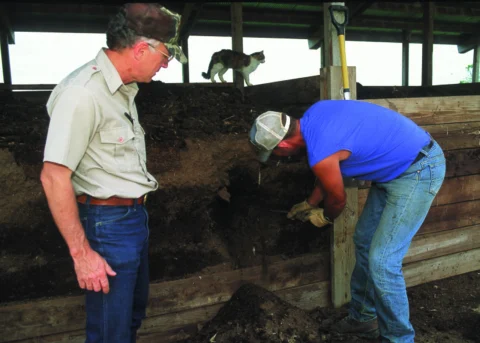
(NRCS_Photo_Gallery).jpg)
From the Namibian discussions
A Namibian message saved for the wiki raised the NPK value of chicken manure. No laboratory analysis accompanied the available text. Rather than publish a supposedly universal nutrient ratio, keep a record of the actual material and test it where repeated or larger applications justify the cost.
Describe what you have
Separate fresh droppings, mixed litter and finished compost in your records. Note the bedding material, storage conditions and approximate age. A sample from the dry top of a pile may not represent wet material beneath it. Ask the laboratory how to collect a representative sample safely.
Read results on the same basis
University of Minnesota guidance describes variation in manure properties and the value of analysis. Check whether results refer to wet material or dry matter and how nutrients are expressed. A crop adviser can combine this with soil results and expected crop demand. More manure is not always the right response to weak growth.
Plan handling and use
- Keep storage runoff away from wells, watercourses and food-handling areas.
- Use appropriate hygiene and wash hands after handling manure or litter.
- For food crops, follow an established composting and manure-use protocol; do not assume a short wait makes raw manure safe.
- Record mass, area, date and crop whenever material is applied.
Include the whole nutrient budget
If you also add compost, ash or fertiliser, put them on the same record. Repeated additions can accumulate nutrients and salts even when each individual application appears modest. If the material is sold or shared, provide its history and any analysis rather than promising a fixed fertiliser strength.
Namibian climate and microclimate
Drying in hot air reduces water content but is not a reliable sanitising process. Covered storage and careful handling matter in Namibia’s dusty conditions. Salinity can become especially important in intensively irrigated beds with limited leaching.
Your first practical step
Label the current manure or litter pile and begin an application record before the next load goes into the garden.
Watch and adapt
 Watch videoWatch: How to make great compost
Publisher: ABC Gardening Australia
Country and context: Australia; exact filming locality not confirmed.
A household composting demonstration. It is not a validated pathogen-reduction certificate for a particular manure batch.
The video introduces compost management; it does not certify that a particular manure pile is pathogen-free.
Keep exploring
- Chicken Manure
- Is the compost ready for seedlings?
- Poultry bedding: keep deep litter dry and workable
Sources and further reading
Have you tried this in Namibia? Share the site conditions, method and result—including what did not work—with the Living Earth community. Local observations help the next person adapt the idea.