
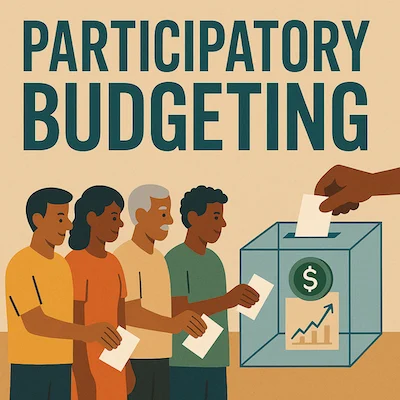
Participatory Budgeting: Empowering Namibian Communities Through Inclusive Decision-Making
Introduction
Participatory budgeting (PB) is a democratic process that allows community members to directly decide how to allocate a portion of a public budget. This approach fosters transparency, accountability, and community engagement, ensuring that public funds are used to meet the real needs of the people. In Namibia, participatory budgeting can play a crucial role in empowering communities, enhancing local governance, and promoting sustainable development.
What is Participatory Budgeting?
Participatory budgeting is a process where citizens are involved in the decision-making process of budgeting. It typically involves several stages:
1. Idea Collection: Community members propose ideas and projects that they believe should be funded.
2. Proposal Development: The ideas are refined into concrete proposals, often with the help of experts and local authorities.
3. Voting: Community members vote on the proposals they believe should receive funding.
4. Implementation: The winning projects are funded and implemented by local authorities or community groups.
5. Monitoring and Evaluation: The implementation of the projects is monitored, and their impact is evaluated to ensure accountability and transparency.
Benefits of Participatory Budgeting
1. Enhanced Transparency: By involving citizens in the budgeting process, PB promotes transparency and reduces opportunities for corruption.
2. Increased Accountability: Local authorities are held accountable to the community, ensuring that public funds are used effectively and responsibly.
3. Community Engagement: PB fosters a sense of ownership and engagement among community members, encouraging active participation in local governance.
4. Better Resource Allocation: Projects and initiatives funded through PB are more likely to address the actual needs and priorities of the community.
5. Social Inclusion: PB provides a platform for marginalized and underrepresented groups to have a voice in decision-making processes.
Implementing Participatory Budgeting in Namibia
1. Pilot Projects: Start with pilot projects in a few selected regions or municipalities to test and refine the PB process.
2. Community Awareness: Conduct awareness campaigns to educate community members about PB and how they can participate.
3. Capacity Building: Provide training and support to local authorities and community leaders to effectively manage the PB process.
4. Inclusive Participation: Ensure that all segments of the community, including women, youth, and marginalized groups, are encouraged and able to participate.
5. Transparent Processes: Use clear and transparent processes for proposal development, voting, and implementation to build trust among community members.
Practical Examples for Namibian Communities
Urban Communities
1. Infrastructure Development: Use PB to decide on funding for local infrastructure projects, such as road repairs, public transportation, and community centers.
2. Public Services: Engage urban residents in allocating funds for public services like waste management, water supply, and electricity.
3. Green Spaces: Involve community members in decisions about creating or improving parks, gardens, and recreational areas.
4. Safety and Security: Use PB to fund projects that enhance community safety, such as street lighting, security patrols, and emergency services.
Rural Communities
1. Agricultural Support: Allocate funds for agricultural projects, such as irrigation systems, seed banks, and training programs for farmers.
2. Health Services: Involve rural residents in deciding on funding for local health clinics, mobile health units, and preventive health programs.
3. Education: Use PB to improve educational facilities, provide learning materials, and support school feeding programs in rural areas.
4. Water and Sanitation: Engage community members in allocating funds for clean water and sanitation projects, such as boreholes, wells, and latrines.
Success Stories Relevant to Namibia
1. Porto Alegre (Brazil): The city of Porto Alegre is a pioneer of PB, having implemented it since 1989. The process has led to significant improvements in infrastructure and public services, particularly in low-income areas.
2. Kenya: Various counties in Kenya have adopted PB to improve transparency and community involvement in local governance. The process has successfully funded projects in health, education, and infrastructure.
3. South Kivu (DR Congo): Participatory budgeting in South Kivu has empowered communities to decide on the allocation of funds for health, education, and water projects, leading to improved services and increased trust in local authorities.
Certainly. Here is the direct text, ready for pasting into your article:
Building Stronger Communities Through Participatory Budgeting
As global governance becomes more centralised and opaque, there’s a growing demand for transparency, accountability, and local voice—especially when it comes to how public funds are spent. Participatory budgeting offers a practical, tested way to deliver on these demands while building trust, civic education, and equity from the ground up.
This process isn’t simply about deciding where money goes. It’s about shifting how communities think, plan, and collaborate. In a time when many citizens feel disconnected from decisions affecting their daily lives, participatory budgeting reconnects them—offering a democratic tool that is as much about belonging as it is about budgets.
From Urban Neighbourhoods to Rural Villages
While participatory budgeting began in large cities like Porto Alegre, Brazil, the model is increasingly being adapted to small towns and rural areas, including in the African context. In fact, the process may be even more impactful in rural settings, where residents are often overlooked and development funds misdirected or underutilised.
In countries such as Kenya, Uganda, and South Africa, participatory budgeting has helped village committees decide how to use devolved funds, especially in infrastructure, school maintenance, water access, and farming support. These local assemblies typically meet under trees, in classrooms, or at community halls—proving that the power of participatory budgeting lies not in the size of the municipality, but in the quality of participation.
Adapting Participatory Budgeting for Africa
To work well in African contexts, participatory budgeting must respect cultural realities and logistical limitations. For instance:
- Use of local languages is key to ensure everyone understands the budgeting process.
- Visual and oral methods—such as maps, storytelling, and role-play—can be used to present project options where literacy is low.
- Mobile and SMS voting systems are useful for remote or working community members.
- Village facilitators (trusted individuals trained in the process) help maintain fairness and avoid elite capture.
In Namibia, where vast distances and sparse populations make traditional centralised planning inefficient, participatory budgeting could allow regional councils, schools, and villages to decide on small budget lines themselves, using tools that foster collaboration and equity.
Examples of Participatory Budgeting in Africa
Kenya – County-Level Budget Forums
Under its devolved government framework, Kenya holds public budget forums at county level, allowing citizens to identify priority projects. These forums, backed by law, enable citizens to weigh in on health facilities, feeder roads, and water boreholes. Though challenges exist, the process has increased transparency and awareness in many counties.
Madagascar – Budgeting at Commune Level
In rural communes in Madagascar, citizens meet to deliberate on how to use small public funds. These decisions often prioritise drainage channels, agricultural services, and local schools. The process has been supported by international NGOs and has led to better project completion rates.
South Africa – Ward-Based Planning
In municipalities like Ekurhuleni and Buffalo City, ward committees identify budget priorities alongside local councillors. Though not fully participatory budgeting in form, these models have helped ensure better alignment between local needs and formal municipal plans.
Participatory Budgeting for Schools, Clinics, and Co-ops
Participatory budgeting can also work within public institutions. Imagine:
- Public schools where learners, parents, and teachers decide how to use a portion of the school fund—on books, garden tools, or sanitation improvements.
- Community health centres where patients and nurses co-decide on budget allocations—between mobile outreach, medicines, or waiting-room improvements.
- Farmer cooperatives where members vote on budget priorities—processing equipment, shared transportation, or branding.
This builds ownership, teaches responsibility, and reinforces democratic values in daily life. Even small budget lines can become powerful tools for learning and leadership.
A Step-by-Step Participatory Budgeting Process
- Preparation
- Set a budget amount and source of funds.
- Train facilitators or community representatives.
- Publicise the process through local radio, posters, or WhatsApp groups.
- Idea Collection
- Hold open meetings where citizens suggest community needs and project ideas.
- Encourage input from diverse groups—especially women, youth, and elders.
- Proposal Development
- Ideas are refined into costed proposals by working groups.
- Experts may help estimate costs and feasibility.
- Voting
- Community members vote on their preferred projects—by show of hands, ballot, or mobile phone.
- The most-supported proposals are selected for implementation.
- Implementation and Monitoring
- Funds are released, and the community helps monitor progress.
- A public review is held to reflect on what worked and what didn’t.
Benefits for Government
Participatory budgeting strengthens government’s credibility, efficiency, and impact.
- Reduces waste and corruption by increasing public oversight.
- Improves service delivery by ensuring funds are spent on what people actually need.
- Boosts trust and legitimacy, especially in marginalised areas.
- Provides real-time data on community priorities for policymakers.
- Builds citizen capacity—teaching communities how to plan, debate, and take responsibility.
By inviting citizens into decision-making, government honours democracy and builds more capable and informed partners in development.
Limitations and How to Address Them
| Challenge | Mitigation Strategy |
|---|---|
| Elite capture or domination | Use anonymous voting, quotas for women/youth, open facilitation |
| Low turnout | Offer childcare, food, transport; rotate meeting times |
| Lack of technical expertise | Include local experts or NGOs to support proposal development |
| Funding delays | Pre-agree budgets and timelines with funders or councils |
Linking Participatory Budgeting with Broader Goals
Participatory budgeting aligns closely with the Sustainable Development Goals (SDGs), including:
- SDG 16: Peace, justice, and strong institutions.
- SDG 11: Sustainable cities and communities.
- SDG 1 & 10: Reducing poverty and inequality.
- SDG 6 & 13: Water access and climate adaptation.
By grounding these goals in local, visible action, participatory budgeting turns distant agendas into real-life community decisions.
Recommended Resources
Books
- Participatory Budgeting in the Global South – Brian Wampler and Stephanie McNulty
- Hope for Democracy: 25 Years of Participatory Budgeting Worldwide – Nelson Dias
- Budgeting for the Poor – World Bank Africa region case studies
Online Platforms
Final Word
Participatory budgeting is not about big money—it’s about big dignity. Even small amounts, when entrusted to the community, become seeds of change. Citizens move from complaint to contribution. Government shifts from command to collaboration.
Participatory budgeting offers something refreshingly simple: talking, listening, deciding, and building—together.
Conclusion
Participatory budgeting offers a transformative approach to local governance in Namibia, empowering communities to directly influence how public funds are used. By promoting transparency, accountability, and community engagement, PB can help ensure that resources are allocated effectively to meet the real needs of Namibian citizens. Implementing PB in both urban and rural communities can drive sustainable development, enhance social inclusion, and build stronger, more resilient communities.