
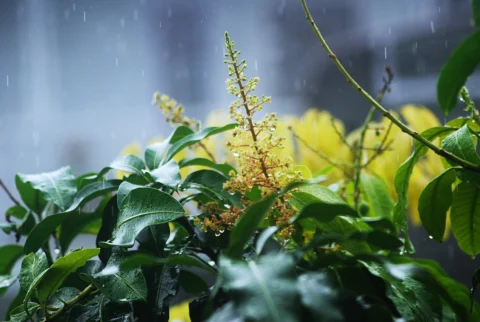
Powdery growth on mango flowers or young tissue deserves prompt investigation because flowering is a valuable stage. Photograph the symptoms and confirm the cause before choosing a treatment. White material can be confused with insects, residues or other damage.

From the Namibian discussions
A Namibian request about mango mildew received a hydrogen-peroxide suggestion, followed by corrections to the amount and a question about concentration. This shows why informal spray recipes need clarification. The exchange is retained as local discussion, not proof that the mixture was effective or harmless on mango flowers.
Record the pattern
- Photograph the whole tree, affected shoots and a close view of the material.
- Note whether flowers, young fruit or leaves are affected.
- Record recent sprays, weather and irrigation changes.
- Ask a competent local adviser to distinguish powdery mildew from other problems before treatment.
Understand the vulnerable stage
University of Florida mango guidance identifies powdery mildew as a disease of flowers, young fruit and leaves. A dry season does not mean fungal disease is impossible. Follow crop-stage observations rather than assuming the same calendar as Florida.
Choose a crop-appropriate response
Ask for a locally permitted, mango-appropriate option and follow its label or professional directions, including restrictions around flowering, heat and other sprays. Organic acceptability and crop safety are separate questions. Household peroxide strength, dilution and exposure cannot be guessed from a corrected chat message.
Review the result
Mark treated and observed areas where an adviser considers comparison appropriate. Record flower survival and new symptoms rather than judging only whether visible powder disappears. Keep neighbouring trees under observation, clean tools appropriately and avoid moving suspect plant material unnecessarily.
Namibian climate and microclimate
Mango flowering may coincide with different humidity and temperature patterns across Namibia. Dense sheltered growth can behave differently from an exposed tree. Record the actual flowering stage and conditions to build a useful local disease history.
Your first practical step
Collect clear photographs and a spray history before applying another product to the flowers.
Watch and adapt
 Watch videoWatch: Beneficial Insects and Natural Enemies
Publisher: University of California IPM
Country and context: USA; California context.
A supporting lesson on beneficial insects; identify the species actually present in your Namibian garden.
The supporting pest-management lesson emphasises identification. It does not demonstrate a mango-mildew treatment or endorse peroxide.
Keep exploring
Sources and further reading
Have you tried this in Namibia? Share the site conditions, method and result—including what did not work—with the Living Earth community. Local observations help the next person adapt the idea.