
Air layering encourages roots on a branch while it is still attached to the parent plant. It can be useful for suitable woody plants, especially when ordinary cuttings are difficult. It is not necessary for every species or every propagation task.
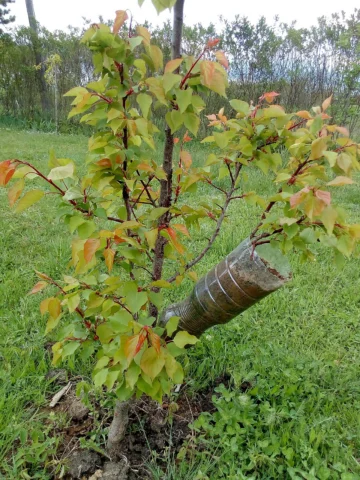

From the Namibian discussions
The Namibian mulberry discussion introduced air layering and a video, then another grower suggested simpler cuttings for their readily rooting trees. That is a useful distinction: choose the least complicated method that reliably preserves the plant you want.
Understand what the method changes
RHS describes air layering as propagation from attached stems. A prepared section is surrounded by moist rooting material and protected while roots develop. The rooted branch is later separated. The process copies the branch’s genetics; it does not produce a seedling or preserve a grafted tree’s separate rootstock.
Choose a suitable candidate
Ask for a species-specific method and work on a manageable branch from a healthy plant with the owner’s permission. Avoid a major structural limb or work requiring unsafe climbing. Where cuttings already work well, compare their effort and survival before choosing air layering.
Follow and record the process
- Use clean tools and follow a reliable method for preparing the chosen species.
- Apply the recommended moist rooting material and secure its cover without crushing the branch.
- Check moisture and attachment without repeatedly disturbing developing roots.
- Separate only when a sufficient root system has formed, then pot and protect the new plant while it establishes.
Do not rush the final separation
Leaves can remain healthy because the branch is still supported by the parent. That is not evidence that the layer can survive independently. Record the start date, rooting observation, separation and later survival. Dispose of wrapping responsibly and inspect the parent plant after the branch is removed.
Namibian climate and microclimate
Exposed wrapping can overheat in Namibian sun, while dry wind increases moisture loss. Choose a sheltered working position and inspect regularly. A humid tropical demonstration may require much less attention to drying than your site.
Your first practical step
Identify one plant that is difficult to root from cuttings and obtain a species-specific layering method before making a trial.
Watch and adapt
 Watch videoWatch: Propagation: the aerial layering technique
Publisher: ABC Gardening Australia
Country and context: Australia; exact filming locality not confirmed.
A demonstration of air layering. Species response and the best season still require local judgement.
Observe the demonstration’s species and setting. Adjust protection and inspection for local heat and drying, and do not assume every fruit tree responds alike.
Keep exploring
- Propagation
- Mulberry cuttings: turn a local success into a repeatable method
- Fruit-tree rootstocks: ask what is beneath the graft
Sources and further reading
Have you tried this in Namibia? Share the site conditions, method and result—including what did not work—with the Living Earth community. Local observations help the next person adapt the idea.