
Plants between fruit trees can provide mulch, cover and useful harvests. They also use water, light and labour. A small comparison helps you find a useful support planting without hiding its costs beneath a list of possible benefits.
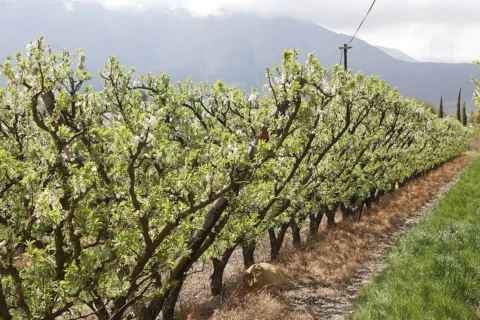

From the Namibian discussions
A Namibian grower described a mixed planting plan between olive trees, including legumes and other biomass species. The message recorded an intended system, not measured orchard results. Keep the practical idea while identifying each species and testing its contribution separately enough to learn from it.
Choose one function first
Decide whether the main goal is ground cover, prunings for mulch, food or temporary shelter. Different species and cutting schedules serve different purposes. Pigeon pea, for example, varies by type and is sensitive to frost; a general claim about legumes cannot select a suitable plant for every orchard.
Keep a comparison area
- Choose a short orchard section for the trial and a reasonably comparable section without the new planting.
- Record species, planting date, irrigation and pruning.
- Keep access to the fruit trees and irrigation equipment clear.
- Compare tree growth, moisture observations, harvests and labour through the season.
Check the unwanted effects
Inspect for shading of young trees, blocked access, competing roots, pest shelter and volunteer seedlings. Do not include a plant simply because it makes abundant biomass. Toxic species such as castor require particular consideration around children and animals, and invasive potential should be checked before spreading seed.
Use the material deliberately
Weigh or estimate prunings consistently and record where they are used. Keep mulch away from vulnerable trunks as appropriate for the crop and inspect beneath it. A plant that produces less material but fits the water budget may be more useful than a vigorous species that competes strongly with the orchard.
Namibian climate and microclimate
In arid Namibia, competition can appear first during an irrigation interruption or hot spell. A support plant successful in a wetter agroforestry video may need a smaller area, different season or different species locally. Record the conditions in which the benefit was observed.
Your first practical step
Trial one identified biomass species along a short section and leave a comparison section for the same season.
Watch and adapt
Publisher: ABC Gardening Australia
Country and context: Australia; exact filming locality not confirmed.
A layout lesson. Choose locally suitable species and examine sun, wind and water before copying rows or spacing.
The Australian orchard lesson supports layout thinking. Recalculate water, shade and mature plant size for your Namibian site.
Keep exploring
- Agroforestry: Revolutionary Farming with Trees for Soil Health & Climate Resilience
- Pigeon peas: trial food and biomass in a warm garden
- Castor Oil Plant
Sources and further reading
Have you tried this in Namibia? Share the site conditions, method and result—including what did not work—with the Living Earth community. Local observations help the next person adapt the idea.