
A solar dryer uses the sun and moving air to remove moisture from food. It can help preserve seasonal surplus, but a warm box is not automatically a safe drying process. The food, weather, airflow and final dryness all matter.

From the Namibian discussions
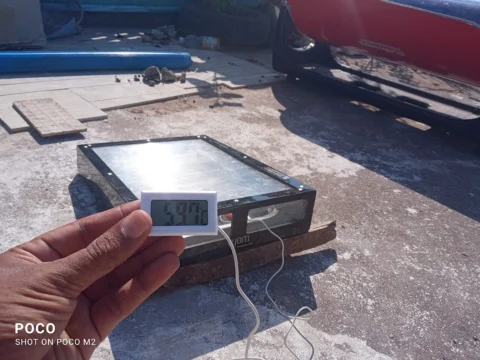
A Namibian contributor shared solar-dehydrator plans and a build video, offering advice to others rather than taking orders. This is a useful example of local skill sharing. Keep build experience separate from evidence that every food can be dried safely in the same unit.
Choose the food before the equipment
Utah State University publishes community solar-dehydrator plans and directs users to food-safety guidance. Start with a food and tested preservation method suited to your equipment. Fruit, vegetables and meat have different requirements. Do not adapt an ordinary fruit-dryer demonstration into a raw-meat preservation method.
Prepare a clean, observable batch
- Use clean food-contact trays and protect openings from insects while maintaining the designed airflow.
- Prepare pieces uniformly according to a tested recipe and keep loads comparable.
- Measure conditions in the food chamber with suitable instruments rather than guessing from outdoor temperature.
- Keep a record of the food, preparation, load, start time, weather and drying duration. Have an appropriate backup method if the weather changes.
Check dryness and storage
Follow the food-specific guidance for judging dryness and any conditioning step. Cool and package as directed in clean, dry containers. Label the date and check for condensation or spoilage. Visible mould is not something to remove before selling the rest of an uncertain batch. When the drying process has failed, do not improvise a rescue method for high-risk food.
Design for everyday use
Put the dryer where it can receive sun, be supervised and remain protected from dust and animals. Check that trays can be cleaned and moved without spilling food. A community unit needs a booking system and agreement on cleaning, batch separation and who decides whether a batch is acceptable.
Namibian climate and microclimate
Coastal fog, still humid days and winter sun angles can make drying very different from inland summer conditions. Moving a dryer to follow the sun may help exposure, but it does not replace temperature and food-quality checks.
Your first practical step
Try one small batch under a tested fruit-drying method. Record usable dried mass, time and any backup energy before expanding or selling food.
Watch and adapt
 Watch videoWatch: Building a Solar Food Dehydrator
Publisher: Dennis Scanlin
Country and context: Exact filming country not confirmed.
A construction-focused demonstration originally shared in the local collection. Use the separate food-safety references for preparation, drying and storage.
Compare the demonstration with the linked university plans and food-safety guidance. Namibian sunshine can help drying, but dust, insects, night-time moisture and storage still need control.
Keep exploring
- Preserving food in a sustainable way
- Root Cellar
- Solar cooking: match the cooker to the meal and the weather
Sources and further reading
- Utah State University: community solar dehydrator
- National Center for Home Food Preservation: drying guidance
Have you tried this in Namibia? Share the site conditions, method and result—including what did not work—with the Living Earth community. Local observations help the next person adapt the idea.