
Seedlings that rot or collapse around the soil line may be affected by damping off, a group of diseases rather than one single organism. Similar symptoms can follow heat, salt, root injury or poor watering, so inspection matters before deciding on a treatment.
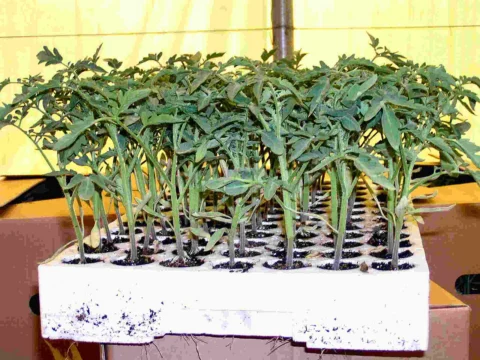

From the Namibian discussions
Namibian growers reported seedlings dying soon after transplanting into rich wicking-bed mixtures. The messages do not establish a diagnosis. Worms and visible compost organisms were noticed, but their presence alone does not prove they killed the seedlings.
Look at the pattern
University of Minnesota guidance explains that damping-off organisms can affect seed before emergence or attack young seedlings. Wet conditions, contaminated containers or media, and slow growth can favour problems. Compare affected stems and roots with healthy plants and photograph the difference.
Contain losses and improve the nursery
- Separate affected trays and remove collapsed seedlings with their immediate medium.
- Clean reusable containers and tools using an appropriate nursery sanitation method.
- Use a suitable seed-starting medium and avoid overcrowding.
- Check drainage, watering, light and airflow together instead of repeatedly adding treatments.
Avoid a false cure
Do not keep increasing fertiliser because seedlings look weak. Salts or immature compost can add stress, and household disinfectants poured onto living roots can cause injury. Ask a plant-health adviser about persistent losses, bringing a clear record of the medium, crop, age and watering. A sick seedling rarely recovers simply because a microbial product is added.
Test before refilling the whole bed
Grow a few seedlings in a known suitable medium beside the suspect mix under otherwise similar conditions. This does not identify a pathogen, but it can help locate the problem. Keep the comparison small and prevent drainage from an affected tray contaminating healthy stock.
Namibian climate and microclimate
A dry regional climate does not prevent wet pockets in trays or reservoirs. Cool nights can slow growth while an enclosed propagator stays humid. Inspect the root zone rather than assuming the surface reflects all conditions.
Your first practical step
Photograph the stem at soil level and compare one healthy and one affected seedling. Check the drainage and medium before buying a treatment.
Watch and adapt
Publisher: ABC Gardening Australia
Country and context: Australia; exact filming location not confirmed.
A practical seed-raising lesson. Adapt light, watering and timing to your seed species and Namibian microclimate.
The supporting nursery lesson helps with clean handling and observation. It does not diagnose the disease in your particular tray.
Keep exploring
- Wicking-bed problems: test the growing medium before adding more
- Seed Nursery
- Critical Guide to Organic Pest Control in Southern Africa: Proven Natural Solutions for Healthier Crops
Sources and further reading
Have you tried this in Namibia? Share the site conditions, method and result—including what did not work—with the Living Earth community. Local observations help the next person adapt the idea.