
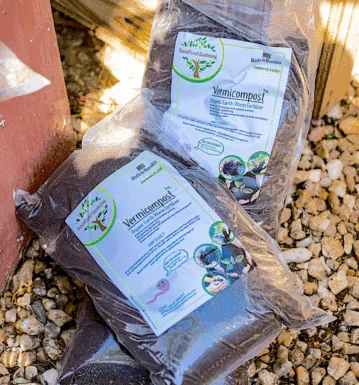
Vermicompost, also known as worm castings or worm compost, is a nutrient-rich organic fertilizer that is produced through the process of vermicomposting. This process involves the use of specialized composting worms, such as red wigglers (Eisenia fetida), to break down organic materials like kitchen scraps, yard waste, and other biodegradable matter. The worms consume the organic matter, and their digestive processes transform it into a nutrient-dense material known as vermicompost.
Benefits of Vermicompost
Vermicompost offers several benefits for plants and soil:
- Nutrient-Rich: Vermicompost is teeming with essential nutrients, including nitrogen, phosphorus, potassium, and micronutrients, which enhance plant growth and health.
- Improved Soil Structure: It enhances soil structure by promoting better water retention and drainage, which is crucial for plant root development.
- Microbial Activity: Vermicompost is rich in beneficial microorganisms that help suppress harmful pathogens and improve soil’s overall microbial ecosystem.
- Reduced Environmental Impact: Recycling organic waste through vermicomposting reduces landfill waste and greenhouse gas emissions.
- Sustainable Fertilization: It provides a natural and sustainable way to fertilize plants without relying solely on synthetic chemicals.
Application Guidelines for Vegetables
When using vermicompost for vegetables, follow these guidelines:
- Amount: Apply a layer of vermicompost that’s about 2.5 to 5 centimeters (1 to 2 inches) thick.
- Timing: Incorporate vermicompost into the soil before planting or during the growing season. You can also use it as a top dressing around established plants.
- Mixing: Gently incorporate the vermicompost into the top 15 to 20 centimeters (6 to 8 inches) of soil.
- Frequency: Apply vermicompost once every 4 to 6 weeks during the growing season for continuous nutrient supply.
- Seedlings and Transplants: When transplanting seedlings, mix a small amount of vermicompost into the planting hole to provide a nutrient boost.
- Containers: For container gardening, mix vermicompost with potting soil to improve water retention and nutrient availability.
- Mulching: Use vermicompost as a mulch around plants to conserve moisture and slowly release nutrients.
Always consider the specific requirements of the vegetables you’re growing and adjust the amount of vermicompost accordingly. Additionally, remember to water the area thoroughly after applying vermicompost to help the nutrients integrate into the soil.
How to apply vermicompost to fruit trees
Vermicompost is a valuable organic fertilizer for fruit trees. Here’s a general guideline for applying vermicompost to your fruit trees in Namibia:
Large Fruit Trees:
- Amount: Apply around 5-10 kilograms of vermicompost per mature tree per year.
- Timing: Ideally, apply vermicompost during the early spring or late fall, when the tree is not actively growing. This allows the nutrients to slowly release into the soil as the tree begins its growth phase.
Small Fruit Trees:
- Amount: For smaller fruit trees, apply about 2-5 kilograms of vermi-compost per tree per year.
- Timing: Similar to large fruit trees, apply vermi-compost in the early spring or late fall.
Application:
- Frequency: Apply vermicompost once a year for both large and small fruit trees.
- Method: Spread the vermicompost evenly around the base of the tree, avoiding direct contact with the trunk. You can create a circular trench around the tree’s drip line and spread the vermicompost within this area.
- Depth: Gently incorporate the vermicompost into the top layer of soil, about 5-10 centimeters deep.
- Watering: After applying the vermi-compost, water the area thoroughly to help the nutrients seep into the soil.
The density of dry vermicompost can vary based on factors such as the moisture content and the composition of the materials used in the composting process. However, as a general estimate, the density of dry vermicompost is usually around 0.4 to 0.6 liters per kilogram. This means that one kilogram of dry vermicompost would take up approximately 0.4 to 0.6 liters of space. Keep in mind that this is a rough estimate and the actual density can vary.
Remember that these are general guidelines, and the specific needs of your fruit trees can vary based on factors such as tree species, soil conditions, and local climate. It’s a good practice to monitor the health and growth of your fruit trees and adjust the vermicompost application as needed.
If you have access to a soil testing facility, consider conducting a soil test to determine the nutrient levels in your soil. This can help you fine-tune your vermi compost application to meet the specific nutrient requirements of your fruit trees.
Where to Buy in Namibia
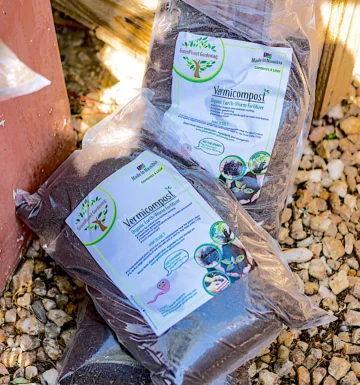
For gardeners and farmers in Namibia looking for a reliable source of natural fertilisers, Green Planet Gardening is a highly recommended option. The company specialises in organic soil improvers and supplies a range of products including compost, potting mixes, and naturally produced worm-based fertilisers.
Green Planet Gardening has built a strong reputation for quality and sustainability, working closely with local growers and communities. Their products are designed to boost soil life, increase water-holding capacity, and provide long-lasting nutrition for crops and gardens. Many permaculture projects, organic farmers, and home gardeners across Namibia already rely on their products.
By supporting companies like Green Planet Gardening, farmers not only get access to high-quality soil inputs but also contribute to the growth of sustainable agriculture in Namibia.
Visit their website here: greenplanet-gardening.com
Wider Benefits and Related Practices
Healthy soil is the foundation of productive farming. When soils have enough organic matter and living organisms, they hold more water, release nutrients slowly, and resist erosion. This is especially important in dry regions, where crops often fail because water disappears quickly or because soils have lost their fertility. Farmers everywhere are realising that it is not enough to just add fertilisers; they also need to feed the soil life.
Earthworms are only one part of this bigger picture. Other practices such as using green manures, applying biochar, or recycling farmyard manure can also play a big role in restoring degraded land. In some places, farmers mix animal manure with crop residues and even kitchen scraps to create simple compost piles. Over time these methods improve soil texture, reduce dependence on chemical inputs, and make farms more self-sufficient.
In Africa and Asia, there is growing interest in combining composting with agroforestry systems. Tree leaves, prunings, and crop residues can be processed into natural fertilisers that improve both annual crops and perennial plants. This creates a circular system where waste from one part of the farm becomes a resource for another. It also reduces the need to burn crop residues, which is a major cause of air pollution.
Adding organic fertilisers also helps tackle climate change. When carbon is stored in soils, it is less likely to escape into the atmosphere as carbon dioxide. Practices that rebuild soil organic matter are now recognised by international organisations as some of the most effective and low-cost ways to fight global warming.
For farmers who are curious to explore more, there are many resources available online:
- FAO: Soil Health and Organic Matter
- Rodale Institute on Regenerative Organic Agriculture
- CGIAR Research on Soil Fertility
- Practical Action – Composting and Soil Improvement
- SARE: Sustainable Agriculture Research & Education
Composting in the Namibian Context
Namibia has some of the most challenging soils in southern Africa. In the north, much of the land is sandy and lacks the ability to hold water or nutrients. In the central highlands, clay soils can be very hard when dry and difficult to work with. Across the country, one of the main challenges for farmers is how to build up soil organic matter so that fields stay productive year after year.
Adding organic inputs is one of the few practical methods to improve these soils. When kitchen scraps, animal manure, crop residues, or even weeds are recycled into the soil, they gradually increase fertility and water-holding capacity. This is especially important for staple crops such as mahangu (pearl millet), maize, and sorghum, which often fail in poor soils. By building a sponge-like layer in the ground, farmers can trap more rainwater, reduce evaporation, and give crops a better chance to survive dry spells.
Another opportunity lies in combining composting with livestock farming. Many rural households already keep goats, cattle, or chickens. Their manure can be mixed with crop residues to make powerful natural fertiliser. Instead of letting manure wash away during the rainy season, farmers can capture it and use it to enrich their fields. This reduces the need to buy expensive chemical fertilisers, keeps nutrients cycling within the community, and improves food security.
In urban areas, organic waste from markets, households, and even breweries can be collected and turned into valuable soil improvers. This not only helps farmers around towns and cities but also reduces the problem of waste management.
With rainfall becoming less predictable due to climate change, practices that improve soil health are no longer optional — they are essential. By turning waste into a resource, communities in Namibia can strengthen local farming, protect the environment, and reduce dependence on outside inputs.
For further learning:
- Namibia Organic Association
- Food and Agriculture Organization – Namibia Country Page
- Practical Action – Composting
- Regeneration International