
Planting more trees is not automatically the same as restoring an ecosystem. Species, location, survival and the existing habitat matter. A useful planting plan asks what should improve and how the project will recognise that improvement.

From the Namibian discussions
A saved Namibian message drew attention to the Global Biodiversity Standard. That is a useful prompt to examine tree projects beyond the number planted. This guide suggests a local planning checklist; it does not claim that a project has been assessed or certified under the standard.
Understand the place first
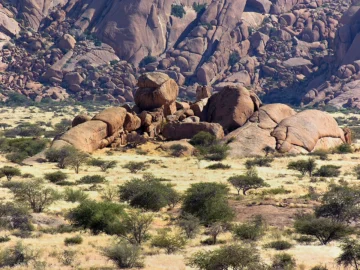
Record the vegetation already present, seasonal use by people and animals, and the reason the site is degraded, if it is. Some open habitats are valuable in their own right. Obtain ecological advice before converting natural grassland or other functioning habitat into a dense tree plantation.
State the intended benefit
- Write down whether the project aims to restore habitat, provide food, reduce erosion or supply another service.
- Check which species belong at the site and which could become invasive or problematic.
- Plan water, protection and maintenance for establishment.
- Agree who will monitor survival and ecological change after the planting event.
Count outcomes, not just deliveries
The Global Biodiversity Standard focuses attention on biodiversity in restoration and tree-growing projects. For a household or community group, begin with simple repeatable observations: survival, natural regeneration, ground cover and visible damage. Keep the same observation points so later photographs can be compared fairly.
Keep production and restoration claims clear
A fruit orchard can be valuable without being equivalent to restoration of a native ecosystem. Explain the project honestly and seek advice about trade-offs. Record benefits to people alongside ecological observations, rather than using one attractive photograph as proof of every claimed outcome.
Namibian climate and microclimate
Water scarcity makes species and density decisions especially important in Namibia. A species suited to a wetter northern site may struggle inland or use scarce irrigation at the coast. Restoration should respond to the site’s ecology and rainfall, not a universal tree-per-person target.
Your first practical step
Photograph the site before planting and write a one-paragraph description of the habitat and intended change.
Watch and adapt
 Watch videoWatch: How (and why) to FIND YOUR WATERSHED
Publisher: Andrew Millison
Country and context: Exact filming country not confirmed.
A watershed-reading lesson. Use Namibian maps to locate your own catchment and confirm local drainage on foot where safe.
Use the landscape lesson to examine connections beyond an individual planting hole. It is supporting context, not a biodiversity certification assessment.
Keep exploring
- Trees – Start here
- Invasive Species in Namibia – Threat or Opportunity?
- Biomass between fruit trees: test the benefit and competition
Sources and further reading
Have you tried this in Namibia? Share the site conditions, method and result—including what did not work—with the Living Earth community. Local observations help the next person adapt the idea.