
Rodent problems often connect several places: a feed store, rubbish area, chicken enclosure and vegetable bed. Reducing access to food and shelter is a practical starting point for the whole site.
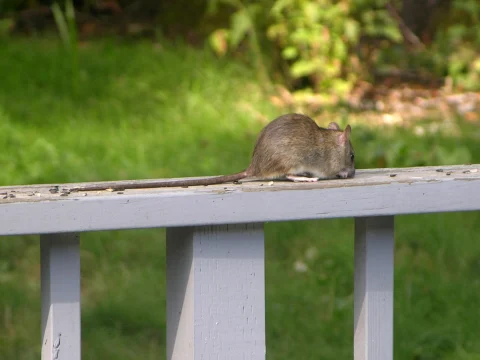
Photo: Alex O'Neal · Original image · CC BY-SA 2.0. Wikimedia display-size version; no crop or content edits.
.jpg)
From the Namibian discussions
One Namibian group contributor reported providing several owl-housing options and having no mouse problem, attributing this to the owls following the food. This is valuable experience to investigate locally. It does not establish that an owl box will be occupied, or that it will control every outbreak. Record owl activity and rodent losses together if you try this approach.
Find where losses occur
Map damaged food, gnawing, droppings and likely access routes. Distinguish a mouse problem from a rat problem before selecting equipment. Avoid identifying a species from one sign alone.
Make the store less accessible
- Use sound, close-fitting containers for seed, grain and animal feed.
- Clean up spilled feed promptly and remove unnecessary food left out overnight.
- Inspect doors, pipe penetrations and damaged mesh.
- Arrange stored items so edges and floors can be inspected.
UC IPM recommends combining sanitation, exclusion and targeted population management. A change at one food source may simply move activity elsewhere, so revisit the whole site.
Combine wildlife habitat with protection
Owl habitat can be part of a broader landscape approach, while containers and barriers protect the immediate food supply. Seek locally suitable nest-box advice rather than copying an overseas species design. Do not place a box where people must repeatedly disturb nesting birds.
When further control is needed
Use correctly selected traps only where children, pets and wildlife cannot reach them, and inspect them frequently. Rodenticides can expose non-target animals; seek qualified advice rather than scattering bait around a food garden. For contaminated stores, use public-health cleaning guidance: avoid dry sweeping or vacuuming rodent waste.
Namibian conditions and microclimate
In a dry season, irrigated plots and livestock water may draw animals from a wider area. A cooler shed, dense vegetation beside a wall or a gap beneath a door creates its own shelter. Inspect these transitions between garden, store and home.
Try it locally and share what happens
Choose one recurring loss, such as damaged seed bags. Improve storage and keep a dated record of fresh signs. If owls are present, note sightings without assuming that every change in rodent numbers is caused by them.
Watch, understand, adapt
IPM for rodents
Country and context: United States — University of California IPM. Select “IPM for Rodents” in the video library.
A longer overview of inspection, prevention and management.
Apply it locally: Use the general inspection approach; California species, products and rules are not Namibian recommendations.
Keep exploring
Chicken housing · Saving seeds · Compost