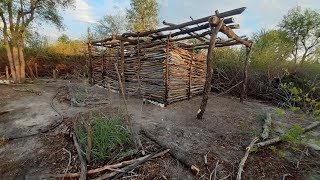
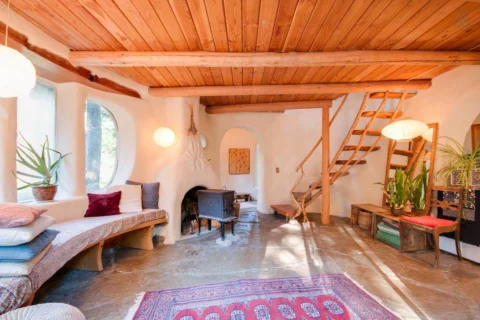
Cob is one of the oldest and most versatile natural building techniques, consisting of a hand-sculpted mixture of subsoil (clay and sand), straw, and water. It has been used across centuries and cultures, from the British Isles to parts of Africa, the Middle East, and Asia, offering a durable, breathable, and sustainable building method.
Overview
Cob structures are monolithic—walls are sculpted in layers and allowed to dry as construction progresses. Unlike bricks or blocks, cob doesn’t require moulds or forms. The word “cob” comes from an Old English term meaning a lump or rounded mass, referring to the hand-formed clumps of material.
Composition
| Material | Purpose |
|---|---|
| Clay-rich soil | Acts as a binder |
| Sand | Provides structural strength and prevents cracking |
| Straw | Adds tensile strength and binds the mix |
| Water | Activates the clay and allows workability |
The right proportions vary depending on local soil composition. Ideal soil has about 20–30% clay and 70–80% sand, but this can be adjusted by adding more sand or clay.
Construction Process
1. Site Preparation: Choose a raised, well-drained site with good orientation to sun and wind.
2. Foundation: A strong plinth is built using stone or rubble to prevent rising damp. “Stone up to your knees, cob to your eyes, and thatch for your hat” is a traditional saying.
3. Mixing: The material is mixed by foot or mechanical mixers—often on tarpaulins, stomping the ingredients until a fibrous, sticky dough is formed.
4. Building Walls: The material is applied in ‘lifts’ or layers, usually 30–60 cm high, and allowed to dry partially before adding more.
5. Carving and Shaping: The material allows organic, curved, sculptural forms, niches, shelves, benches, and arches.
6. Drying: Walls dry naturally over weeks or months.
7. Plastering: These walls are finished with natural plasters like lime or clay to protect against erosion.
8. Roofing: Wide roof overhangs or thatch are essential to protect cob from heavy rains.
Climate Suitability
| Climate | Cob Suitability | Notes |
|---|---|---|
| Arid / Semi-Arid | Excellent | Durable and thermal mass works well |
| Temperate | Very Good | Needs good foundations and roof overhangs |
| Tropical (Wet) | Moderate | Needs extra protection from rain, not ideal without wide eaves |
| Cold Climates | Good | Add internal insulation or combine with strawbale for better R-value |
Thermal Properties
• High thermal mass: Cob stores heat during the day and releases it at night, ideal for passive solar heating.
• Poor insulation: Cob alone is not a good insulator—often combined with insulating layers or materials in cold climates.
Advantages
• Low-cost and locally available
• Non-toxic, breathable, healthy indoor air
• Fireproof and pest-resistant
• Easy to repair or modify
• Sculptural and artistic possibilities
• No formwork or bricks required
Limitations
• Labour-intensive
• Slow construction process (requires drying time)
• Requires protection from rain and damp
• Needs experienced hands for structural design
• Not suitable for flood-prone areas without proper protection
Tools and Equipment
• Tarpaulins for mixing
• Buckets and shovels
• Stomping feet or mechanical mixers
• Trowels, carving tools, levels, string lines
• Plastering tools (for finishes)
Common Combinations
• Stone foundation + Cob walls + Thatched roof
• Cob walls + Light clay insulation lining
• Cob walls with embedded bottles, glass, or artistic features
Sustainability & Cultural Value
Cob supports vernacular architecture, encourages local self-reliance, and reduces the carbon footprint of construction by eliminating industrial materials. It is often used in ecovillages, permaculture sites, and regenerative settlements.
Modern Revival
This building method is seeing renewed interest globally among natural builders, eco-architects, and self-builders. In many regions, building codes are evolving to allow for cob structures, especially with engineered designs and appropriate testing.
Some modern variations include:
• “CobBauge” – hybrid cob with insulation layers used in Europe.
• Stabilised cob – adding lime or cement for extra water resistance in wet climates.
Conclusion
Cob building is earth-friendly, expressive, and empowering. With the right design, community effort, and local knowledge, cob structures can last for centuries and serve as a beacon of sustainable architecture rooted in place.
The 3 Most Essential Books for DIY Cob Building Projects
Build beautiful, affordable, and sustainable homes with your own hands.
Building this way — using a mix of clay, sand, straw, and water — has been used for centuries to create natural, low-cost, and breathable homes that work with nature, not against it. If you’re ready to get your hands dirty and your walls earthy, these three books are your essential companions on the journey:
1. The Hand-Sculpted House by Ianto Evans, Michael G. Smith, and Linda Smiley
Why it’s essential:
This is the bible on this method. Written by the pioneers of the modern natural building revival, it blends practical how-to advice with philosophy, design thinking, and real-life stories. It’s like having a wise elder guide you through every stage of the cob process — from foundations to finishes.
What you’ll learn:
• Site selection and passive solar design
• Mixing material by foot or machine
• Sculpting walls and adding curves, niches, and benches
• Living simply and building in harmony with nature
Perfect for:
First-time builders, off-grid dreamers, and anyone who wants to feel inspired while learning.
2. Building With Cob by Adam Weismann and Katy Bryce
Why it’s essential:
This beautifully photographed book focuses on practical UK-based projects, but the techniques translate well to arid and semi-arid regions too. It breaks down the construction process with clarity, including useful diagrams and tips from real builds.
What you’ll learn:
• Soil testing and how to find the right mix
• Constructing walls, plinths, and roofs
• Using lime plasters and natural finishes
• Tips for durability and long-term maintenance
Perfect for:
Hands-on learners who want a visual, step-by-step guide.
3. The Cob Builder’s Handbook by Becky Bee
Why it’s essential:
Becky Bee brings a grassroots, can-do attitude that empowers anyone to start building right away. It’s simple, direct, and full of encouragement — especially helpful if you’re building with a small budget or limited experience.
What you’ll learn:
• Basic mixes and how to test materials
• Foundations, drainage, and roof options
• Building with community and organising workshops
• Creating beauty with curves and sculptural elements
Perfect for:
DIYers in Africa looking for low-tech, community-friendly building guidance.
💡 Final Tip:
Using this method in building isn’t just about making walls — it’s about rethinking how we live. These books will help you build not just a home, but a new relationship with the land, your body, and your community.
Cob Building in Namibia: Ancient Wisdom for Modern Regeneration
In the heart of Namibia, where arid winds meet wide skies and deep earth, a quiet revolution is taking root — one built not on cement and steel, but on soil, straw, water, and human hands.
This mixture of clay-rich soil, sand, straw, and water — is one of the oldest construction techniques known to humankind. For thousands of years, African communities have built homes from earth. From the thick clay walls of northern Namibia’s traditional homesteads to the sun-dried bricks used across the Sahel, natural building was — and still is — a living art, perfectly adapted to our climates and materials.
Today, as Namibia faces rising temperatures, erratic rainfall, high unemployment, and a widening housing crisis, cob is making a comeback — not just as a nostalgic memory, but as a radical solution for a regenerative future.
Why Cob?
🔹 It’s Climate-Ready
Thick walls act like thermal batteries — absorbing heat during the day and releasing it at night. In our hot, dry regions, this means cooler indoor spaces without air conditioning. Unlike tin shacks or concrete blocks that trap heat, cob breathes with the land.
🔹 It’s Affordable
With materials sourced directly from the ground beneath your feet, this method slashes building costs. No imported cement. No factory-made bricks. Just local earth, straw (a by-product of farming), and water — making it ideal for low-income communities, cooperatives, and homesteads.
🔹 It’s Healthy
Walls are non-toxic, mould-resistant, and regulate humidity naturally. For families living in damp or poorly ventilated structures, cob provides a healthier, more dignified way to live.
🔹 It Builds Community
Such a house construction is labour-intensive — but in a good way. It brings people together. Whether you’re building a home, a kitchen, or a classroom, cob invites neighbours to mix, stomp, shape, and share skills. It restores pride in manual work, and fosters connection and local knowledge.
From Namibia to the World
Around the globe, this building method is being rediscovered as a modern solution to ecological and economic collapse. In the UK cottages built centuries ago are still standing. In the US, such homes are becoming a mainstay of off-grid living. In South Africa and Kenya, young architects are blending cob with modern design to create stunning, affordable homes.
Here in Namibia, cob has enormous untapped potential. It aligns with our needs: low cost, locally made, thermally efficient, job-creating, and environmentally regenerative. It offers rural and peri-urban communities a way to build homes that work with nature, not against it, while reducing pressure on government housing programmes and empowering self-reliance.
What’s Next?
The Living Earth Movement believes this material has a key role in the future of Namibian shelter. We’re promoting cob as part of a broader permaculture approach — combining natural building with food forests, water harvesting, and climate-smart design.
Together, we can:
• Train community builders through hands-on workshops.
• Create model homes that serve as learning centres.
• Inspire policymakers to include natural building in housing regulations.
• Empower youth to see building not as a job for big companies, but as a path to dignity and income.
The earth beneath our feet holds the answers. It’s time to remember. It’s time to build.