
A soil report is only as useful as the sample sent to the laboratory. Combining a manure heap, a sandy path and a vegetable bed into one bag may produce an average that describes none of them. Sample the area you actually want to manage.
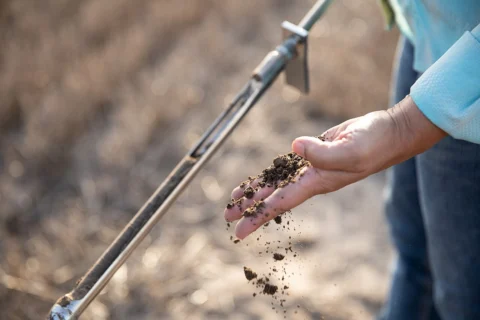
.jpg)
From the Namibian discussions
A saved Namibian message raised soil testing, but the available text did not include interpretable laboratory results. The opportunity is to make testing a practical habit and keep local results with the site history, instead of prescribing the same amendment everywhere.
Ask the laboratory first
Tell the laboratory what you grow, how you irrigate and which problem you are investigating. Ask for sample depth, quantity, container and delivery instructions. A cultivated field, tree root zone and container mix may require different methods. Request an interpretation relevant to the crop and local conditions.
Separate different management areas
- Sketch the garden or field and mark visibly different soils, previous amendments and irrigation zones.
- Within each reasonably uniform area, collect the number of subsamples and depth requested by the laboratory.
- Use clean equipment and keep unusual patches separate rather than letting them distort the main sample.
- Label the bag and retain a matching map, date and short management history.
Read the units and method
Extension guidance emphasises that pH and nutrient results need interpretation in context. Ask what a reported value means for your crop and which test method was used. A fertiliser recommendation in kilograms per hectare is not automatically a suitable spoonful per planting hole. Obtain help with the area conversion before applying anything.
Turn results into a comparison
Record the amendment, amount, treated area and cost in NAD. Where feasible, leave a small comparable area unchanged. Watch crop response, not merely the next report’s numbers. Repeated testing is most useful when the collection method and management records stay comparable.
Namibian climate and microclimate
Saline irrigation water, alkaline soils, sandy patches and recently imported compost can create very different conditions within one Namibian property. If water quality is a concern, ask for a separate water test rather than expecting a soil sample to explain the supply completely.
Your first practical step
Contact a laboratory and obtain its written collection instructions before filling the sample bag.
Watch and adapt
Publisher: International Center for Biosaline Agriculture
Country and context: United Arab Emirates-based institute; exact filming location not confirmed.
A supporting sampling lesson. Ask the receiving laboratory how it wants your soil or compost samples collected.
Use the demonstration as a visual introduction and follow the receiving laboratory’s specific instructions.
Keep exploring
- Soil
- Phosphorus: make a soil-test decision
- Wicking-bed problems: test the growing medium before adding more
Sources and further reading
Have you tried this in Namibia? Share the site conditions, method and result—including what did not work—with the Living Earth community. Local observations help the next person adapt the idea.