For a worthwhile bulb-onion harvest, choose the right variety and planting window before buying seed. Day length, steady early growth and careful curing matter as much as the space available. Start with a small bed you can weed and water consistently.


At a glance
- Botanical name: Allium cepa. This guide concerns mature bulb onions.
- Choose seed by day-length response, local planting window and storage purpose, not colour alone.
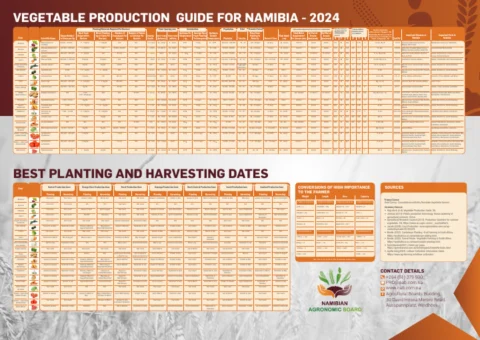
- The NAB chart gives 8–10 cm between plants and 30–45 cm between rows, with a 168-day crop reference. Actual duration depends on cultivar and starting material.
NAB local production reference. For young green harvests, see Spring onions.
Choose the variety before the calendar
Bulb formation responds to day length. Short-, intermediate- and long-day varieties are not interchangeable; a seed packet recommended in a northern US guide may be unsuitable for your latitude. Ask a supplier familiar with your Namibian region for the named cultivar, sowing dates and intended harvest period. Obtain the advice before sowing a large nursery. University of Minnesota: onion day-length response.
Also ask whether the variety is intended for prompt fresh use or longer storage. Red, white and brown describe appearance, not a complete management plan. Keep the packet with the growing record so a successful crop can be repeated. Bulb onions occupy the bed for months; compare that commitment with quicker green-onion harvests if water or space is tight.
Namibian climate and microclimate
Check the regional production chart, then compare its window with nearby growers using the same variety. A sheltered courtyard and an exposed field may establish seedlings differently. Coastal humidity can complicate drying even when the growing temperature is mild; inland sun can overheat newly lifted bulbs.
Shelter must still allow air movement. Plan the curing space before harvest: a roofed, ventilated area is more useful than discovering too late that the only available corner gets wet. Do not use a fixed northern-hemisphere “weeks before last frost” instruction as your national planting calendar.
Establish a manageable bed
Use well-drained, reasonably fertile soil and remove weeds before planting. Onions are poor competitors with weeds. Seeds, transplants and sets have different starting points; sets are small bulbs, not seedlings. Select healthy material of the correct variety. Follow its sowing and transplant instructions and avoid burying the growing neck deeply. USU establishment guide.
A small nursery lets you raise a labelled batch before planting out. Keep it accessible for routine watering and observation. Harden seedlings gradually to the outdoor exposure and settle roots into moist ground when transplanting. Avoid planting so much that weeding and irrigation immediately become unmanageable.
Leave enough access to pull weeds gently without trampling the root zone. For a communal bed, decide who checks establishment each day and who takes over when that person is away. A shared watering record is often more useful than everyone assuming someone else did it.
Water, feed and weed
Maintain a reliable supply of root-zone moisture during active growth. Shallow roots make interrupted watering particularly important, while waterlogged soil creates other problems. Check delivery along the row, especially at the far end of a drip line. Keep hoeing shallow enough to avoid damaging roots.
Base fertiliser on the soil and crop stage. Do not keep pushing leafy growth with nitrogen late in the crop. As plants reach natural maturity, irrigation and feeding need adjustment for harvest and curing rather than continued growth. Iowa State onion care and maturity.
From the Namibian discussions
A November 2024 report in the saved Namibian group material described years without observed bagrada bugs after onions and garlic chives were intercropped among brassicas. The grower had also been improving the soil. Keep this as a promising firsthand observation, while recognising that several conditions changed together. It does not guarantee control in another garden.
A separate December 2023 message reported spraying fermented onion-leaf juice on aphids affecting beans, with an apparent reduction and a possible feeding effect. No preparation strength, comparison or crop-safety measurements were included. The observation belongs in the local record, but it is not enough to specify a spray recipe. For an easy trial, begin with an onion intercrop and compare pest counts and harvests with an otherwise similar brassica strip.
Recognise problems before treating
Inspect between leaves for small insects and look for patterns of pale damage, uneven growth or soft necks. Onion thrips and rots are included in the Namibian production reference. Confirm the problem locally; damage, disease and water stress can overlap. Remove badly rotting material from storage promptly and avoid moving suspect plants into a new bed.
Where possible, rotate onions with unrelated crops rather than following garlic or another onion crop. A history of serious disease needs specific advice; a generic three-year rule is not a cure for every soil problem. Keep flowering or damaged bulbs separate from sound storage candidates.
Harvest, cure and store
Allow the crop to show natural maturity, including tops falling over; do not force green necks down to imitate ripening. Lift carefully and cure with ventilation and protection from rain and damaging sun. Time alone is not the test: necks and outer skins need to dry appropriately before storage. Thick-necked, injured or suspect bulbs should be used promptly rather than mixed into the main store. University of Minnesota: harvest and curing.
Use a dry, ventilated storage arrangement and inspect it regularly. An airtight plastic bag traps moisture. Compare losses as well as harvested kilograms: a variety that looks productive at lifting may not meet your storage needs. Record costs in NAD, water, bed area and usable bulbs remaining after a month.
Seed saving and the next planting
Onions generally need a later flowering phase to produce seed, and varieties can cross. Keep a named variety and use an appropriate seed-saving plan rather than saving from the first plant that bolts. Do not treat a household refrigerator schedule copied from overseas as a complete local seed-production method.
Before the next season, decide what limited the result: wrong variety, poor establishment, weeds, uneven water, disease or drying space. Change one practical thing and keep the rest comparable. This turns a disappointing crop into useful local knowledge.
Watch, understand, adapt
 Watch video▶ Growing Onions from Sowing to Harvest — GrowVeg.
Country and context: UK-based publisher; the exact filming site is not confirmed. Focus on handling plants and recognising harvest stages. UK onion sets, day-length varieties and sowing months should not be copied automatically. Use the demonstration for technique, and the Namibian production chart and nearby growers for season and variety choices.
Visual references from the original guide
Earlier illustrations remain available here; their filming or growing location is not established. The credited main photograph above is the illustration for this revised guide.


Keep exploring
Have you tried this in Namibia? Share your region, variety, planting date, soil, water, harvest and what you would change. Local successes and failures both help the next grower.
Documents to read or download