
Boscia albitrunca, often called shepherd’s tree or witgat, is a characteristic tree of dry southern African landscapes. Existing trees can provide shade, habitat and browse while anchoring a locally meaningful planting plan.

From the Namibian discussions
A Namibian contribution described the tree’s cultural importance, dense shade, browse line and association with termite mounds. It also described traditional fruit use. These are valuable observations to retain. The same discussion’s medicinal claims are not a basis for prescribing plant preparations.
Learn to recognise a whole tree
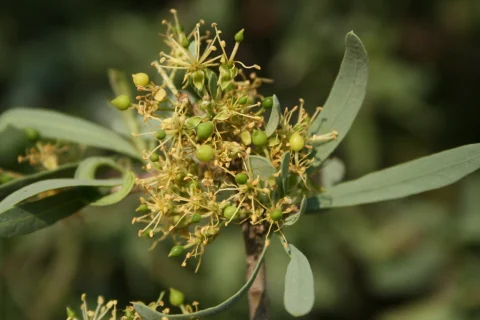
SANBI describes a pale trunk, a rounded crown and small, leathery leaves, with records from Namibia and other dry parts of southern Africa. Those features are identification clues rather than an edible-plant test. Confirm a specimen with someone who knows the local flora, especially before collecting food or nursery material.
Protect what is already established
- Mark existing trees on the garden or farm plan before deciding where to build or clear.
- Observe the shadow at the hours people and livestock need shelter. Keep access routes from compacting the same root area repeatedly.
- Record browsing pressure and whether young recruits survive nearby. Protect selected seedlings from trampling and animals.
- Ask the relevant local authority about permissions before pruning, harvesting or moving trees; rules elsewhere in southern Africa should not be assumed to apply in Namibia.
Plan for a young tree, not a mature survivor
A long-established tree may reach resources that a new seedling cannot. Choose planting material with a known identity and discuss propagation with an experienced nursery. Budget establishment water and protection. Record the first hot season, cold period and browsing events rather than describing survival from a single visit.
Build a local tree record
Record the locally used name, language, approximate crown width and the uses reported by people familiar with the tree. Keep cultural accounts attributed as local knowledge. If fruit is collected, obtain permission and leave a share for wildlife and regeneration. Do not use bark or root removal as a casual experiment.
Namibian climate and microclimate
A termite mound, rocky slope and open sandy plain offer different root environments. A tree thriving in one setting is a clue to investigate, not proof that every garden in the region suits it.
Your first practical step
Choose one known shepherd’s tree and record shade, browsing and nearby seedlings through a season. Use it as a starting point for learning with neighbours.
Watch and adapt
 Watch videoWatch: Build a Nursery & Grow Trees
Publisher: Community Forests International
Country and context: Exact filming country not confirmed; Swahili with English subtitles.
A general seedling-care lesson, also catalogued by World Agroforestry. It is not a species-specific growing demonstration.
Apply the film’s attention to seed source and seedling care. Ask for Boscia-specific propagation advice rather than copying another tree’s seed treatment.
Keep exploring
- Trees – Start here
- Termites in the garden: understand activity and assess damage
- Water-Efficient Plant Selection
Sources and further reading
- SANBI: Boscia albitrunca identification and habitat
- South African forestry research review: Boscia albitrunca
Have you tried this in Namibia? Share the site conditions, method and result—including what did not work—with the Living Earth community. Local observations help the next person adapt the idea.