
Charring timber is a traditional surface treatment. A post in soil faces a different test from sheltered or ventilated cladding, so a visually durable finish does not settle how long the buried post will last.
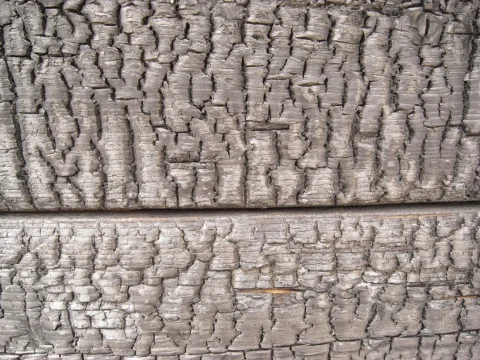
Photo: japanese_craft_construction · Original image · CC BY 2.0. Wikimedia display-size version; no crop or content edits.

From the Namibian discussions
A passage shared in the Namibian collection described charred post ends and compacted gravel as a long-lasting alternative to concrete, including claims of insect-proof carbon and centuries of service. The saved passage supplies no local post ages or controlled comparison. Keep the method as a shared building idea, while separating those broad claims from measured experience.
Define the job first
A decorative garden marker, fence post and load-bearing building column have different consequences if they fail. Do not use an experimental treatment as the sole basis for a structural design. For a building or heavily loaded fence, obtain appropriate design and timber advice.
What published work can tell us
US Forest Service wood-protection guidance stresses timber durability and treatment appropriate to ground contact. Research on charred siding examines surface treatment under particular test conditions; it does not establish that every charred post becomes termite-proof. Species, heartwood, cracks and exposure remain relevant.
If you compare methods locally
- Use non-structural test pieces with recorded timber species and dimensions.
- Record how each piece was prepared and the soil it contacts.
- Keep an untreated comparison where safe and appropriate.
- Inspect at the soil line, not only the visible upper surface.
- Record softening, cracking and insect damage over years, not just appearance after a few months.
This is a durability-observation plan. It is not a torching procedure or a structural installation specification.
Drainage is site-specific
Gravel around a post cannot drain freely if the surrounding ground holds water with nowhere for it to go. Conversely, concrete performance depends on design and detailing, not merely its presence. Record actual wetting and ground conditions before attributing failure to one material.
Namibian conditions and microclimate
Dry surface soil may hide wetter conditions after irrigation or flood runoff. Termite pressure and soil-line moisture vary across a property. A post near a vegetable bed may face a different exposure from one on an open, dry boundary.
Try it locally and share what happens
Photograph existing posts of known age and ask the installer about timber, treatment and soil. Build a local record of service conditions before making claims about expected lifespan.
Watch, understand, adapt
Wood decay fungi for non-specialists
Country and context: United States — University of California IPM. Select “Wood Decay Fungi for Non-specialists” in the video library.
Background on wood decay, not a charred-post construction tutorial.
Apply it locally: Use the biological context to improve inspection. It does not certify a post design for Namibian loads, soils or termites.
Keep exploring
Fences · Natural building · Termites