
A pale, curled grub in compost or soil is not enough information to decide whether it is harming a plant. Beetle larvae differ in what they eat, and a useful diagnosis connects the insect with the actual damage.
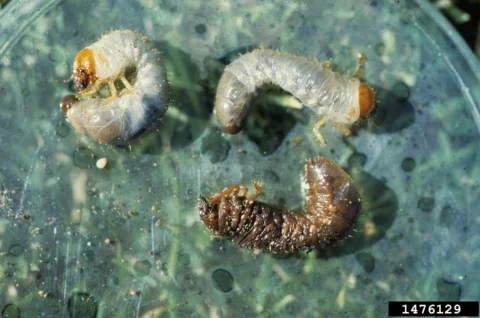

From the Namibian discussions
Namibian gardeners discussed grubs in dead plants and whether the way a grub crawls could distinguish root feeders from decomposers. One grower reported root loss alongside grubs. Keep that observation, but do not treat a simple crawling rule as a dependable identification of every local beetle larva.
Look at the roots and the setting
UC IPM describes white grubs that feed on turf roots. That establishes that some grubs can cause injury; it does not show that every compost grub is the same pest. Examine a failing plant and a healthy comparison, noting root loss, drainage, moisture and where larvae are found.
Collect useful observations
- Photograph the grub with a size reference and record whether it came from roots, rotting wood or mature compost.
- Photograph the plant’s remaining roots and stem base before disposing of the sample.
- Count larvae in comparable small soil samples from affected and unaffected areas.
- Ask a local insect or plant-health adviser how to submit a specimen for identification.
Avoid treating all soil as contaminated
Replacing every pot’s soil or killing all larvae can remove useful organisms and still miss the cause of decline. Check watering, root rot and physical damage as part of the investigation. If a particular batch of potting material is implicated, keep it separate while the problem is assessed.
Choose a response after identification
Hand removal may be practical for a few confirmed damaging larvae in containers. Larger problems need species- and site-specific advice. Do not pour methylated spirits or household disinfectants into garden soil. Overseas biological-control products also need appropriate local species, conditions and availability; a photograph of a treated grub is not a local recommendation.
Namibian climate and microclimate
Moist compost, an irrigated lawn and dry sandy beds support different insect communities. A pest may be concentrated near watering points. Record the water regime when sharing observations so that other growers can compare like with like.
Your first practical step
Keep one clear photo sequence linking plant, roots and grub. Seek identification before treating the whole garden.
Watch and adapt
 Watch videoWatch: Beneficial Insects and Natural Enemies
Publisher: University of California IPM
Country and context: USA; California context.
A supporting lesson on beneficial insects; identify the species actually present in your Namibian garden.
The film encourages identification before control. It is background insect-management learning rather than a key to Namibian white-grub species.
Keep exploring
- Compost
- Soil
- Critical Guide to Organic Pest Control in Southern Africa: Proven Natural Solutions for Healthier Crops
Sources and further reading
Have you tried this in Namibia? Share the site conditions, method and result—including what did not work—with the Living Earth community. Local observations help the next person adapt the idea.