
Raising insects for poultry or fish feed can be interesting, but a living colony requires management and a reliable market or use. Start by testing survival, labour and feed costs before building a large production room.
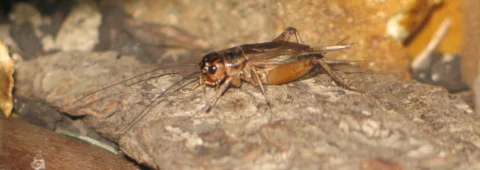

From the Namibian discussions
A Namibian contributor described plans to use a root cellar for mushrooms and crickets, with insects intended for chickens and fish. This was a proposed use, not a reported production result. A cool cellar that suits one purpose may be unsuitable for a warm-growing insect colony.
Identify the species and system
FAO’s account of cricket farming in Thailand documents a developed industry in a tropical setting. It is useful context, not proof that the same species and methods will work in Namibia. Obtain correctly identified, legally sourced stock and suitable species-specific husbandry advice. Keep insects contained and do not release surplus stock.
Measure the whole cycle
- Begin with a manageable colony and record its source and starting number or mass.
- Record room conditions, water provision, feed inputs and cleaning time.
- Separate healthy production from spoiled feed, dead insects and pest contamination.
- Weigh the usable harvest and compare it with the costs of producing it.
Treat feed safety seriously
Do not assume that any waste is a suitable substrate. Contaminants can enter the production chain, and animals need a balanced ration rather than unlimited insects. Ask a feed specialist about the intended poultry or fish species and obtain guidance before processing or selling insect meal. Avoid inventing a universal inclusion percentage.
Decide whether to expand
A colony that survives is not yet an economical feed system. Include electricity, space, labour, losses and equipment in NAD. If purchased feed could produce a similar benefit more reliably, that matters. Keep a failed trial record too; it helps the next grower avoid the same mismatch.
Namibian climate and microclimate
Cold inland nights, hot sheds and limited water may all change the economics. Insulation, ventilation or heating can add costs. Measure the intended room across day and night rather than assuming below-ground space is automatically ideal.
Your first practical step
Log the proposed production room’s conditions before buying insects or building cages.
Watch and adapt
 Watch videoWatch: Cricket Farming
Publisher: Discover JKUAT — Jomo Kenyatta University of Agriculture and Technology
Country and context: Kenya-based university; exact filming site not independently confirmed.
A university introduction to cricket production. It does not establish Namibian production costs or validate termite-rearing methods.
The Kenyan university example complements the FAO material from Thailand. Neither establishes the temperature, costs or output of a Namibian root-cellar trial.
Keep exploring
Sources and further reading
Have you tried this in Namibia? Share the site conditions, method and result—including what did not work—with the Living Earth community. Local observations help the next person adapt the idea.