Types of Wastewater:
- Greywater: Waste water generated from household activities such as washing dishes, laundry, and bathing. It contains less organic matter and can be easier to treat compared to blackwater.
- Blackwater: Waste water from toilets and contains a higher concentration of organic matter and pathogens compared to greywater.
Treatment of Wastewater:
- Greywater Treatment:
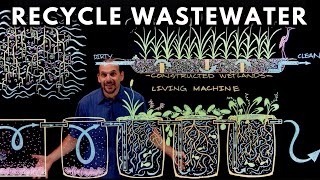
- Homemade Wastewater System without Reed Bed: Greywater can be treated using a simple filtration system, such as a mulch basin or gravel filter, to remove larger particles. Additionally, a plant-based filter like a constructed wetland or a sand filter can be used to further purify the water.
- Homemade Waste Water System with Reed Bed: A constructed wetland or reed bed system is an effective way to treat greywater. In this system, greywater is passed through gravel or sand-filled trenches planted with reeds or other wetland plants. The plants help to remove pollutants and pathogens through biological processes.
- Blackwater Treatment:
- Homemade Wastewater System without Reed Bed: To treat blackwater at home, a septic tank system can be employed. The septic tank allows solid waste to settle at the bottom while partially treating the water. However, the effluent still needs further treatment before disposal.
- Homemade Wastewater System with Reed Bed: A reed bed system can be used to enhance the treatment of blackwater. In this setup, the effluent from the septic tank is channeled through a series of gravel-filled beds planted with reeds. The reeds and microbial activity in the gravel beds further break down organic matter and nutrients.
Please note that homemade wastewater treatment systems may vary in effectiveness depending on the scale and design. It is crucial to follow local regulations and guidelines for safe and sustainable wastewater treatment. For more detailed information on wastewater treatment, consider referring to reputable sources and articles on the topic.
Using Greywater Systems on Farms in Namibia: A Practical Guide for Regenerative Water Use
In Namibia’s arid and semi-arid climate, water is one of the most precious resources. Yet, many households and small-scale farms still allow usable wastewater – greywater — from showers, hand basins, dishwashing, and laundry — to flow into soakaways or simply run off as waste. This presents a huge opportunity for regenerative design: by capturing and reusing greywater wisely, farmers can build more resilient, productive, and self-sustaining systems, even in water-scarce regions.
Greywater, if managed correctly, is not waste — it’s a valuable irrigation resource. It’s already in the system, already paid for, and already part of daily life. Using it again for productive purposes is a core principle of permaculture and sustainable farming.
What is Greywater, and Why is it Valuable?
Greywater refers to relatively clean used water from domestic activities such as:
• Showering or bathing
• Handwashing
• Dishwashing
• Laundry
Unlike blackwater (from toilets), greywater usually contains only small amounts of soap, food particles, or natural detergents. With some simple design, it can be safely reused to irrigate plants, particularly perennial crops like trees and shrubs that don’t come into direct contact with the water.
In rural Namibia, this can be a game-changer. Most farms and homesteads already have regular access to water for domestic use, even if it’s fetched or pumped in small quantities. By reusing this water twice — first for washing, then for irrigation — farmers can effectively double their impact without increasing their consumption.
The Shower Pit: A Simple and Effective Wastewater Tool
One of the most accessible and low-tech greywater solutions is the shower pit. This is a basic, gravel-filled pit dug just outside the shower area. As water flows from the shower, it drains directly into the pit, where it filters slowly into the soil.
How to Build a Shower Pit:
1. Dig a pit approximately 60–80 cm deep and 1 metre wide.
2. Line the base with a layer of coarse stones or broken bricks for drainage.
3. Fill the rest with gravel, small stones, or coarse sand.
4. Place a perforated pipe or basin drain from the shower outlet into the pit to guide water directly inside.
5. Optionally, cover with a layer of mulch or woodchips to reduce smell and prevent mosquito breeding.
6. Plant water-loving species nearby, such as banana circles, pawpaw trees, or vetiver grass, to make use of the seeped moisture.
This kind of setup works well for individual households, communal farms, or even rural clinics and schools, where showers or handwashing stations are used regularly.
Expanding Greywater Use Across the Farm
Once the basic concept is in place, farmers can begin scaling up greywater usage beyond just a shower pit. Here are other greywater ideas:
1. Kitchen Sink Drain Gardens:
A sink drain can be redirected into a mulch basin or small trench garden lined with organic material. The food particles and grease are broken down naturally by soil organisms and worms, feeding trees or vines planted along the trench.
2. Laundry Water Reuse:
Wastewater from handwashing clothes or washing machines (using natural soaps) can be diverted into planting beds or infiltration basins around trees. It’s important to rotate areas or filter it slightly to prevent salt build-up.
3. Greywater Banana Circles:
Banana circles are a popular permaculture solution where wastewater (like from showers or sinks) is directed into a circular pit planted with bananas, sweet potatoes, or taro, with mulch and compost added regularly. The plants thrive on the water and nutrients.
4. Greywater Swales or Trenches:
If the household generates a higher volume of greywater, it can be distributed through swales — shallow, level ditches dug along contours to slow and spread water across the landscape. Trees planted along swales will benefit from this slow, consistent watering.
What Can You Grow with Greywater?
While it’s not ideal to irrigate leafy greens or root crops that are eaten raw with untreated greywater, there are many safe and productive options:
• Fruit Trees: Pawpaw, banana, guava, pomegranate, citrus, moringa
• Fodder Crops: Napier grass, vetiver, pigeon pea, cowpea
• Timber or Windbreak Trees: Leucaena, neem, acacia, mulberry
• Perennials: Sugarcane, lemongrass, cassava, sweet potato (planted around pits)
The key is to keep the water away from edible plant parts and let the soil and mulch do the filtering work.
Design Tips and Cautions
While greywater is generally safe for reuse, there are some basic precautions to follow:
• Avoid using harsh detergents, bleach, or chemical soaps. Use biodegradable or natural soap products when possible.
• Distribute water over larger areas, not concentrated in one spot, to avoid soggy soil or bad smells.
• Include mulch or gravel in all greywater systems to help filter and break down solids.
• Rotate discharge areas or flush with clean water occasionally to prevent salt or soap build-up.
• Avoid reusing blackwater (toilet water) unless it is properly treated in a separate composting or biogas system.
Greywater and Regenerative Farming
Greywater systems are more than just a water-saving trick — they are part of a whole-systems design approach that mirrors nature. Water cycles are closed, nutrients are reused, and each element (like the shower) serves multiple functions (cleaning and irrigating).
When paired with composting toilets, mulch basins, and keyline design, greywater reuse helps farmers build a closed-loop farm ecosystem that regenerates soil, increases resilience to drought, and boosts productivity — all with minimal additional cost.
Why This Matters for Namibia
Namibia faces increasing water stress due to climate change, over-extraction, and population growth. By adopting household- and farm-level greywater systems, we can reduce pressure on boreholes and municipal water systems, improve food security, and keep more moisture in our landscapes.
For smallholder farmers, this is not just about conservation — it’s about survival and regeneration. A simple shower pit or dishwater trench can be the difference between a struggling homestead and a thriving food forest.
And at a national scale, if thousands of households begin to implement such systems, we create a massive decentralised water storage and irrigation network, right beneath our feet, improving resilience across the country.
Let’s Start Simple
You don’t need expensive filters, pumps, or tanks. Start with a bucket. Dig a pit. Plant a tree next to your shower. Let your water work twice before it disappears. These are the small steps that build the regenerative future we all need — starting today, right at home.
Worthwhile books:
Here are three highly recommended books that provide practical, detailed guidance on designing and building greywater systems — from simple home setups to more advanced farm-scale designs:
1. Create an Oasis with Greywater by Art Ludwig
(Most recommended!)
• This is considered the bible of greywater systems. Art Ludwig is one of the pioneers in the field and explains everything from basic concepts to practical how-to guides for various systems (e.g., mulch basins, branched drains, laundry-to-landscape).
• Especially useful for low-cost, low-tech, and DIY solutions suitable for rural areas like Namibia.
• Includes design examples, system comparisons, materials lists, and maintenance tips.
➡ Why it’s great for Namibia: Easy-to-understand language, low-budget ideas, and excellent illustrations for building systems with basic tools and local materials.
2. Water-Wise Home: How to Conserve and Reuse Water in Your Home and Landscape by Laura Allen
• A very practical book by one of the co-founders of Greywater Action.
• Focuses on real-life implementation with step-by-step instructions for systems like laundry-to-landscape, sink drains, and infiltration basins.
• Also includes information about legal considerations, water-saving appliances, and integrating greywater into food gardens.
➡ Why it’s great: Clear instructions, lots of photos and diagrams, and very user-friendly for people building small systems by hand.
• Although not only focused on greywater, this book is a must-read for understanding how to combine greywater with swales, basins, and contour earthworks.
• It shows how to integrate water reuse into broader farm and garden design, which is especially valuable in arid regions like Namibia.
• Includes case studies, planting guides, and excellent illustrations.
➡ Why it’s great: It helps you move from just “greywater reuse” to full landscape water literacy, building a whole-system design that supports soil, plants, and people.
Would you like a short summary of each book in PDF or a printable info sheet to share with others in your network or training sessions? I can prepare that too.
Worthwhile videos:
Here’s an awesome video explaining how to clean waste water using natural methods such as plants: