Benefits and Uses of Hemp:
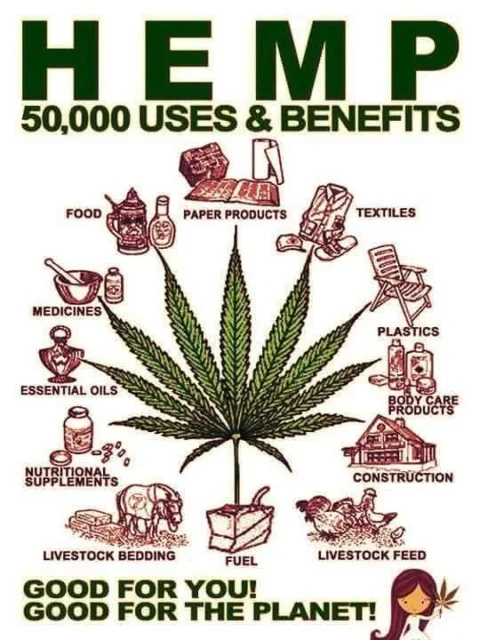
- Fiber Production: Hemp fibers are strong, durable, and resistant to mold and ultraviolet light. They are used in the production of textiles, clothing, and industrial fabrics.
- Nutrient-Rich Seeds: Hemp seeds are a rich source of nutrients, including protein, omega-3 and omega-6 fatty acids, and various vitamins and minerals. They can be consumed raw, added to foods, or processed into hemp oil.
- Hemp Oil: Hemp oil, extracted from the seeds, is used in cooking, salad dressings, and as a nutritional supplement. It contains essential fatty acids and has a favorable omega-3 to omega-6 ratio.
- Building Materials: Hemp fibers can be used in the production of construction materials such as hempcrete, a sustainable and lightweight alternative to traditional concrete.
- Biodegradable Plastics: Hemp fibers can be used to produce biodegradable plastics, offering an eco-friendly alternative to conventional plastics.
- Animal Bedding: Hemp fibers are suitable for producing bedding for animals. It provides a comfortable and absorbent material for livestock and pets.
- Paper Production: Hemp can be used to make paper, and it’s considered an environmentally friendly alternative to traditional wood-based paper production due to its faster growth and lower environmental impact.
- Health and Wellness Products: Hemp-derived products, such as CBD (cannabidiol), are used in various health and wellness applications, including dietary supplements, skincare products, and therapeutic treatments.
- Environmental Benefits: Hemp cultivation can contribute to environmental conservation by improving soil quality, reducing the need for synthetic fertilizers and pesticides, and sequestering carbon dioxide.
- Fuel Production: Hemp can be used as a biofuel source. The plant’s biomass can be converted into biofuels, providing a renewable and sustainable energy option.
- Clothing and Textiles: Hemp fibers are commonly used in the textile industry to produce clothing, footwear, and accessories. The fabric is breathable, durable, and has natural antimicrobial properties.
- Seed Meal as Animal Feed: After oil extraction, hemp seed meal can be used as a nutritious feed for livestock and poultry.
Hemp’s versatility and sustainability make it a valuable resource with a wide range of applications across various industries, promoting environmental conservation and offering economic opportunities.
Benefits of Hemp Plants:
- Drought Tolerance: Hemp is well-suited for arid climates as it has a relatively low water requirement compared to other crops.
- Soil Improvement: Hemp has deep roots that can improve soil structure and fertility, making it a valuable crop in arid regions where soil quality may be a concern.
- Fast Growth: Hemp is a fast-growing plant, allowing for quicker harvest cycles and reduced exposure to arid conditions.
- Biodiversity Support: Hemp cultivation can support local ecosystems by providing habitat for diverse species, contributing to overall biodiversity.
- Carbon Sequestration: Hemp plants can sequester carbon dioxide from the atmosphere, aiding in mitigating the effects of climate change.
Growing Hemp in Arid Countries:
- Selecting Varieties: Choose hemp varieties that are well-adapted to arid climates. Some varieties are specifically bred for drought resistance.
- Water Management: Implement efficient water management practices, such as drip irrigation, to minimize water usage and ensure targeted delivery to the plants.
- Soil Preparation: Prepare the soil by adding organic matter to improve water retention. Hemp can adapt to various soil types, but well-draining soil is crucial to prevent waterlogging.
- Planting Time: Time the planting to coincide with the beginning of the rainy season or when water availability is expected to be at its highest.
- Spacing: Optimize plant spacing to prevent competition for water and nutrients. This can vary based on the hemp variety and local conditions.
- Mulching: Apply mulch around the hemp plants to reduce evaporation, retain soil moisture, and suppress weed growth.
- Companion Planting: Consider companion planting with other drought-resistant crops to create a mutually beneficial environment.
- Fertilization: Use organic fertilizers to promote healthy plant growth. Proper nutrition enhances the plant’s ability to withstand stress, including drought.
- Monitoring and Adaptation: Regularly monitor soil moisture levels and adjust irrigation practices accordingly. Hemp is resilient, but adjustments may be needed based on local conditions.
- Harvest Timing: Plan the harvest to avoid extended periods of extreme aridity. Harvesting at the right time ensures optimal yield and quality.
By following these guidelines, hemp cultivation in arid countries can be sustainable and beneficial, offering economic opportunities and contributing to environmental conservation.
Controversies Surrounding Hemp:
- Legalization and Regulation: The legal status of hemp varies globally, and even within countries, regulations can differ. While hemp is legal in many places, confusion and controversies arise due to its association with marijuana, a psychoactive variety of Cannabis. This has led to challenges in defining and regulating hemp, impacting its cultivation and use.
- Association with Marijuana: Hemp belongs to the Cannabis plant family, and its association with marijuana has led to misconceptions and stigmas. Some people may oppose hemp due to the confusion between the non-psychoactive hemp and the psychoactive marijuana varieties.
- Cannabidiol (CBD) Controversy: CBD, derived from hemp, has gained popularity for its potential therapeutic benefits. However, the regulatory status of CBD is often debated, leading to controversies in terms of its legal use, marketing claims, and efficacy in treating various health conditions.
- Environmental Concerns: While hemp is generally considered environmentally friendly, there are debates about the environmental impact of large-scale hemp cultivation. Some argue that monoculture practices and extensive water use could have negative consequences, challenging the perception of hemp as a wholly sustainable crop.
- Cross-Pollination with Marijuana: Concerns exist about the potential cross-pollination between hemp and marijuana plants. This can impact the THC (tetrahydrocannabinol) levels in marijuana crops, potentially affecting its potency. Strict regulations are often in place to prevent this, but challenges can arise in regions with both crops.
- Quality Control and Standards: Ensuring consistent quality in hemp products, especially in terms of CBD content, is a challenge. Controversies arise regarding the lack of standardized testing and quality control measures, leading to variations in product quality and potency.
- Economic Competitions: Hemp competes with other industries, such as cotton and synthetic materials in textiles, and traditional construction materials like concrete. Controversies may arise from economic interests and competition between established industries and the emerging hemp sector.
- Social and Cultural Perspectives: Some controversies stem from cultural and societal attitudes towards hemp. In certain regions, historical associations or deeply ingrained beliefs may influence public opinion and policy decisions related to hemp cultivation and use.
Addressing these controversies involves comprehensive education, clear regulations, and ongoing research to ensure that hemp’s potential benefits are maximized while addressing concerns related to legality, environmental impact, and societal perceptions.
Photo by Harrison Haines: https://www.pexels.com/photo/green-cannabis-plant-3536257/
Here is extended content you can add to the bottom of your hemp article on GrowYourFood.Africa. It reduces the keyword “hemp” density by using alternatives like “industrial crop,” “plant fibre,” or “cannabis sativa,” and includes African examples and external links.
African Countries Embracing Industrial Cannabis for Economic Growth
Across Africa, a growing number of governments are recognising the potential of industrial cannabis not as a drug, but as a high-value agricultural commodity with wide applications in textiles, construction, paper, and sustainable packaging. While regulation is still evolving, some countries have taken significant steps to allow cultivation and explore the plant’s commercial opportunities.
South Africa
South Africa was among the first on the continent to allow the commercial cultivation of low-THC cannabis (also known as dagga locally) for industrial and medicinal uses. Since 2018, the Constitutional Court decriminalised private use, and by 2022, the Department of Agriculture had published clear guidelines for farming Cannabis sativa strains with less than 0.2% THC. Farmers and entrepreneurs are beginning to explore applications in green building, textiles, and bioplastics.
- Official guidelines: South African Department of Agriculture – Cannabis Master Plan
- Industry example: House of Hemp – a pioneer in the sector.
Malawi
In 2020, Malawi legalised the cultivation of industrial varieties of the cannabis plant and issued the first commercial licences in 2021. The focus is not on recreational use but on exports and local value-added products, especially biomass for energy, paper, and medicinal extracts. Local authorities see the crop as a replacement for declining tobacco revenues.
- Government regulator: Malawi Cannabis Regulatory Authority
Zimbabwe
Zimbabwe approved the cultivation of cannabis for medicinal and industrial purposes in 2018, one of the earliest to do so in Africa. The government has issued numerous cultivation licences to private companies. The focus has been on export-oriented investment, but efforts are growing to build domestic processing capacity for fibres, oils, and bio-based products.
- Case study: Zimbabwe Industrial Hemp Trust (ZIHT) has developed demonstration projects showing how the crop can regenerate degraded soils and offer high-value opportunities to small-scale farmers.
Rwanda
Rwanda made headlines in 2020 when it announced a framework for controlled cultivation of cannabis for export only. Although currently limited to select investors, the move indicates a shift in policy and a readiness to explore regulated, high-value industries.
- Update from Rwandan Development Board: Rwanda allows cannabis cultivation for medical export
Ghana and Lesotho
Lesotho was the first African country to issue licenses for medicinal cannabis production back in 2017. It has since attracted international investment, although benefits to local farmers have been debated. Ghana also passed legislation in 2020 to allow cultivation of low-THC cannabis strains, hoping to position itself as a regional player in the wellness and textile markets.
Potential for Namibia and Other Arid Regions
With vast semi-arid landscapes and sun-drenched growing conditions, Namibia could become a leader in growing drought-resilient varieties for fibre and seed. These can regenerate poor soils, support agroforestry models, and offer alternatives to environmentally harmful crops. Yet legal uncertainty and public perception still pose barriers. As more African nations reform their policies and create clear licensing frameworks, collaborative learning and regional trade could unlock this underutilised resource.
Further Reading & Resources
- FAO: The Role of Industrial Hemp in Sustainable Agriculture
- UNCTAD: Commodities at a Glance – Special Issue on Cannabis
- HempToday – Africa – news and updates on cannabis developments across the continent
- African Union: African Continental Free Trade Area (AfCFTA) – which could enable easier trade in fibre-based crops.