Organic Management of Locusts – grasshoppers: A Comprehensive Guide
Introduction
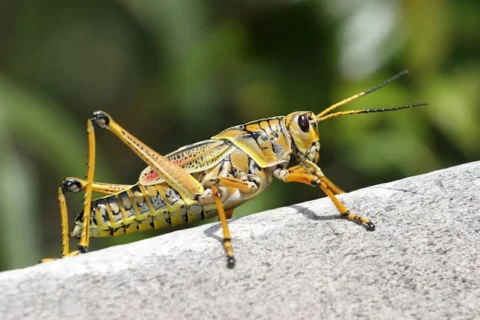
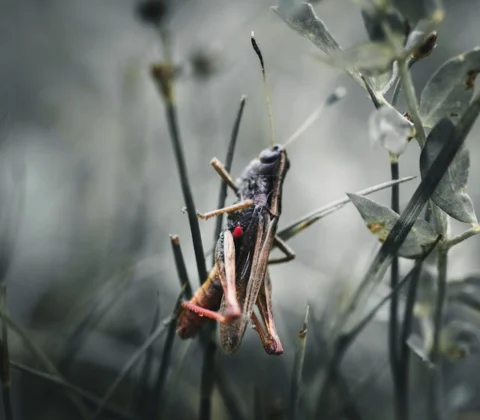
Locusts (also calles Grasshoppers) are highly destructive pests that can cause significant damage to crops, pastures, and vegetation, threatening food security and livelihoods, especially in arid and semi-arid regions. Conventional chemical control methods can harm the environment, non-target species, and human health. Therefore, organic and sustainable approaches are increasingly preferred for managing locusts. This guide outlines various ordsganic methods to control locust populations effectively and sustainably, providing solutions that are both eco-friendly and practical for small-scale farmers.
In Namibia, the terms “grasshopper” and “locust” are both used, but they refer to different things:
• Grasshopper – Used for general grasshoppers that do not swarm or cause major agricultural damage. Some people may also refer to them in local languages.
• Locust – More commonly used when referring to swarming species that cause damage to crops, such as the African Migratory Locust (Locusta migratoria), Red Locust (Nomadacris septemfasciata), and Brown Locust (Locustana pardalina).
In many indigenous Namibian languages:
• In Oshiwambo, grasshoppers are often called “oshikulumbumbwa”.
• In Otjiherero, they may be referred to as “ozonjungira”.
• In Nama/Damara, a common term is “ǂhūb”.
• In Afrikaans, both “sprinkaan” (grasshopper) and “treksprinkaan” (migratory locust) are used.
1. Understanding Locust Behavior
Locusts are grasshoppers that undergo a dramatic transformation when environmental conditions, such as rainfall and food availability, are favorable. They form dense swarms that travel long distances, consuming all vegetation in their path. Locusts tend to rest together in large heaps during the night and early morning, making these times ideal for targeted control measures.
2. Manual Collection and Utilization
One effective and organic method for managing locusts involves manually collecting them while they are huddled together at night or early morning. Here’s a step-by-step guide:
• Timing: Wait until sunset or very early morning when locusts are inactive and clustered together for warmth.
• Collection: Use shovels to scoop up the swarms into empty feed bags. This method is efficient as locusts are less likely to disperse during these hours.
• Freezing: Place the filled bags in a freezer overnight to humanely kill the locusts without the use of chemicals.
• Drying: The next morning, shake the locusts out of the bags onto a clean sheet to dry in the sun. Sun drying helps preserve the locusts and makes them easier to grind or mix into feeds.
• Usage in Animal Feeds: Dried locusts are an excellent source of protein for chickens, sheep, and cattle. Adding them to animal feeds can improve the protein content, promoting better growth and health in livestock.
Benefits of This Method:
• Eco-Friendly: No chemicals are used, preventing environmental contamination.
• Resource Utilization: Transforms a pest problem into a valuable resource for animal husbandry.
• Cost-Effective: Minimal financial investment is required, making this method accessible to small-scale farmers.
3. Biological Control
Another organic approach to managing locust populations is through biological control, which involves using natural predators, pathogens, or parasites to keep locust numbers in check. Some of the biological control methods include:
• Fungal Biopesticides: Metarhizium anisopliae, a naturally occurring fungus, is highly effective against locusts. It infects locusts, leading to their death while having minimal impact on non-target species.
• Birds and Predatory Insects: Encouraging the presence of natural locust predators, such as birds (e.g., starlings) and predatory insects (e.g., beetles and spiders), can help maintain locust populations at manageable levels.
• Parasitic Wasps and Flies: Certain species of parasitic wasps and flies lay their eggs in locusts. Their larvae consume the host from the inside, effectively reducing locust numbers.
Benefits of Biological Control:
• Target-Specific: Reduces locust populations without harming other beneficial organisms.
• Sustainable: Promotes a balanced ecosystem and reduces dependency on chemical controls.
4. Habitat Management
Managing the habitat to make it less conducive for locust breeding is another vital organic control strategy:
• Intercropping and Agroforestry: Diversifying crops and integrating trees can create a more complex habitat that is less attractive to locusts and supports natural predators.
• Flooding Breeding Grounds: Locusts prefer to lay eggs in dry, sandy soils. Flooding these areas can destroy eggs and prevent them from hatching.
• Field Sanitation: Removing weeds and plant debris from fields can reduce locust shelter and egg-laying sites.
Benefits of Habitat Management:
• Prevention-Oriented: Reduces the chances of locust infestations by disrupting their breeding cycles.
• Ecosystem-Based Approach: Enhances biodiversity and overall farm health.
5. Mechanical Barriers and Traps
Mechanical barriers and traps are simple yet effective ways to control locust movements:
• Physical Barriers: Installing mesh barriers around fields can help protect crops from locust invasions.
• Trapping: Digging shallow trenches and installing netting or screens can capture locusts as they move across the landscape. These can then be collected and used as animal feed, as described earlier.
Benefits of Mechanical Barriers and Traps:
• Low-Cost: Requires minimal investment and materials.
• Simple to Implement: Easy for farmers to set up and maintain.
6. Light
Another way to control grasshoppers and other flying insects is by placing a light outside the chicken house. They’re attracted to the light in the evenings and then very early in the morning morning let loose the chickens. Caution: Stand out of the way as you open for the chickens once they know the routine.
7. Community-Based Management
Locust control is most effective when conducted on a community-wide scale:
• Community Locust Committees: Forming local committees to monitor locust activity and coordinate control measures can enhance effectiveness.
• Knowledge Sharing: Training and educating community members on organic control methods ensure widespread adoption and success.
• Collaborative Action: Joint efforts can cover larger areas and have a more significant impact.
Benefits of Community-Based Management:
• Scalability: Allows for large-scale control efforts that can be more effective than individual actions.
• Empowerment: Involves local communities in managing their resources and pest problems.
Conclusion
Organic management of locusts is not only possible but also practical and sustainable. By employing a combination of manual collection, biological control, habitat management, mechanical barriers, and community-based strategies, farmers can protect their crops and livestock from locust damage while promoting ecological balance and sustainability. Adopting these organic methods will not only help mitigate the immediate threat posed by locusts but also contribute to long-term food security and environmental health.
References:
For further reading and more detailed guidelines, consider visiting:
https://www.freethink.com/energy/locust-swarms-animal-feed
• Integrated Pest Management Principles
Even more detail:
Here’s a more information and of the methods mentioned above:
Crickets and grasshoppers can be quite a nuisance in vegetable gardens, as they often feed on a wide range of plants and can cause significant damage. Fortunately, there are several strategies you can employ to control or repel these pests in an organic or natural way.
Here are some effective methods for managing crickets and grasshoppers in your vegetable garden:
- Manual Control
Handpicking: Early in the morning or late in the evening when crickets and grasshoppers are less active, manually pick them off your plants. This is a time-consuming but effective option for smaller gardens.
Trapping: Set up DIY traps to catch these pests. You can make a simple trap by placing containers (such as buckets or bowls) with a bit of vegetable matter or a sugary substance (like overripe fruit) inside to lure the pests. Once they enter, they will be trapped and can be removed. - Physical Barriers
Row Covers: Use insect netting or row covers to physically prevent crickets and grasshoppers from accessing your plants. These can be draped over your vegetables and anchored to the ground, creating a barrier that pests cannot penetrate.
Mulching: Apply a thick layer of mulch around your plants. Crickets and grasshoppers tend to prefer dry, open ground, and mulch can make it harder for them to reach your crops while also providing a moist environment that benefits your plants. - Natural Repellents
Garlic and Chili Spray: A natural deterrent can be made by blending garlic, hot chili peppers, and water. Spray this mixture directly onto your plants to repel crickets and grasshoppers. They dislike the strong smell and taste, and it won’t harm your crops.
Recipe: Blend 1 garlic bulb, 2-3 hot peppers (or chili powder), and 1 liter of water. Let it sit for several hours, strain, and then spray on your plants.
Neem Oil: Neem oil is an organic pesticide that can help control various pests, including crickets and grasshoppers. It disrupts the feeding and reproductive cycles of insects, making it effective for long-term control. Apply it to the leaves and stems of your vegetables.
Diatomaceous Earth: This natural powder made from fossilized remains of marine phytoplankton is harmless to humans and pets but deadly to insects like crickets and grasshoppers. It works by drying out the pests’ exoskeletons and causing them to dehydrate. Sprinkle it around your garden beds, especially near plants that are being targeted by pests.
Mint or Lavender: Crickets and grasshoppers tend to avoid plants with strong scents. Consider planting mint, lavender, or rosemary around the perimeter of your vegetable garden to act as a natural repellent. - Attracting Natural Predators
Encourage Birds: Birds are natural predators of crickets and grasshoppers. Attract them to your garden by setting up bird feeders, birdhouses, or birdbaths. Birds like sparrows, swallows, and starlings can help reduce insect populations.
Introduce Beneficial Insects: You can introduce predatory insects, such as ground beetles, parasitic wasps, or praying mantises, which will feed on crickets and grasshoppers. These can be purchased from garden centers or online.
Frogs and Toads: Frogs and toads are excellent natural predators of crickets and grasshoppers. If you have a water feature or pond in your garden, it will attract them. If not, you can create small water areas where frogs and toads will thrive and help control pest populations. - Insecticidal Soap or Oil
Use insecticidal soap or horticultural oils to kill crickets and grasshoppers on contact. These products are less harmful to beneficial insects and the environment compared to chemical pesticides.
Be sure to apply these treatments early in the morning or late in the evening to minimize harm to pollinators like bees. - Crop Rotation and Diversity
Crop Rotation: Change the location of your vegetable crops each season. Crickets and grasshoppers tend to lay eggs in the soil, and rotating your crops prevents them from establishing themselves in the same area year after year.
Companion Planting: Some plants can help deter crickets and grasshoppers. For example, garlic, onions, and chives are natural repellents. Marigolds and nasturtiums can also serve as decoy plants, attracting pests away from your vegetables. - Pheromone Traps (for Grasshoppers)
Some species of grasshoppers are attracted to pheromone traps, which can be used to lure and capture adult grasshoppers. These traps can help reduce the number of breeding adults, preventing future infestations. - Cultural Practices
Regular Garden Maintenance: Keeping your garden tidy can discourage crickets and grasshoppers from taking up residence. Remove weeds, plant debris, and other potential hiding spots where pests could lay eggs or find shelter.
Watering: These pests tend to thrive in dry conditions, so keeping your garden well-watered can help reduce their numbers, as they prefer drier, dustier environments. - Chemical Control (Last Resort)
If all else fails, you might consider using a targeted organic pesticide, such as one based on pyrethrin (derived from chrysanthemums) or spinosad. These should only be used as a last resort since they can also affect beneficial insects.
Always follow the manufacturer’s instructions carefully and apply these treatments early in the morning or late in the evening to minimize the impact on pollinators.
In regions affected by seasonal insect swarms, especially during warm and rainy periods, farmers often turn to traditional knowledge and local ecological approaches for protection. Companion planting, intercropping, and maintaining a healthy balance of beneficial insects can help buffer ecosystems against pest outbreaks. For example, ducks and chickens—when managed properly—can reduce the presence of many crop-eating insects without disrupting the soil.
Furthermore, there is increasing interest in turning some of these challenges into opportunities. In some African countries, these plant-devouring insects are harvested as a protein-rich food source for both humans and livestock, turning a threat into a resource. Promoting local food systems that incorporate nutrient recycling and ecological resilience can help mitigate future hopper outbreaks.
Finally, resilience against agricultural pests isn’t just about repelling or killing them—it’s about regenerating the land so that pest populations don’t spiral out of control. Soil health, biodiversity, and agroforestry all play a key role in this balance. Readers are encouraged to explore more regenerative practices and consider solutions that align with climate-adaptive farming.
Worthwhile Books & Guides
- “Ecological Pest Management in Practice” – by Miguel Altieri & Clara Nicholls A highly accessible guide for farmers and gardeners on managing pest populations through biodiversity, natural predators, and ecological farming techniques.
- “The Biology of Grasshoppers” – edited by R.F. Chapman & A. Joern A more technical but comprehensive academic resource that delves into the life cycles, ecology, and behaviour of orthopteran species.
- “Regenerative Agriculture: A Practical Whole Systems Guide to Making Small Farms Work” – by Richard Perkins While not focused solely on pests, this book includes excellent practical strategies to reduce the impact of insect infestations through holistic farm design.
Useful Online Resources
- FAO Locust Watch Offers up-to-date data on locust swarms globally, plus mitigation strategies suitable for both large-scale and community-level responses.
- Infonet-Biovision A Kenyan-based online platform full of farmer-friendly resources on agroecology, including practical pest management using natural enemies and botanical sprays.
- Regeneration International Includes case studies and global examples of regenerative agriculture that increase resilience against crop-eating insect outbreaks.
Here is the revised version of the additional content, without any icons or symbols, and with improved flow for your wiki article:
A Fable from the Drylands:
The Farmer and the Winged Hunger
Long ago, in a place where red earth met the blue sky and cattle walked slowly home at dusk, lived an old farmer named Omukwetu. His fields had once been rich with millet and beans, but in recent years, his harvest had vanished under waves of flying hunger.
“These sky-borne thieves have no chief,” he grumbled, shaking his hoe. “They do not listen to warnings, nor respect borders.”
One year, the winged invaders came again. But this time, Omukwetu did not run to the fields with smoke or drums. He had learned something from the forest.
Instead of chasing them with noise, he had spent the dry months planting neem trees, rows of moringa, and strips of lemongrass. He’d scattered chilli powder and ashes, invited birds to nest by planting wild figs, and let guinea fowl roam freely. His neighbours mocked him.
“You think planting trees will stop the sky?” they laughed.
But when the time came, the swarm passed by his land. Not all were repelled—but enough. The birds pecked, the trees confused, and the smell of ash and spice turned many away.
Later, as the sun set, a boy from the neighbouring village asked the old man, “Why didn’t they eat your fields?”
Omukwetu smiled. “Because I listened to the land. And I gave the land what it needed to fight back.”
Cultural Lessons and Community Wisdom
In many African cultures, stories like that of Omukwetu echo an important truth: nature protects those who work with her, not against her. Farmers across dryland regions have long known that balance—not battle—is the key to resilience. Some rural communities plant “living fences” of medicinal or strong-smelling plants to confuse pests. Others use ash, cow dung, or fermented plant brews to deter flying insects naturally.
In places like Burkina Faso, rural farmers have created “insectary strips” — narrow rows of flowering plants that attract beneficial predators like wasps and ladybugs. These solutions don’t rely on chemicals or high costs—they rely on knowledge passed down or rediscovered.
Turning Problems Into Protein
In parts of Uganda and Nigeria, communities have begun raising local poultry breeds that enjoy feasting on small hoppers. Some households now consider an infestation a kind of seasonal protein boost: what was once a pure disaster is now at least partially converted into food. When properly cooked or dried, certain flying insects are also eaten by people and sold in markets—especially where other protein sources are expensive.
Landscape Regeneration and Pest Resilience
Modern agroecological research shows that one of the best long-term strategies to prevent field pest outbreaks is land restoration. Bare, degraded land with low diversity invites chaos. By contrast, perennial groundcovers, mulch, and tree cover create a cooler microclimate and support natural predators that reduce pest numbers before they explode. Soil with high organic matter and fungal networks supports plant immunity—making the whole system stronger.
From War to Harmony
Too often, people view insect invasions through a war lens: burn them, poison them, beat them. But just like weeds, these creatures are messengers of imbalance. When your farm becomes a monoculture of tasty, unprotected leaves, it’s a feast. When your ecosystem is diverse, layered, and alive—it’s less appealing to a wandering swarm.
This shift—from fighting nature to cooperating with her—is at the heart of all regenerative approaches to farming.