
A hedge can define a garden, soften wind, provide habitat and sometimes produce food. On a small plot, its water demand, thorns and mature width deserve as much attention as its speed of growth.
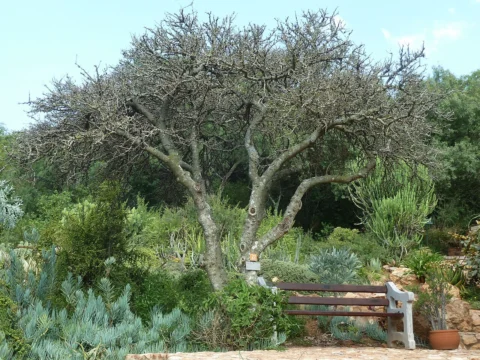

From the Namibian discussions
Windhoek growers suggested Kei apple, sand olive, old man saltbush and pineapple guava, and encouraged combining food plants with supporting vegetation. They also noted that several candidates grow slowly. These are local leads worth testing, not a promise that every species suits every boundary or needs the same care.
Choose the main job
A security hedge, a low edible boundary and a wind filter have different requirements. Decide which matters most before buying plants. A dense wall of foliage may shade vegetables; thorny growth can protect a boundary but obstruct a pavement, shared path or play area. Use existing local hedges as examples and ask how they are maintained.
Measure the space you really have
- Mark the boundary accurately and agree the planting with the person responsible for the land.
- Allow room for the mature hedge, pruning access and paths without assuming that all growth can be cut back indefinitely.
- Check the sun’s position and where winter shade will fall on your garden and your neighbour’s.
- Locate pipes, drains, overhead lines and gates before digging. Plan an irrigation route that can be inspected and repaired.
Select species by evidence
SANBI’s Kei apple account describes Dovyalis caffra as useful for hedging and notes that male and female flowers are generally on separate plants. A fruiting hedge therefore needs more thought than buying identical-looking seedlings. Ask about pollination, fruit litter and thorns as well as growth rate. Verify other species separately.
Establish in stages
Start with the most useful boundary section. Protect young plants from animals, keep labels and check water reaching each root area. Note gaps and mortality before ordering a second section. If a mixed hedge is intended, map each species so that later pruning and replacement can match its needs.
Namibian climate and microclimate
Windhoek frost pockets, reflective walls and coastal salt exposure favour different choices. An established hedge receiving garden runoff may use more water than it appears to. Ask owners about irrigation before copying it.
Your first practical step
Walk one proposed boundary with a tape measure. Compare three local hedges and record species, approximate age, width, watering and maintenance effort.
Watch and adapt
Publisher: ABC Gardening Australia
Country and context: Australia; exact filming locality not confirmed.
A layout lesson. Choose locally suitable species and examine sun, wind and water before copying rows or spacing.
Use the site-planning lesson to consider mature size and light. Hedge spacing and pruning still need species-specific advice.
Keep exploring
- Kei Apple
- How Windbreaks Can Save Water, Soil and Crops in Harsh Climates
- Water-Efficient Plant Selection
Sources and further reading
Have you tried this in Namibia? Share the site conditions, method and result—including what did not work—with the Living Earth community. Local observations help the next person adapt the idea.