
Sandponics is used for several sand-based growing approaches. Some connect fish production with planted sand beds; others use sand culture without fish. Ask for a complete system description before comparing claims.
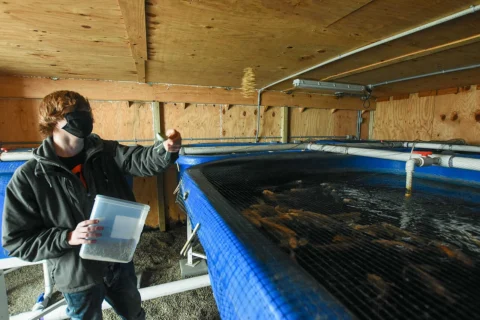
Photo: USDAgov · Original image · Public domain. Wikimedia display-size version; no crop or content edits.
.jpg)
From the Namibian discussions
The saved Namibian topic points to a short video, without a written local operating record. It is a useful design lead, but a clip cannot show all water inputs, fish losses, maintenance or costs. Local operators can help fill those gaps.
Distinguish it from an ordinary sand garden
Growing in sandy soil is covered elsewhere in this wiki. This guide concerns an engineered water-and-growing-media system, especially one linked to fish. Also distinguish a generic sand bed from a specifically documented integrated aqua-vegeculture design; names are not sufficient specifications.
Follow the water and waste
FAO’s aquaponics manual explains the relationships among fish, plants, bacteria, feed and water quality. A sand-based design still needs an account of oxygen, solids, nutrients and drainage. Ask what happens when a pump stops and how the fish are protected during a power interruption.
Questions before buying equipment
- Which fish, crop and water source was the design tested with?
- What sand particle sizes and chemical properties are required?
- How are drainage, aeration and accumulated solids managed?
- Which water measurements are needed, and who will take them?
- What are the daily feed, power, replacement-water and maintenance costs?
Use research as a comparison, not a guarantee
A published study of different sands with desalinated water found differences in system performance and called for further work with other sand qualities, crops and fish. It supports examining the medium, not assuming any local sand is interchangeable. Do not stock fish in an untested system simply because the water looks clear.
Start with a manageable learning system
Obtain a documented design and training, then prove circulation, drainage and the monitoring routine before stocking under expert guidance. Compare costs and food output with a simpler garden using the same available water.
Namibian conditions and microclimate
Hot exposed tanks, cold inland nights and coastal conditions affect a living water system differently. Water quality and salinity also matter. Shade must balance plant light with water-temperature management; a foreign greenhouse design is not automatically suitable outdoors in Namibia.
Try it locally and share what happens
Visit an operating system if possible. Ask to see several months of water, feed, power and harvest records, including failures. Share the system details alongside any recommendation.
Watch, understand, adapt
Growing fish and vegetables together
Country and context: Kazakhstan — Zhambyl region, presented by the Food and Agriculture Organization of the United Nations.
An example of greenhouse aquaponics and digital monitoring. It illustrates connected fish and plant production, not a sandponics construction method.
 Watch video▶ Watch at the source
Apply it locally: Treat this as a system-management example. A greenhouse in southern Kazakhstan has different seasonal and temperature-control needs from your Namibian site. It does not establish the right sand, fish stocking or water-management plan for a local sandponics system.
Keep exploring
Simple aquaponics · Sand gardening · Aquaponics problems