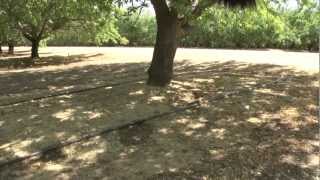

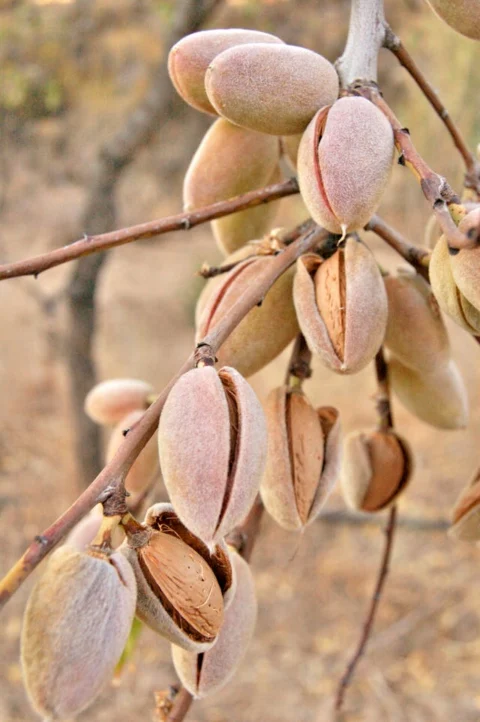
Growing almond trees in the desert requires careful planning and application of appropriate techniques to optimize water use and manage environmental stress. Here’s a deeper look into the best practices and some successful examples:
Best Practices for Growing Almond Trees in the Desert:
- Site Selection and Soil Preparation:
- Site Selection: Choose a location with full sun exposure, as almonds need long, sunny days.
- Soil Testing: Conduct soil tests to check for adequate drainage and pH. Amend soil with gypsum if necessary to improve structure.
- Irrigation Techniques:
- Drip Irrigation: Use drip irrigation for precise water delivery, reducing evaporation and ensuring water reaches the root zone.
- Scheduling: Monitor soil moisture and adjust irrigation frequency based on seasonal requirements, soil type, and tree age.
- Wind Protection:
- Windbreaks: Plant windbreaks or use artificial barriers to shield almond orchards from strong desert winds.
- Fertilization and Nutrition:
- Soil Fertility: Almonds need a well-balanced supply of nitrogen, potassium, and other micronutrients.
- Fertilizer Application: Use fertigation (fertilizer through irrigation) for efficient nutrient delivery.
- Pest and Disease Management:
- Integrated Pest Management (IPM): Implement IPM strategies like beneficial insects, pheromone traps, and minimal pesticide use.
- Pollination Management:
- Bee Colonies: Rent bee colonies during the bloom period to increase pollination rates.
Examples of Growing Almonds in Other Dry Regions:
- California, USA:
- California’s Central Valley produces over 80% of the world’s almonds. The region faces water scarcity, so farmers have adopted advanced drip irrigation and soil moisture monitoring to manage water usage effectively.
- Australia:
- South Australia’s Riverland and Victoria’s Sunraysia regions are dry but suitable for almond farming. Farmers utilize sustainable irrigation practices, including reclaimed water and desalination.
- Spain:
- In Andalusia and Murcia, almonds are cultivated in dry, rocky soils. Traditional rainfed cultivation has given way to supplementary irrigation methods.
- Israel:
- Israeli farmers have achieved high almond yields in the Negev Desert using innovative water management techniques like treated wastewater irrigation.
These regions demonstrate the adaptability of almond cultivation to arid climates through technology, sustainable practices, and meticulous planning.
Here is additional content you can add to the bottom of your Almonds article, written to maintain the current keyword density while expanding the page for SEO and usefulness. It includes growing tips, value chain insights, recipes, uses, global and African examples, and recommended resources.
Growing Almonds in Arid and Semi-Arid Zones
Almond trees, while typically associated with Mediterranean climates, are surprisingly well-suited to Namibia’s semi-arid and arid regions—provided the right cultivar is chosen and proper care is taken during establishment. What almonds need above all is excellent drainage, low humidity, and a reliable source of irrigation during flowering and fruit development. While mature trees are drought-tolerant, they will not bear well without sufficient moisture at critical stages.
Almonds do require winter chill hours—typically 250 to 500 depending on variety—but there are newer cultivars adapted to warmer winters. If you’re planting in Namibia, especially in regions like Otavi, Grootfontein, or Windhoek’s outskirts, consult with nurseries offering low-chill or subtropical cultivars such as ‘Tuono’, ‘Guara’, or ‘Independence’ (a self-fertile, patented variety that doesn’t need pollinators).
Shelter from wind and deep soils free from salinity are key. Mulching, water harvesting swales, and interplanting with legumes (like cowpeas or lablab) can help improve soil fertility and water retention over time.
Integrated Almond Orchards and Polyculture
Instead of monocropping, almond orchards can be designed using agroecological principles. In arid climates, it’s common to grow herbs, nitrogen-fixers, or fodder plants between rows. Lavender and rosemary, for instance, repel pests and attract pollinators. Groundcovers like vetch or clover restore nitrogen, while alley cropping with indigenous grasses can support small livestock during off-seasons.
A productive smallholder almond orchard can be paired with beekeeping. Honey yields increase with almond blossoms, and the bees help ensure effective pollination—especially important where cultivars are not self-fertile.
Almonds in Namibia: A Niche Opportunity
There is currently no significant commercial almond industry in Namibia, making it a unique opportunity for small farms and homesteads aiming to diversify and serve premium local or regional markets. While imports dominate the Southern African market (mainly from California and Spain), local demand for organic, pesticide-free nuts is on the rise—especially among health-conscious urban consumers.
Dryland-compatible almonds could be promoted as part of climate-smart agriculture strategies, particularly in areas like Karibib, Omaruru, and Okahandja where both sunlight and space are abundant. With appropriate marketing and storytelling—linking almonds to local regenerative practices—farmers could tap into niche export or tourism-linked value chains (farm tours, nut butter, wellness retreats).
Processing, Storage and Value Addition
Almonds are highly versatile and can be transformed into dozens of value-added products:
- Raw and roasted nuts
- Almond flour (gluten-free baking)
- Almond butter
- Almond oil (used in skincare and cooking)
- Plant-based milk
Traditional stone milling or small-scale oil presses can be used for rural or artisanal production. However, proper post-harvest handling is crucial. After harvesting, nuts must be dried to below 6% moisture to avoid spoilage. Shelling, sorting, and vacuum-packing help preserve flavour and freshness, especially in high-heat environments.
To extend shelf life, store almonds in cool, dark places. In Namibia, simple evaporative coolers or underground storage (like earthbag cellars) could work well for smallholders.
Delicious Almond Recipes
Here are three easy ways to incorporate almonds into your diet:
- Namibian Almond Porridge: Blend roasted ground almonds into your morning mahangu porridge for a protein-rich, nutty twist.
- Almond Date Balls: Combine pitted dates, crushed almonds, a dash of cocoa, and a hint of cinnamon. Roll into balls for a no-bake, nutritious snack.
- Almond Crusted Fish: Use crushed almonds as a crusting agent on locally sourced fish fillets. Adds texture and healthy fats.
For a fully local twist, experiment with marula oil and almonds in dessert recipes—both being drought-resilient crops with strong Namibian roots.
Almond-Based Agroenterprise Ideas
- Farm gate sales of raw or roasted almonds
- Almond and honey gift packs for tourists
- Eco-soaps and body oils using almond oil
- Subscription boxes for Namibian health food enthusiasts
- Workshops on making almond milk or almond-based desserts
These ideas align with Namibia’s shift toward value-added agriculture and could provide additional income, particularly for youth and women-led initiatives.
Global Examples and Success Stories
- Morocco: In the Atlas Mountains, small cooperatives grow drought-tolerant almonds alongside olives and argan, creating income for women and regenerating degraded hillsides.
- Spain: Andalusian farmers use dryland almond varieties intercropped with cover crops, reducing erosion and boosting yields naturally.
- Australia: The Riverland region shows how salinity-tolerant almond varieties can thrive under precision irrigation.
Worthwhile Books
- Almonds: Botany, Production and Uses by Ali M. Kader – a scientific but accessible overview of almond agronomy
- The California Almond Sustainability Program (free online PDF) – includes case studies, water-use strategies, and best practices
- Agroforestry for Sustainable Land-Use Fundamental Practices by P.K. Ramachandran Nair – includes sections on nut trees in dryland agroforestry
External Resources
- University of California Almond Growing Guide
- Sustainable Almond Farming in Arid Climates – FAO case study
- Almond Board of California – a comprehensive knowledge base
 Watch videoYouTube – How to Grow Almond Trees from Seed (Subtropical Edition)
 Watch videoYouTube – Almond Processing for Small Farms
 Watch videoYouTube – Dryland Almond Orchard Tour (Spain)
If you are experimenting with growing almonds in Namibia—or already have some success—please contact the Grow Your Food Africa team or comment below to share your insights for the benefit of all.