
Apricots can be rewarding, but early flowers can be lost to cold weather. Find a variety with a local cropping record before giving it a permanent place.
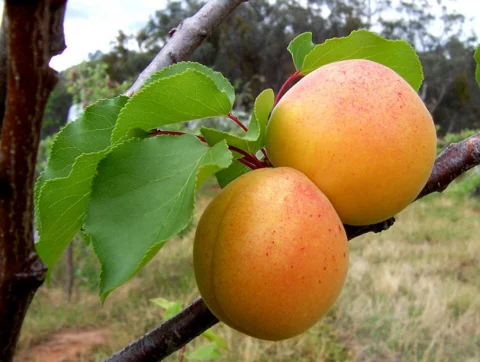

Choose a tree with a local record
Apricot is Prunus armeniaca. Ask for a named variety and rootstock, not just “an apricot”. Your aim is regular useful fruit, not simply a tree that survives.
- Ask nearby growers which varieties fruit at a similar elevation and exposure.
- Ask the nursery about winter chill, flowering time and pollination for its variety.
- Choose a sunny place that drains well, with space for the mature crown.
- Arrange water and protection from animals before planting.
- Keep the nursery label and start a flowering and harvest record.
Cold is not just one question
Deciduous fruit trees need suitable winter conditions, yet flowers can be damaged by a later frost. These are two different problems. A warm coastal site and a frost-prone inland hollow should not automatically receive the same variety.
Watch where cold air settles and where walls change the temperature around the tree. A sheltered corner can be useful, but the warmest corner is not always the best place for flowering at a safe time. Ask growers about actual crops after difficult springs. Overseas flowering dates cannot answer that question for Namibia.
Build a tree you can look after
Plan a shape that allows light and access for picking. Avoid letting a young tree become inaccessible and then trying to correct it with severe cutting. The RHS growing guide discusses training, watering and fruit thinning; Oregon State provides diagrams for orchard pruning. Both are from northern-hemisphere settings. RHS apricot guide; Oregon State pruning guide.
Keep track of which wood carries flowers before cutting. For apricots, dry-weather pruning is preferable to blindly following a winter pruning habit used for other fruits. Get help with a neglected tree before removing large branches.
Water the root zone and check soil moisture rather than following a fixed daily dose. Mulch can help protect the surface; keep it away from the trunk. Fruit load and tree size change the demand on a limited water supply.
Find the reason for a poor crop
- Flowers disappear after a cold night: note the date and minimum temperature if available. Consider flowering time when choosing future trees.
- No flowers: confirm the variety, tree age and winter conditions before buying another tree as a pollinator.
- Many small fruits and overloaded branches: seek guidance on thinning while fruit is young.
- Sticky gum or dying branches: photograph the affected area and ask for a diagnosis; gum alone does not identify one cause.
- Fruit lost near harvest: inspect regularly for birds, damage and ripeness; keep any protective netting safely secured.
Use the crop while it is good
A household tree can produce more ripe fruit at once than expected. Decide who will pick and use it before harvest begins. Record fresh use, sharing and waste as well as the total crop.
If drying or preserving, use a tested method and clean equipment. A sunny Namibian day does not by itself provide controlled drying or safe storage. Start with a small batch you can manage. Consider whether a tree with a different harvest period would be more useful than another of the same kind.
Watch and adapt
 Watch videoWatch: summer pruning of cherry and apricot trees
Grow Organic / Peaceful Valley, United States; exact filming location is unconfirmed. Watch branch selection and the purpose of pruning. Translate the season and growth stage to Namibia rather than copying a month. Publisher’s video page.
Keep exploring
Sources and further reading
Have you grown this in Namibia? Share your region, soil, water, tree age and result with the Living Earth community. A short local observation is useful even without a scientific trial. Tell readers what you saw, and encourage them to try a small test in their own conditions.