
Chickpeas, Cicer arietinum, offer a different pulse to try alongside locally familiar beans. The first question is whether a suitable variety can flower and fill pods within your site’s temperature and water limits. A packet of food chickpeas is not a planting calendar.
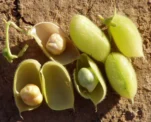

From the Namibian discussions
A Namibian participant asked when to sow chickpeas and whether anyone had cultivation experience. The saved exchange did not answer the seasonal question. This guide proposes a way to produce useful local evidence rather than inventing a national sowing date.
Choose planting material for the purpose
Australian GRDC guidance distinguishes desi and kabuli chickpeas and shows how variety, frost, heat and water stress affect production. Ask for named, healthy seed intended for planting and any local trial information. Record the supplier’s advice, but distinguish a recommendation for Namibia from advice written for an Australian winter-rainfall region.
Set up a modest comparison
- Choose a freely draining plot with enough water to establish the crop and support pod filling.
- Use one identified variety and record the number of seeds sown, spacing and sowing date. Follow the supplier’s crop-specific spacing guidance.
- If resources allow, compare two small sowing dates rather than risking the whole seed lot at once. Keep all other management similar.
- Record emergence, flowering, pods, irrigation and minimum temperatures. Count actual harvested dry seed, not just lush leaves.
Check the crop rather than the calendar
Inspect regularly for poor establishment, damaged pods and disease. If plants fail, keep a few photographs and note whether the problem coincided with cold, heat, wet soil or irrigation interruption. Do not assume that being a legume guarantees enough nitrogen: ask about a suitable chickpea inoculant and local soil advice before adding fertiliser.
Decide whether to repeat
Compare harvested kilograms with seed, water, time and costs in NAD. A small harvest may still justify household experimentation, but it is not a commercial yield estimate. Keep seed only from healthy plants and label the lot; cook harvested chickpeas using established food preparation methods.
Namibian climate and microclimate
Namibia’s coastal coolness, inland frost and northern summer heat can create different flowering windows. A drought-adapted crop still needs timely moisture. Test the actual microclimate and avoid transferring overseas month names directly.
Your first practical step
Obtain a small named seed lot and write down the conditions you want the crop to avoid during flowering. Ask a local grower or agronomist to help select the first trial date.
Watch and adapt
Publisher: ABC Gardening Australia
Country and context: Australia; exact filming location not confirmed.
A practical seed-raising lesson. Adapt light, watering and timing to your seed species and Namibian microclimate.
The seed lesson supports careful handling and record keeping; it is not a chickpea sowing calendar or evidence of local yield.
Keep exploring
Sources and further reading
Have you tried this in Namibia? Share the site conditions, method and result—including what did not work—with the Living Earth community. Local observations help the next person adapt the idea.