
Introduction
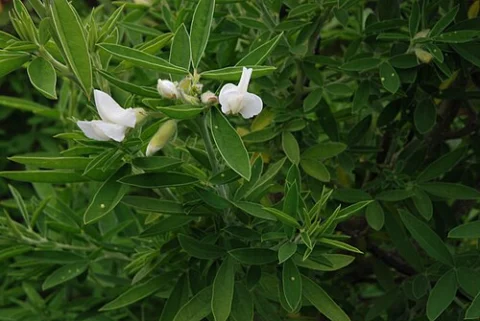
Tagasaste (Cytisus proliferus), also known as Tree Lucerne, is a fast-growing evergreen shrub or small tree originating from the Canary Islands. It has gained popularity in dry regions like Namibia as a high-protein livestock fodder crop, soil improver, and windbreak, especially on degraded or sandy soils.
Why Tagasaste Matters
- Drought-Tolerant: Thrives with as little as 250–400 mm of rainfall per year.
- High Fodder Value: Crude protein content of 18–24%, palatable to cattle, goats, and sheep.
- Nitrogen Fixing: Improves poor soils through root nodules with Rhizobium bacteria.
- Fast Growth: Can reach 3–5 metres in height within 1–2 years.
- Multi-Use Tree: Used for mulch, erosion control, green manure, bee forage, and firewood.
Ideal Growing Conditions in Namibia
- Rainfall: Minimum 300 mm/year, but will survive dry years once established.
- Soil: Prefers well-drained sandy or loamy soils with neutral to slightly alkaline pH.
- Temperature: Handles light frost but performs best in frost-free areas.
- Sun: Full sun required for best biomass production.
Planting and Management
- Propagation: Sow seeds in trays or directly into soil after hot water treatment to break dormancy.
- Spacing: 1.5–2.5 metres apart for hedges, 3–4 metres for open stands.
- Establishment: Weed control and initial watering are important.
- Pruning: Regular cutting every 3–6 months promotes leaf production and keeps plants bushy.
- Lifespan: Productive for 10–15 years with proper care.
Benefits for Smallholder Farmers
- Low Input Fodder System: Reduces dependency on expensive feed.
- Soil Rehabilitation: Rebuilds topsoil on overgrazed or bare patches.
- Livelihood Support: Can be integrated with goats, sheep, or mixed farming.
- Dryland Agroforestry: Excellent addition to alley cropping or silvopasture systems.
Challenges
- Invasive Potential: In wetter climates, it may spread aggressively.
- Overbrowsing: Young plants need protection from livestock in early years.
- Poor Tolerance to Waterlogging: Avoid clay-heavy, flood-prone soils.
Tagasaste in Namibia
Tagasaste is especially promising in the semi-arid zones of Namibia, including the Khomas, Omaheke, and Otjozondjupa regions. Pilot projects around Windhoek and Okahandja have shown strong results for both goat and cattle farming. The plant has also been trialled in regenerative grazing systems and permaculture guilds to provide year-round forage.
Worthwhile Videos
 Watch videoGrowing Tagasaste – Fodder Trees for Regenerative Grazing (YouTube)
 Watch videoTagasaste in Australia – Benefits for Sheep Farmers
 Watch videoEstablishing Tagasaste in Arid Climates
Further Reading & Resources
- “Tagasaste – A Productive Fodder Shrub for Dry Areas” by FAO
- “Agroforestry Guide for Drylands” – World Agroforestry Centre (ICRAF)
Here’s more:
Tagasaste (Tree Lucerne) – A Valuable Ally in Dryland Farming
Meta Title: Tree Lucerne in Namibia – Fodder, Soil Health & Dryland Farming
Meta Description: Discover how Tree Lucerne supports livestock and land restoration in Namibia and similar dry regions. A hardy, multi-purpose plant for dryland farming.
A Tree That Feeds, Restores and Protects
Across the dry hills of central Namibia, farmers have long sought a reliable, drought-resilient source of animal feed. Enter Tree Lucerne, a tall, shrubby plant that not only offers green feed in the dry season but also contributes to rebuilding depleted soils. Known scientifically as Cytisus proliferus, this evergreen leguminous shrub is increasingly seen as a friend to both livestock and the land.
While many associate fodder trees with wetter climates, this particular species has proven itself in some of the harshest semi-arid regions on earth. Once established, it provides year-round forage, withstands poor soils, and demands little attention beyond occasional pruning or harvesting.
From the Canary Islands to African Farms
Originally native to the Canary Islands, the species has naturalised in parts of Australia, South Africa, Kenya, and Ethiopia. In each of these countries, it has carved out a role in smallholder farming systems, especially where rainfall is erratic and feed shortages are common.
In Kenya’s Rift Valley, for example, dairy farmers have adopted this hardy shrub to supplement napier grass. The Kenya Agricultural and Livestock Research Organisation (KALRO) reports that milk yields increased by 30% on farms using Tree Lucerne leaves as part of their daily ration. Farmers appreciated its high protein content, quick regrowth, and the ability to cut feed costs in dry seasons.
In South Africa’s Karoo and Eastern Cape, where grazing pressure and soil erosion are constant threats, some regenerative agriculture initiatives have planted Tree Lucerne as living hedges to stabilise sandy soils and provide windbreaks. When pruned regularly, the leaves and twigs serve as a valuable green supplement for sheep and goats.
Ecological & Economic Advantages
Instead of competing with crops, Tree Lucerne complements farming systems in multiple ways:
- Perennial fodder: Even in the dry season, the plant holds onto its green leaves, making it a critical feed reserve.
- Natural fertiliser: As a legume, it improves soil fertility through nitrogen fixation, especially when pruned and left as mulch.
- Shade and shelter: In mixed systems, it offers shade for smaller animals and young crops.
- Low cost over time: While it requires care during the first year, mature trees need very little input.
In addition to its on-farm benefits, this plant has gained attention in climate adaptation strategies. With longer droughts and rising feed costs becoming the norm, integrating such multi-functional species becomes a logical step toward resilience.
Cultivation and Management
Growing Tree Lucerne is relatively straightforward but does require some planning:
- Propagation: Seeds need hot water treatment to germinate. They can be direct-seeded or started in trays.
- Establishment: Young plants should be watered during the dry season and protected from livestock.
- Spacing: For fodder production, spacing of 1.5–2 metres is ideal. For windbreaks, closer planting can be used.
- Harvesting: Leaf biomass is best harvested every few months through coppicing or pruning, allowing time for regrowth.
Although not a miracle tree, its fast growth and versatility make it one of the more promising fodder shrubs in arid Africa.
A Word of Caution
It’s important to note that in wetter areas, Tree Lucerne can become weedy if not managed. It also doesn’t tolerate clay-heavy soils or waterlogging. Farmers must assess local conditions carefully, ideally starting with small trial plots.
Potential in Namibia and Beyond
In Namibia’s Khomas, Omaheke, and Otjozondjupa regions, several regenerative agriculture trials have tested Tree Lucerne as part of goat and cattle grazing systems. The Kambashu Institute and local agricultural extension officers have noted positive results with improved animal body condition and reduced reliance on store-bought feed during drought years.
The Namibian National Farmers Union (NNFU) is also exploring how fodder trees can supplement mahangu-based systems and build resilience in communal areas. Partnerships with farmer cooperatives in Okakarara and Rehoboth have started including Tree Lucerne in alley cropping trials, with early indicators showing promise.
Elsewhere in Africa, the shrub has been tested in:
- Zimbabwe, especially in Matabeleland South where fodder shortages are severe
- Ethiopia, as part of World Agroforestry Centre projects combining soil conservation and livestock feed
- Botswana, where the National Agricultural Research Institute trialled it under silvopastoral systems
Recommended Reading and External Resources
- “Agroforestry in Dryland Africa” – ICRAF (World Agroforestry)
- “Fodder Trees: A Guide to Multipurpose Leguminous Species” – FAO
- South African Journal of Animal Science: Research articles on fodder tree nutrition
- Fodder Shrubs in Eastern Africa (PDF) – Excellent practical guide
Worthwhile Videos
 Watch videoTree Lucerne as Sustainable Fodder – Kenya Smallholder Success
- Watch videoTagasaste for Grazing Systems – Australia Case Study
- Watch videoHow to Grow Fodder Trees in Arid Regions
Final Thought
Some farmers call it the “tree that feeds the land and the animals.” Tree Lucerne is not new, but it is perhaps newly relevant. As African farmers adapt to changing climates, look for low-cost, high-impact options, and embrace agroecological thinking, trees like this may become key players in dryland regeneration — not just as emergency feed, but as part of long-term systems that restore life to tired soils.