Grow tomatoes at a scale you can water, support and harvest consistently. This guide follows the crop from variety choice and planting through pruning, pest checks, ripening and storage, with options for a small courtyard as well as a larger garden.
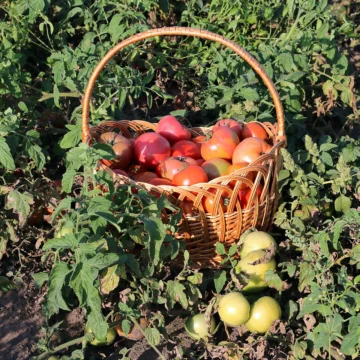

At a glance
- Botanical name: Solanum lycopersicum. Choose the variety for its growth habit, intended use and season.
- Growing space: a well-drained bed or a suitable large container with dependable water and support.
- Main routine: check root-zone moisture, tie growth gently, inspect leaves and fruit, and harvest regularly.
- Start small: a few well-managed plants can teach more than a large planting that outgrows the water or labour available.
From the Namibian discussions
The collection shared a method of laying leggy tomato stems into a trench to encourage roots, and a separate video about storage in ash. Neither saved item included a measured Namibian comparison. The planting idea is included below with its practical limits; ash contact is not presented as a proven or food-safe storage method.
Choose the variety and planting window
Bush or determinate varieties have a more limited growth habit and often a more concentrated harvest. Indeterminate varieties continue growing and need a support and training plan. Ask the seed supplier about fruit type, maturity, disease resistance and performance in conditions similar to yours. “Heirloom”, “hybrid” and “organic” do not by themselves identify the best variety for a particular garden.
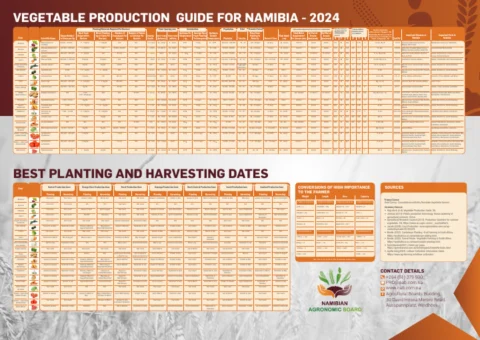
Plan backwards from likely frost, intense heat and water shortages. A plant may survive a difficult period yet set little fruit. Ask nearby growers about successful planting windows, then compare a small number of plants before committing the whole bed. Use the Namibian Agronomic Board’s production chart as a regional reference, not a promise of yield or a household watering prescription.
Prepare soil, containers and seedlings
Choose a sunny position with access for picking and good drainage. Improve soil with appropriate mature organic material and use a proper soil test where fertility or pH is uncertain. Vinegar, baking soda and coffee grounds are not substitutes for measured soil analysis and a suitable amendment plan.
For containers, choose adequate root volume for the mature variety, drainage holes and a stable position. A shallow pot that dries before you can return is a poor match for a vigorous vine. Prepare support before roots fill the bed. Harden seedlings gradually for outdoor sun and wind, and avoid transplanting plants with suspect stems or badly damaged roots.
Follow the seed supplier’s spacing for the variety and support system. Leave room to reach both sides for inspection and harvest; crowding plants to fit more into a narrow strip can make them harder to manage. Record variety and planting date on a durable label.

Plant ordinary and leggy seedlings carefully
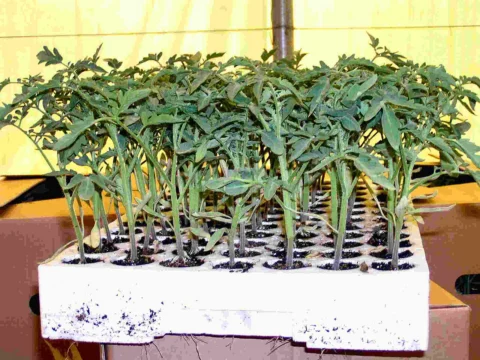
Water the root ball before transplanting and settle it into moist soil. Healthy tomato stems can form additional roots when buried. For a leggy plant, Maryland Extension describes deep or horizontal planting: remove leaves that would be buried, lay the stem gently and keep the growing tip above the surface. Do not force a brittle stem into a sharp bend.
Mark the direction of a buried stem so later staking or hoeing does not cut it. Place irrigation where it wets the root zone rather than only the visible tip. Trench planting does not cure disease or replace better nursery light, and it should not be transferred automatically to other plant species.
Water and feed for steady growth
Check moisture below the surface and adjust irrigation to the soil, container and weather. Aim for steady availability without saturation. Use mulch appropriately, keeping it clear of the main stem, and inspect drippers so a blocked outlet does not leave one plant dry while the rest look well watered.
Plan fertility from soil information, crop demand and the product instructions. More nitrogen is not always better: lush foliage alone is not the objective. Keep fertiliser and compost applications in the growing record. A liquid homemade preparation is not automatically balanced nutrition or hygienically suitable for contact with edible fruit.
Support and prune for the variety
Use a frame, cage or stakes that remain secure when loaded with mature growth and exposed to local wind. Soft ties should support rather than constrict stems. Check them as plants grow, and keep foliage off wet soil where practical.
Do not remove all side shoots from a bush tomato as though it were a single-stem climbing crop; that can remove productive growth. For indeterminate plants, choose a manageable training system and remove selected shoots while small. Retain enough leaf cover to protect fruit from sunscald. Excessive stripping is particularly unhelpful in intense sun.
Remove damaged or suspect material thoughtfully, clean tools when dealing with disease and avoid handling plants unnecessarily when wet. The objective is accessible, healthy growth—not a bare plant or maximum pruning.
Recognise trouble before choosing treatment
Inspect new growth, leaf undersides and fruit. The NAB chart lists local concerns including whiteflies, mites, aphids, leafminers, nematodes and tomato pinworm. Identify the actual organism or symptom before treating; a North American pest list should not be copied as a Namibian diagnosis.
A dark sunken patch at the blossom end may be blossom-end rot, a physiological problem involving calcium supply to developing fruit. Irregular water uptake can contribute even where soil contains calcium. Review watering and root conditions and obtain advice before adding amendments; crushed eggshells are not an immediate cure.
Keep healthy transplants, manage weeds and crop residues, and rotate sensibly with other crops. Preserve useful natural enemies. If a pesticide is necessary, use a locally appropriate product and its current label, including harvest restrictions. Homemade mixtures and “organic” labels do not remove the need for correct identification and careful use.
Harvest, ripen and store with less loss
Handle fruit gently and move it out of harsh sun. Separate sound ripe tomatoes, fruit still ripening and damaged or decaying fruit. Inspect the stored harvest daily rather than waiting for one soft fruit to spoil the rest.
Sound fruit that has reached the mature-green stage can continue ripening after harvest. Very immature fruit is a different prospect. Use a clean, protected, ventilated place and monitor the result; a hot inland kitchen is not the same as a controlled store. Do not seal damp fruit into an unmanaged container or coat it with unidentified ash.
Use ripe fruit promptly or refrigerate it when needed to prevent loss. Refrigerate cut tomatoes and prepared dishes appropriately. For surplus, follow tested freezing, drying or preservation guidance rather than improvising a shelf-stable jar recipe. The separate green-tomato-pickling guide remains available because preservation is a distinct task.
Save seed and keep a season record
If saving seed, select healthy plants and understand the difference between open-pollinated and hybrid varieties. Keep variety labels through harvesting, seed cleaning and drying. The retained seed-saving film shows options; compare them with a reliable seed-saving reference and test germination before relying on a whole stored lot.
Record usable kilograms, losses, irrigation, material costs in NAD and time spent supporting and picking. This makes a local success reproducible and helps you choose whether more plants, a different season or better storage would actually help the household.
Namibian climate and microclimate
Coastal humidity, inland frost, northern heat and strong wind change the crop’s needs. Observe the actual bed, not only the regional forecast. A sheltered wall can help in cool conditions but trap heat later. Temporary protection may help establishment; permanent deep shade can reduce production.
Your first practical step
Choose a manageable number of plants, confirm whether the variety is bush or climbing, and prepare water and support before transplanting. Keep one record from planting to the last harvest.
Watch and adapt
 Watch videoHow to grow the tastiest tomatoes — ABC Australia. Australia; exact filming locality not confirmed. Use the growing principles while adapting season, irrigation and protection to your site.
 Watch videoHow to Prune Tomatoes for Maximum Yield and Plant Health — Epic Gardening
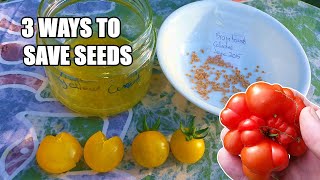 Watch video3 Favorite Ways to Save Tomato Seeds WITH a Germination Test — Rob Bob's Aquaponics & Backyard Farm
The pruning film is from Epic Gardening; exact filming country was not confirmed. Rob Bob’s seed-saving resource has an Australian gardening context. Watch with your variety and seed-saving objective in mind; neither supplies a Namibian planting calendar.
More original viewing resources
 Watch videoGrowing Tomatoes in Aquaponics at Home- Its easy with Aquaponics! 🍅🍅🍅 — Aquaponic Gardener
 Watch videoGrow Lots of Tomatoes… Not Leaves // Complete Growing Guide — Next Level Gardening
 Watch videoAgriculture in the Negev – Today's Desert Pioneers — Ben-Gurion University | אוניברסיטת בן-גוריון בנגב
The Ben-Gurion University film concerns the Negev in Israel. It illustrates a dry-region agricultural setting, not a low-cost recipe for Namibia. Exact filming countries for the other two resources were not confirmed. Aquaponic production also needs system-specific nutrient, water and power management.
Photographs and visual references from the original guide
These original references remain available for continuity. The linked images are not evidence for a particular yield, pest diagnosis or farm location.
- Original visual reference 1
- Original visual reference 2
- Original visual reference 3
- Original visual reference 4
- Original visual reference 5


Keep exploring
- Favored Vegetables
- Backyard Aquaponics
- Wicking Beds
- Bag Gardening
- Raised Beds
- Deep Soil
- Green tomato pickles: preserve the family flavour safely
- Leafminers: read the damage before treating the garden
- Take a useful soil sample before buying amendments
Sources and further reading
- NAB: Vegetable Production Guide for Namibia, 2024
- University of Minnesota: growing tomatoes
- University of Maryland: tomato growing and planting
- University of Georgia: homegrown tomatoes and ripening
- National Center for Home Food Preservation: tomatoes
Have you tried this in Namibia? Share the variety, season, water, soil, method and result—including what did not work—with the Living Earth community. Your local experience helps others adapt the guide.
Documents to read or download