
A planting basin concentrates water near a plant. A swale is a longer earthwork whose alignment and overflow affect a wider area. Both can influence runoff, but they are not interchangeable shapes to copy from a photograph.
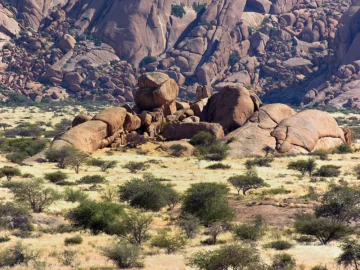

From the Namibian discussions
A message labelled a Namibian demonstration as micro-swales, while the video itself is titled as a zaï-pit demonstration. This is a useful reminder to describe what a structure actually does. Local names can vary; the water’s route matters more than the label.
Trace the incoming water
Walk the site after rain and mark where water originates, spreads, concentrates and leaves. Keep road runoff, contaminated water and major drainage channels separate from a small garden trial. FAO water-harvesting guidance distinguishes techniques by their catchment and intended use.
Decide the scale of the intervention
A few shallow planting basins can be inspected and adjusted by hand. A long berm may divert much more runoff and affect paths, neighbours or buildings. Do not extend a small successful basin into a large contour earthwork without assessing the slope, soil and overflow capacity.
Plan what happens when it fills
- Mark a safe route for excess water before digging.
- Avoid placing structures against foundations or unstable banks.
- Keep access for inspection and repair.
- Check after the first substantial rain for erosion, overtopping and prolonged ponding.
Keep the comparison visible
Record the original surface, the change made and the plant response. If you also added compost, mulch and irrigation, note those inputs. A greener patch can have several causes. Share photographs from the same position so others can understand the site and the maintenance needed.
Namibian climate and microclimate
Short intense Namibian storms can exceed the capacity of a small garden feature quickly. Sandy ground, crusted surfaces and rocky slopes produce different runoff. Begin with a low-consequence trial and obtain competent design help for work that could redirect significant water.
Your first practical step
Draw the route water takes into and out of one proposed planting basin before changing the ground.
Watch and adapt
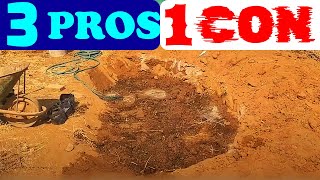 Watch videoWatch: How to Actually make a Zai Pit
Publisher: The Food Forest Namibia
Country and context: Namibia, as identified by the publisher.
A local demonstration of a small water-harvesting pit. It is not a waffle-garden demonstration or an engineering design for a large swale.
The local video demonstrates a pit. Use it to understand a small planting feature, not to size a large swale or embankment.
Keep exploring
- Swales
- Zaï pits: begin with a small runoff-catching trial
- Rainwater Harvesting in Arid Regions: Practical Solutions for Water Security in Southern Africa
Sources and further reading
Have you tried this in Namibia? Share the site conditions, method and result—including what did not work—with the Living Earth community. Local observations help the next person adapt the idea.