
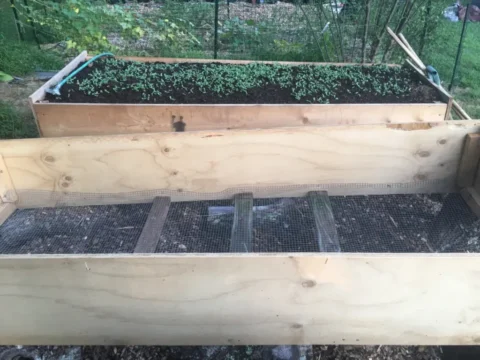
Raise a small batch of trees with space for air beneath their roots. Start with a trial you can water reliably, then compare the plants after planting out.
Start with one small trial
Air-pruning means letting an exposed root tip dry and stop extending. Other roots can branch inside the growing mix. The aim is a useful root system; the whole seedling must stay watered.
Choose one species and a planting destination before building. Keep some seedlings in your usual containers for comparison. If daily care and backup water are uncertain, improve those first.
- Put the nursery near its water source and the person caring for it.
- Choose a bench or bed that stays stable when the growing mix is wet.
- Keep a clear air gap below the root openings.
- Label the species, seed source and sowing date.
- Check moisture through the growing mix, including edges, each day.
See how the bed is built
 Watch videoHow to Build an Air Prune Bed — Cornell Small Farms
United States: Cornell’s accompanying guide describes New York nursery practice. Look at the frame, mesh and access for lifting plants. Its cold-winter timetable and tree list are not a Namibian planting calendar. Read the illustrated companion guide.
Choose between a shared bed and separate containers
A shared bed holds many plants in one body of growing mix. An open-bottom container keeps each plant’s root plug separate. Both need the root openings exposed to air; a solid tray or wet ground directly beneath defeats that purpose. Container dimensions also affect water storage and handling. US Forest Service: choosing nursery containers.
For a first community trial, separate containers may make labelling and distribution easier. A shared bed needs a plan for separating roots and moving plants promptly. Do not assume that every species tolerates bare-root lifting. Get advice for the species before committing a whole batch.
Use sound framing and a securely fixed base that retains the mix. Turn sharp wire edges away from hands. Make the bed narrow enough to reach its centre without stepping into it. There is no universal bed depth: decide around the species, time in the nursery and lifting method. Northeast Edible’s construction example is from the United States and uses imperial measurements; adapt the design and measure your own materials in centimetres.
Make it work in your microclimate
An exposed bed can dry faster than ground-level containers. In Namibia, check the afternoon wind, reflected heat from metal or paving, and how far someone must carry water. Shade and wind shelter should protect seedlings without closing off the air gap. Compare the exposed edge with the middle when checking moisture.
A coastal nursery and a hot inland yard will not need identical watering. Judge the mix and the plants rather than copying a fixed litres-per-day recipe. Record water used by the whole batch, including losses. Better-looking roots alone do not prove that the nursery saves water.
Look below the leaves
- Roots reaching wet soil below: restore the air gap and get species-specific advice before cutting substantial roots.
- Dry edges and wilting: check irrigation coverage, wind and heat before adding more seedlings.
- Soft, wet mix: check drainage and watering. An open base cannot fix every unsuitable growing mix.
- Roots tangled between plants: review spacing and lifting time. Do not pull plants out by their stems.
- Healthy nursery plants dying after delivery: check handling, planting-site moisture, browsing and follow-up care.
Prepare the planting day before lifting
Arrange planting holes, water, transport and protection from animals first. Gradually adjust nursery plants to the conditions they will face. Hardening is not an instruction to leave seedlings severely wilted. Keep roots protected from drying during handling. FAO’s tropical tree nursery manual explains the importance of root condition and planting stress.
For container plants, support the root plug while removing the container. For shared beds, confirm the correct lifting season and method for that species. Do not copy an American dormant-season bare-root method for an actively growing Namibian tree.
Keep the learning in Namibia
The earlier wiki pages proposed air-pruning for African agroforestry. They did not document a Namibian comparison supporting their numerical growth and survival claims. Treat the method as an option to investigate, not a promised percentage improvement.
For example, compare ten seedlings in each system, using the same species and seed batch. This is a practical learning exercise, not a formal trial. Record labour, materials in NAD, watering, losses before planting and survival afterwards. Follow both groups through the same difficult weather. Share what failed as well as what worked.
The earlier species suggestions included ana tree, moringa, acacias, leucaena, Senna siamea, pigeon pea, mango, guava and marula. This was a list of possible nursery subjects, not a tested planting recommendation. Check identity, suitability and local restrictions before growing or distributing any species.
Keep exploring
Sources and earlier material
The linked Cornell, US Forest Service, FAO and Northeast Edible resources provide the technical background. Their settings differ from Namibia. We have kept the earlier illustrations as reference links while their reuse permissions are checked:


Further reading retained from the earlier guides: The Forest Garden Greenhouse by Jerome Osentowski; Restoration Agriculture by Mark Shepard; and Edible Forest Gardens by Dave Jacke and Eric Toensmeier. These are wider design resources, not proof of a Namibian nursery result.