Cucumbers can provide a regular fresh harvest from a bed, container or reachable trellis. Choose the variety, water supply and support together, then follow the crop through flowering, picking and seed saving. A compact growing space still needs a dependable root zone and daily attention during heavy harvest.

At a glance
- Botanical name: Cucumis sativus; slicing, pickling, bush and climbing types serve different purposes.
- Season: warm conditions without frost; confirm a local planting window and the variety’s needs.
- Water: reasonably even root-zone moisture with drainage, adjusted to the actual soil and weather.
- Space: a trellis can reduce the ground footprint, but needs wind resistance and harvest access.
From the Namibian discussions
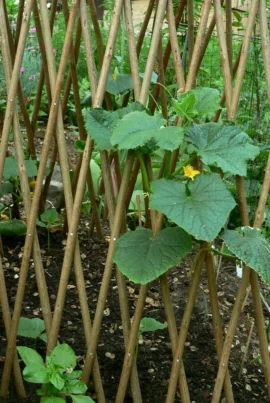
The collection saved a cucumber-trellis idea as visual inspiration. It did not report measured dimensions, yield or performance. The useful local question is how to make a support that works with your courtyard, available materials, wind exposure and variety.
Choose a variety and a place
Decide whether you want cucumbers for fresh eating or a tested pickling recipe, and whether the plant will climb or remain relatively compact. Ask about disease resistance and the variety’s flowering habit. A named variety appearing in an overseas guide is a lead, not proof of reliable performance in your Namibian microclimate.
Select a sunny site with workable soil and a reliable water source. Allow room for harvesting and for air to move through the plants. A large container needs suitable growing medium, drainage and enough root volume for the chosen plant. Do not trade away the entire rooting space merely to fit a tall trellis into a tiny corner.
Sow and establish without unnecessary disturbance
Plant into warm soil after frost risk has passed, following the seed packet’s depth and spacing for the cultivar. Prepare the bed and support first. If using transplants, choose young healthy plants and keep the root ball intact; an overgrown tangled transplant may establish poorly.
Label the variety and sowing date. Check emergence, soil moisture and early damage. Thin or space plants according to the intended system instead of leaving a crowded cluster because every seed germinated. Harden nursery plants to outdoor conditions gradually.
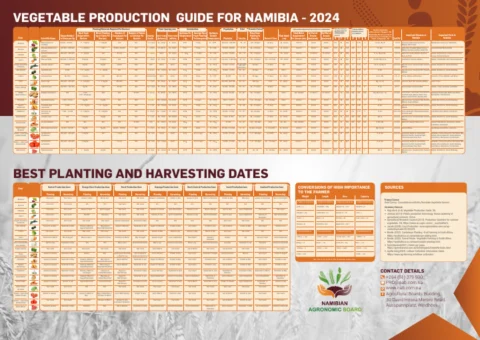
Use the NAB production chart as a Namibian planning reference, while adjusting for the actual variety and growing system. Broad regional calendars and commercial figures do not replace watching soil temperature, water availability and frost at the garden.
Build a trellis you can maintain
- Use sound material, with no sharp edges or exposed wire ends where people work.
- Anchor the structure for mature vines and the local wind, not just for small seedlings.
- Keep the top reachable and leave a clear picking route.
- Install supports before roots occupy their positions.
Guide young shoots gently onto the support and use loose ties where needed. Recheck ties as stems expand and look behind leaves for hidden fruit. If wind tears leaves or harvest becomes difficult, revise the design before repeating it. A porous windbreak may be useful, but placement needs observation because barriers change airflow.
Pruning is not one fixed recipe for every cucumber. Follow guidance appropriate to the variety and training system. Avoid stripping leaf cover simply because a video promises maximum yield; the leaves support growth and help protect fruit.
Keep water and nutrition consistent
Check the soil beneath the canopy and below the dry surface. Use mulch appropriately and measure what the irrigation system delivers. A fixed weekly volume copied from a wetter climate can be badly misleading in a windy Namibian container garden.
Aim for moisture that supports active growth without waterlogging. Manage weeds while small and keep fertility appropriate to soil information and crop needs. If a plant repeatedly wilts, investigate moisture, roots, heat and damage before adding fertiliser. Keep irrigation changes in the crop record so later comparisons are meaningful.
Understand flowers and pollination
Many cucumber varieties have separate male and female flowers. A small immature fruit behind the female flower helps distinguish it. For pollination-dependent types, insects need access to flowers; a protective cover left closed can prevent fruit set.
Some varieties set fruit without pollination, and predominantly female varieties can have particular pollen requirements. These are different traits. Ask the supplier about the actual cultivar before choosing netting, greenhouse management or hand pollination. Misshapen or absent fruit warrants checking pollination and plant stress rather than automatically spraying.
Inspect pests and disease in context
Look at young growth, leaf undersides and fruit during the normal watering and picking routine. Record symptoms and seek identification before choosing a response. Keep American cucumber-beetle examples in their geographic context instead of assuming that a similar-looking local insect causes the same disease.
Start with healthy planting material, manageable plant density, suitable watering and crop hygiene. Avoid indiscriminate sprays that can harm pollinators and natural enemies. If a treatment is needed, use appropriate local advice and follow the current product label, including harvest restrictions.
Harvest for the variety and intended use
Pick while fruit is tender and at the size and colour appropriate to the variety. Not all cucumbers are long or dark green. Inspect frequently once production begins, use a clean knife or scissors where needed and avoid pulling vines off their support.
Keep harvested fruit shaded and handle it gently. Plan prompt use and appropriate cool storage rather than leaving it in a hot vehicle or closed sunlit room. Clean fruit can be used fresh in salads, sandwiches or yoghurt-based dishes; keep prepared foods under suitable refrigeration. For pickles, use a tested preservation method.
Heat and water stress can contribute to bitterness in susceptible varieties. Do not eat unusually or intensely bitter fruit or try to make it acceptable by cooking. Record which plants and conditions produced it and review the variety and growing conditions.
Save seed deliberately
Choose healthy plants of an appropriate open-pollinated variety if your aim is to reproduce its characteristics. Different cucumber varieties can cross, and seed saved from an F1 hybrid may not grow true to type. Eating-stage cucumbers usually have immature seed; seed fruit must remain much longer on the plant.
Follow the Seed Savers Exchange guide for maturity, cleaning, drying and isolation. Label the variety, year and any uncertainty about crossing. Store thoroughly dried seed in suitable cool, dry conditions and test germination before depending on an old lot. Seed saving should be planned separately from the normal tender-fruit harvest.
Namibian climate and microclimate
An exposed trellis can lose moisture and suffer wind damage faster than a sheltered bed. Coastal humidity may change leaf-disease pressure, while inland frost limits the season. Compare the root zone and canopy conditions in the place you intend to grow, and protect young plants without leaving them in permanent deep shade.
Your first practical step
Choose one short, reachable trellis or a manageable bed, confirm the variety’s pollination needs and keep a record of water and usable harvest for one season.
Watch and adapt
Framing Success — ABC Gardening Australia. Australia; exact filming locality not confirmed. Apply the support principles using locally available material and suitable anchoring.
 Watch videoHow? When? Why? Prune Cucumbers High Yields Maximum Production Small Spaces… Simple and Easy — Easy Garden Hacks
The Easy Garden Hacks pruning video is retained from the original guide. Filming country and cultivar were not confirmed. Treat its training method as an example to compare with your variety, not a universal instruction or yield guarantee.
Photographs and visual references from the original guide
These original references remain available for continuity. The linked images are not evidence for a particular yield, pest diagnosis or farm location.

Keep exploring
- Favored Vegetables
- Fences
- How Windbreaks Can Save Water, Soil and Crops in Harsh Climates
- Drip Irrigation
- Mulch
- Green tomato pickles: preserve the family flavour safely
Sources and further reading
- NAB: Vegetable Production Guide for Namibia, 2024
- University of Minnesota: growing cucumbers
- Iowa State University: cucumber flowering, varieties and harvest
- Seed Savers Exchange: growing and saving cucumber seed
Have you tried this in Namibia? Share the variety, season, water, soil, method and result—including what did not work—with the Living Earth community. Your local experience helps others adapt the guide.
Documents to read or download