
Pigeon pea, Cajanus cajan, is a shrubby legume grown for food and other farm uses. It may fill a useful role in a warm, adequately watered garden, but its mature size, season length and competition with nearby crops should be part of the plan.
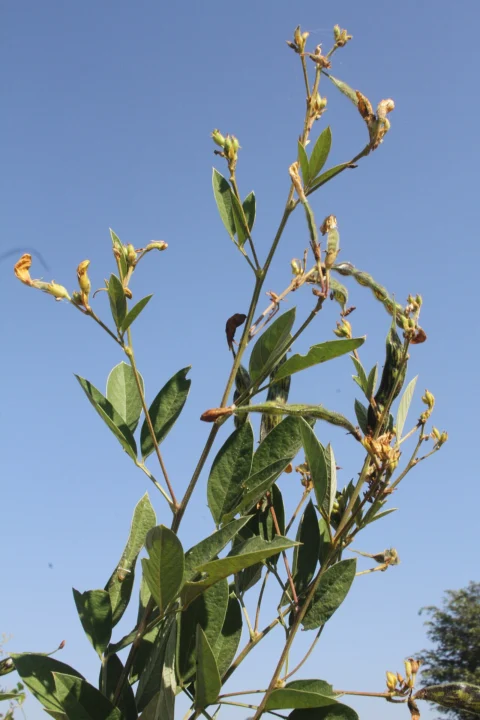
.jpg)
From the Namibian discussions
A Namibian grower described sowing pigeon peas with other species between existing olive trees to produce biomass for the row. The message described the intended system, not a measured harvest. Keep the idea while testing the pigeon peas separately enough to see what they contribute.
Choose the main purpose
Tropical Forages describes substantial differences between pigeon-pea types and notes sensitivity to frost and waterlogging. Ask whether the seed is an early food variety or a longer-lived type. Food harvest and repeated cutting for biomass are different objectives; heavy pruning may work against a desired seed crop.
Plant where you can observe it
- Use correctly identified seed and record the variety or source.
- Give plants room and access for harvesting; keep a small comparison area without pigeon pea beside the main crop.
- Protect young plants and check root-zone moisture. Observe drainage after watering or rain.
- Record height, flowering, food harvest, prunings and the response of neighbouring plants.
Count costs as well as functions
Shade and mulch have value, but so do the water and light used to grow them. Do not infer a fertiliser saving simply from the word legume. If you need to investigate nitrogen fixation, ask how to check effective nodulation and whether inoculation is appropriate for your seed and soil. Do not apply a livestock feeding rate from another animal or region.
Keep a manageable edge
Harvest and remove unwanted seedlings where necessary. A support planting should remain easy to supervise, particularly beside paths or shared boundaries. Use established cooking methods for identified edible peas, and obtain separate advice before making the crop a major feed ingredient.
Namibian climate and microclimate
Warm northern conditions may suit a longer season better than a frosty inland garden. Shelter can help establishment but does not erase frost risk. Sandy soils can drain well while losing moisture quickly.
Your first practical step
Plant a small labelled row and decide in advance whether you are testing food production or mulch production. Record the result separately.
Watch and adapt
 Watch videoWatch: Build a Nursery & Grow Trees
Publisher: Community Forests International
Country and context: Exact filming country not confirmed; Swahili with English subtitles.
A general seedling-care lesson, also catalogued by World Agroforestry. It is not a species-specific growing demonstration.
The general nursery lesson is useful for handling plants; pigeon peas can be direct-sown and need their own variety and seasonal decisions.
Keep exploring
- Lablab
- Agroforestry: Revolutionary Farming with Trees for Soil Health & Climate Resilience
- Biomass Plants
Sources and further reading
Have you tried this in Namibia? Share the site conditions, method and result—including what did not work—with the Living Earth community. Local observations help the next person adapt the idea.