
Earwigs are recognisable by the pincers at the end of their bodies. Some can damage tender crops, while also feeding on other insects. Their presence calls for observation before a decision to control them.
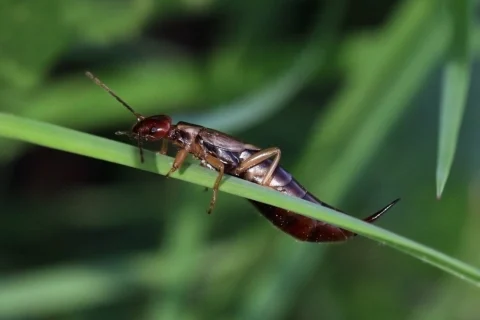
Photo: Charles J. Sharp · Original image · CC BY-SA 4.0. Wikimedia display-size version; no crop or content edits.
_female.jpg)
From the Namibian discussions
The saved group question asked whether earwigs occur “here”. It is a useful invitation to build local records. A photograph, town or region, habitat and date will be more helpful than assuming that an overseas identification applies.
Look for the actual feeder
Check damaged plants after dark with a torch. Leaf holes alone are not a diagnosis: caterpillars and other animals may leave similar damage. Record what you see feeding, rather than only what shelters nearby.
Understand the habitat
UC IPM describes earwigs as night-active insects that shelter in cool, moist places during the day. It reports both seedling injury and predation on aphids. Its principal pest example is the European earwig in California; that is not a survey of Namibia’s earwig fauna.
Protect a small vulnerable area
- Keep seedlings under close observation while they are small.
- Inspect movable objects close to damaged plants for daytime shelter.
- If earwigs are confirmed as the feeder, assess a simple shelter trap near the affected bed and inspect it each morning.
- Reassess plant damage before extending control through the garden.
A short section of hollow tube or rolled paper can reveal sheltering insects. Avoid abandoning traps, removing every piece of habitat or drying the crop’s root zone merely to make the surface less inviting.
Judge results by plant health
A trap count is only one observation. Record new damage, seedling survival and whether aphids increase or decrease. If crop injury stops, continuous trapping may no longer serve a purpose.
Namibian conditions and microclimate
A watered, shaded seedling corner can support different insects from the dry ground outside it. Look for excess surface moisture or leaks while retaining enough irrigation for the plants. Coastal and inland conditions may produce different activity patterns.
Try it locally and share what happens
Inspect one damaged bed after sunset and again early the next morning. Share clear photographs of the insect and damage, with the location and watering conditions.
Watch, understand, adapt
How to trap earwigs
Country and context: United States — University of California IPM; California garden guidance.
A short demonstration of trapping where earwigs have become a problem.
 Watch video▶ Watch at the source
Apply it locally: Use identification and actual damage to decide whether trapping is warranted. Protect non-target animals and do not generalise California species behaviour to all local earwigs.
Keep exploring
Insect habitat · Aphids · Mulch