
Crop rotation means growing different plant families in the same bed over successive plantings. It can help interrupt some pest and disease cycles and diversify the way crops use the soil. It belongs alongside soil care and regular observation. FAO: species diversification
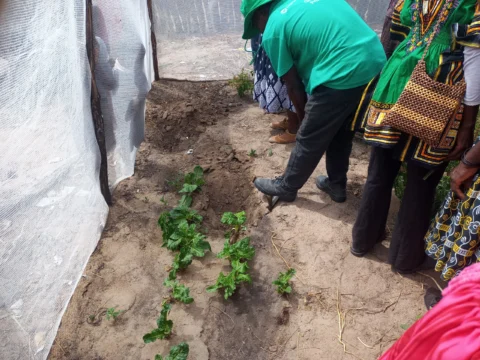

Where it fits
Use this approach when planning annual vegetables in a home garden, community plot or farm. For a Namibian garden, choose crops that fit your available water and local planting season before deciding their order. The sequence below is a planning example, not a planting calendar for every region.
Start with plant families
Changing the vegetable name may leave you with the same family. Tomatoes, potatoes and peppers belong together; cabbage, kale and radishes form another group. Beans and peas are legumes, while pumpkins and cucumbers are cucurbits. Plan changes between families rather than following a simple “fruit, root, leaf” wheel. FAO: crop rotation
Make a simple plan
- Draw your beds on paper and give each one a name or number.
- Write down what grew in each bed last time, including its plant family.
- Choose the crops you want to eat or sell next, then check their season and water needs.
- Where practical, allocate a different family to each bed for the next planting.
- Record the harvest and any problems before planning again.
For example, consider a bed that held tomatoes. A locally suitable bean crop would change the family; peppers would not. A later cabbage crop would change it again. This illustrates the decision, without prescribing the months or guaranteeing control of a particular disease.
Water, soil and limited space
Make the plan fit the garden you can maintain. You do not need to enlarge a small plot just to draw four equal beds. Where rotation is difficult, growing a diversity of plant families is another useful part of soil care. University of Minnesota Extension: healthy garden soil
Common mistakes
A rotation chart does not diagnose a sick plant or specify its treatment. If the same problem returns, record the symptoms and seek a diagnosis before deciding what to grow next. Keep a separate record of watering and soil additions so you can judge the whole growing system.
Try this today
Choose one bed. Write down its last crop and identify its family. Then list two crops from different families that your household would use. Check their planting requirements in the guides below.
Make it work where you live
Namibia has many growing climates
A coastal garden, a frost-prone inland plot and a northern homestead can need very different planting choices. Namibia’s short rainy season and high evaporation make water planning central, but a country label is only the starting point. Atlas of Namibia
Read the microclimate of each bed
- Sun and heat: note morning sun, afternoon shade and hot surfaces beside the bed.
- Wind: compare exposed plants with those behind a permeable shelter; check whether protection also creates too much shade.
- Cold: ask where frost settles and record minimum temperatures if you have a thermometer.
- Water: watch where irrigation reaches, where runoff gathers and which patches dry first.
Shade and wind protection can change growing conditions. Their suitability depends on the crop and site: start with one small comparison and keep notes. Shade guidance · Windbreak guidance
For rotation: change plant family where practical, while keeping the next crop in a bed whose light, temperature and water supply suit it. An identical four-bed diagram is not a requirement.
Watch, understand, adapt
Worthwhile videos
The notes below explain why each resource was chosen and how to adapt it. Country refers to a confirmed filming location where available; otherwise it identifies the publisher.
Post Summer Prep and Plant
ABC Gardening Australia · Josh Byrne
Perth, Western Australia — filming location stated by ABC
Watch on ABCVideo and written guide
What to learn
Useful for seeing how crop changes, bed preparation and drip irrigation fit together. ABC’s accompanying notes explain rotation between plant families.
Adapt for Namibia
Perth has a winter-rainfall pattern. Much of Namibia relies on summer rain, while the coast and far south differ again. Choose your own planting window and water budget; do not copy the broadcast month or its soil-amendment recipe. Use plant families to check any simplified “leaf, root, fruit” grouping.
Microclimate check
A sheltered or shaded bed may suit a different crop from an exposed bed. Rotate with those differences in mind.
Open video at source ↗ · Publisher’s notes · Location / climate background
Keep exploring
Soil · Beans · Tomatoes · Cabbage · Companion planting