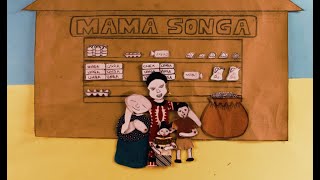
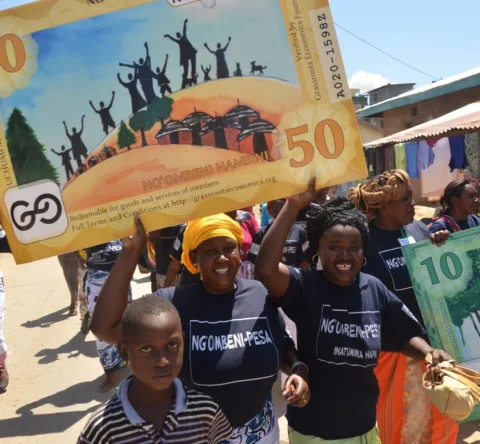
In the face of rising inequality, unreliable income, and limited access to money in many African communities, Grassroots Economics in Kenya has pioneered a compelling model of economic coordination through community inclusion currencies (CICs). Their flagship initiative, the Sarafu Network, offers a powerful case study in how local, decentralised economic systems can empower communities, strengthen resilience, and promote regenerative development.
What is Grassroots Economics?
Grassroots Economics Foundation is a Kenyan-based non-profit social enterprise that develops and implements community currency systems. Founded by economist Will Ruddick, the organisation seeks to create sustainable, local economic ecosystems where goods and services can be exchanged without the need for scarce national currency.
At the heart of their model is the belief that communities already have value — in the form of labour, goods, skills, and services — but often lack the liquidity to trade. By issuing local currencies, communities can activate this value and support internal trade, especially in times of economic disruption or scarcity of cash.
The Sarafu Network: How It Works
Sarafu (Swahili for “currency”) is a network of digital community currencies that operate on mobile phones using simple USSD codes, making it accessible even without smartphones or internet access. These currencies are issued to communities and backed by trust and reciprocity rather than central banks.
Key Features:
- Mobile-based: Anyone can register and start transacting via basic feature phones.
- Mutual Credit System: Users begin with a zero balance and can trade into negative credit (debt) that is balanced as others transact with them.
- No interest, no inflationary printing: The currency supply is based on actual community trade needs.
- Community Trust Circles: Transactions occur within a defined network of participants who accept and use Sarafu, such as farmers, food vendors, tailors, and service providers.
Real-World Impact
Sarafu has already shown substantial impact in several Kenyan communities:
- Food security: Farmers trade surplus food locally even when cash is scarce.
- Increased local trade: Over 80% of users report trading more goods and services than they could before.
- Women empowerment: Many of the most active users are women, who often face the biggest cash-flow barriers in traditional markets.
- Disaster resilience: During the COVID-19 lockdowns, Sarafu helped thousands of households maintain access to essential goods without relying on cash.
Regeneration Through Local Coordination
The Sarafu Network is more than just an economic tool — it’s a coordination system. It allows communities to self-organise, prioritise local production, and reduce reliance on volatile national economies. It also aligns strongly with regenerative principles, such as:
- Relocalisation of value chains
- Circular economies
- Social cohesion and mutual aid
- Decentralised governance and trust-based systems
When money flows locally, so does prosperity. The Sarafu system shows that “we are not poor — we are just disconnected.” By creating mechanisms for local exchange, communities can activate dormant wealth and create resilient, thriving local economies.
Lessons for Namibia and Beyond
The Sarafu model offers rich insights for regenerative coordination efforts across Africa — including in Namibia. Local currencies or voucher systems could help:
- Strengthen local food systems
- Support rural enterprise development
- Create inclusive financing options outside of traditional banking
- Anchor community insurance and savings schemes
- Incentivise participation in regenerative projects and cooperative structures
In fact, the Merit Voucher, community tokens, and mutual aid systems being explored through Living Earth could benefit greatly from lessons learned in Kenya. Namibia’s own rural and peri-urban communities could become pioneers of local economic resilience with similar models adapted to their context.
Worthwhile books
Will Ruddick’s recent publication, Grassroots Economics, introduces an innovative economic model inspired by natural systems and ancestral wisdom. The book delves into how communities can achieve sustainable abundance through resource pooling, drawing parallels between these practices and networks found in nature. It serves as a transformative guide for activists, ecosystem stewards, technologists, economists, and changemakers interested in decentralized, cooperative, and regenerative approaches to resource coordination. Rather than providing definitive answers, Ruddick extends an invitation to explore both new and traditional methods of coordinating resources, restoring trust, and fostering economies that prioritize collective well-being.
As the founder of the Grassroots Economics Foundation, Ruddick has implemented successful programs in resource coordination across Kenya. His work focuses on ecosystem restoration, food and water security, and connecting communities with their inherent abundance, skills, and talents. His extensive experience informs the insights and practical guidance offered in this publication.
Grassroots Economics is available for readers seeking to engage with these concepts and explore practical applications for fostering resilient, community-driven economies.
Related Links:
- Grassroots Economics Foundation
- How Sarafu Works
- Merit Vouchers and Community Tokens on Living Earth HUB (coming soon)
Worthwhile videos: