
Choose planting material for a purpose, establish a small trial and plan water around the site—not a universal calendar.
Drought tolerance is useful, but it does not remove the need to match the cultivar, soil and production goal.
Start with the intended use
Opuntia can supply fruit, edible pads or livestock forage. Decide which product matters before choosing planting material. A plant selected for fruit quality is not automatically the right choice for a forage system. FAO describes cactus pear as a crop with several uses and very different production systems. [1]
For a Namibian pilot, start with an identifiable cultivar and a small, labelled planting. Record its source, planting date, intended use and performance through the seasons. This is a proposed trial approach, not a locally validated production specification.
Choose and observe the site
FAO describes cactus pear as drought resistant and commonly propagated from pads, also called cladodes. Its shallow roots compete with weeds for water and nutrients. Good drainage and suitable planting material matter; do not interpret drought tolerance as proof that any site will work. [2]
- Mark places where water stands after rain.
- Record frost exposure and damage in the trial.
- Leave access for inspection, weed control and harvest.
- Confirm the identity and local acceptability of a species before multiplying it widely.
Make irrigation measurable
The supplied notes describe one grower’s drip arrangement. That is useful experience, but it does not establish a watering schedule for another soil, climate or planting density.
Record emitter flow in litres per hour, operating time, rainfall and plant response. A simple calculation is: water delivered = emitter flow × hours of operation × number of emitters. Compare that record with moisture around the roots before changing the schedule.
Keep cultivar information reliable
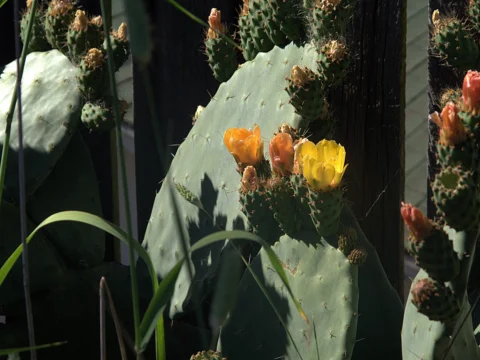
The existing Living Earth article already contains a list of varieties. Before extending it, confirm the names and whether the colours describe fruit, flowers or something else. Keep photographs attached to a named plant and observation date. [3]
Forage formulation, pest treatment, food preservation and medicinal claims need their own evidence. This introductory guide does not provide a complete livestock ration or recommend therapeutic use.
Sources & further reading
- FAO — Cactus (Opuntia spp.) as Forage
- FAO Ecocrop — Opuntia crop profile
- Living Earth — existing Opuntia article
Prepared from the supplied Opuntia, variety and irrigation notes. Private messages and supplier contact details are excluded.
Draft update to existing Opuntia coverage. Local cultivar identities, irrigation recommendations and image relevance need editorial review before public release.