
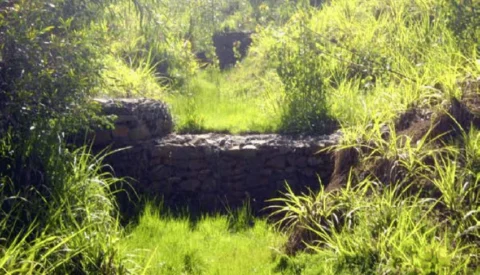
Gabions: A Tool for Combating Drought and Enhancing Water in the Landscape
Gabions are wire mesh baskets filled with stones, rocks, or other materials that are used in civil engineering, road building, landscaping, and erosion control. They are versatile and sustainable structures that can be employed in a variety of settings to manage water flow, prevent soil erosion, and improve water retention in landscapes. Gabions can be particularly effective in arid and semi-arid regions, such as Namibia, where they can help combat drought by adding water to the landscape and creating microenvironments that support vegetation growth.
What Are Gabions?
Gabions are simple structures made of metal cages (often galvanized steel or coated with PVC for durability) filled with natural materials like stones, gravel, or sometimes recycled materials. They are stacked and interconnected to form walls, barriers, or terraces, depending on their intended use. Gabions can be flexible in shape and size, making them suitable for a wide range of applications.
How Gabions Work
Gabions work by slowing down the flow of water and encouraging it to seep into the ground rather than quickly running off the surface. This slows water erosion, increases groundwater recharge, and helps create a more balanced hydrological cycle in the area. They are particularly useful for:
1. Erosion Control: Gabions are widely used to prevent soil erosion along rivers, streams, and slopes. By slowing down water flow, they reduce the speed of water and prevent it from washing away valuable topsoil.
2. Water Retention: In dry landscapes, gabions help retain water by allowing it to seep through the gaps between the stones, recharging the groundwater. This is particularly beneficial in areas that receive sporadic rainfall.
3. Slope Stabilization: Gabions provide stability to slopes and embankments, preventing landslides and erosion that could wash away fertile soil and reduce the land’s capacity to hold water.
4. Habitat Creation: Gabions can create new habitats for plants, insects, and small animals by providing a stable structure where soil and organic matter can accumulate, leading to vegetation growth.
Types of Gabions
There are several types of gabions, each suited for different purposes:
1. Mattress Gabions (Reno Mattresses): These are wide, flat gabions that are used for surface protection along riverbanks and channels to prevent erosion. They are also used for water retention and groundwater recharge in flat areas.
2. Box Stone baskets: Box gabions are square or rectangular cages stacked to form retaining walls, barriers, or terraces. They are often used for slope stabilization, soil erosion control, and creating raised beds.
3. Free-Standing Gabions: These are standalone structures that can be used to create check dams, barriers, and water-diverting channels in watercourses.
Using Stone baskets to Combat Drought and Add Water to the Landscape
In arid regions like Namibia, where drought and water scarcity are major challenges, Stone baskets can be an effective tool for water management. Here are some ways Stone baskets can help combat drought and improve water availability in the landscape:
1. Building Check Dams in Dry Riverbeds (Ephemeral Rivers):
Gabions can be used to build small check dams across dry riverbeds, also known as ephemeral rivers or “rivers that only flow during rainy periods.” These check dams slow down the flow of water during rainstorms, allowing water to spread out and soak into the ground instead of quickly flowing away. This helps recharge groundwater and supports vegetation growth along the riverbeds.
2. Creating Terraces on Slopes:
Stone baskets can be stacked to create terraces on slopes, which help slow down water runoff and allow it to infiltrate into the soil. This terracing method is particularly useful in mountainous or hilly areas where rainwater can quickly run off, leading to erosion and loss of soil moisture.
3. Streambank Stabilization:
Placing Stone baskets along streambanks can prevent soil erosion and keep the soil intact, reducing silt and sediment buildup in downstream water bodies. Stabilized banks help retain water longer and improve groundwater recharge.
4. Enhancing Rainwater Harvesting Systems:
Stone baskets can be integrated into rainwater harvesting systems by building them around catchment areas. They help slow down the water flow and increase infiltration into the ground, providing water for dry periods.
5. Promoting Vegetation Growth:
Gabions can create small microenvironments that promote the growth of native plants and grasses. As water is trapped and infiltrates the soil, plants can establish themselves, leading to increased ground cover and reduced evaporation.
6. Reducing Flash Floods and Land Degradation:
In areas prone to flash floods, these Stone baskets can help mitigate the damage by reducing the speed of floodwater, capturing sediments, and reducing erosion. This process gradually improves soil structure and water retention.
Benefits of Using Stone baskets in Arid Regions
1. Cost-Effective and Low Maintenance: Stone baskets are relatively inexpensive to build and require minimal maintenance. The materials used (stones, rocks) are often locally available, reducing costs.
2. Durable and Long-Lasting: Gabions are strong structures that can withstand harsh weather conditions, including heavy rains and droughts. The cages can last for decades with minimal maintenance.
3. Environmentally Friendly: Stone baskets use natural materials and do not require concrete or other pollutants. They blend well with the natural environment and support local ecosystems.
4. Flexible Design: Stone baskets can be adapted to suit different landscapes and water management needs, making them a versatile tool for land restoration and water conservation.
5. Community Involvement and Employment Opportunities: Building gabions can be a community-driven effort, providing local employment opportunities and empowering communities to manage their water resources sustainably.
Challenges and Considerations
While gabions are effective for water management, there are a few challenges and considerations:
• Proper Design and Placement: Stone baskets must be designed and placed correctly to be effective. Poor placement can lead to unintended water flow patterns or even cause further erosion.
• Potential for Corrosion: The wire mesh of gabions can corrode over time, especially if not properly coated. Using high-quality, coated wire or stainless steel can help prolong their lifespan.
• Initial Labour Effort: Building Stone baskets can be labour-intensive, requiring the collection and placement of stones. However, the long-term benefits often outweigh the initial effort.
Gabions in Arid Regions: Enhancing Water Infiltration and Erosion Control
Gabions—wire mesh baskets filled with stones—have played a crucial role in water conservation, soil stabilization, and erosion control in arid and semi-arid regions across the world. Their ability to slow down water flow, encourage groundwater recharge, and prevent soil erosion makes them a vital tool in sustainable land management. Below are some prominent projects and regions where gabions have been effectively utilized to enhance water infiltration in dry environments.
1. Burkina Faso: Zaï Pits and Gabion Check Dams
In Burkina Faso, a country plagued by desertification, gabions have been combined with Zaï pits—small planting holes filled with organic matter—to improve water retention and increase agricultural productivity.
• Project: The Rehabilitation of Degraded Lands through Water Harvesting project.
• Impact: Stone baskets check dams were built across dry riverbeds and seasonal streams to trap sediment and retain moisture, helping recharge groundwater and reduce soil erosion. Farmers using these systems reported higher crop yields and improved soil fertility.
2. Kenya: Gabions for Watershed Management in Arid Lands
In Kenya’s semi-arid regions such as Kitui, Makueni, and Machakos counties, gabions have been used extensively to mitigate flash floods, store water, and combat soil erosion.
• Project: Community-led Gabion Construction for Sustainable Water Management.
• Impact: By slowing down stormwater flow, these gabions increase water infiltration into the ground, reducing runoff and enabling vegetation to regenerate in previously degraded landscapes.
3. Namibia: Combating Desertification with Stone basket Check Dams
In Namibia’s Kunene and Erongo regions, seasonal rivers (ephemeral rivers) play a crucial role in sustaining both people and wildlife. However, intense seasonal rains lead to rapid water loss due to runoff and erosion. Gabions have been used to retain water for longer periods and support aquifer recharge.
• Project: The Kunene River Catchment Restoration Initiative.
• Impact: Gabions built along dry riverbeds help trap sediments and encourage slow percolation of water into the soil, leading to increased water availability for livestock and vegetation regeneration.
4. Morocco: Stone baskets in the Anti-Atlas and High Atlas Mountains
Morocco has seen desertification spreading from the Sahara, threatening communities dependent on agriculture. Gabion check dams have been used in mountainous regions to control erosion and capture scarce rainfall.
• Project: The Watershed Rehabilitation Programme in the Anti-Atlas and High Atlas Mountains.
• Impact: Gabion structures have been instrumental in recharging local springs and underground aquifers, allowing local communities to sustain olive groves, almond orchards, and traditional terrace farming.
5. India: Gabions for Water Harvesting in Rajasthan
Rajasthan, one of the driest states in India, faces severe water scarcity. Traditional Johad water-harvesting systems have been enhanced with gabion check dams to slow down monsoon runoff and boost groundwater recharge.
• Project: Tarun Bharat Sangh’s Water Conservation Programme.
• Impact: Gabions built across seasonal streams have led to increased water availability in wells, transforming once-barren villages into productive agricultural lands.
6. Peru: Gabions in Andean Drylands
In the Andean highlands, climate change and erratic rainfall have threatened traditional farming practices. Gabions have been used in small-scale irrigation projects to capture and distribute water more efficiently.
• Project: The Andean Water Conservation and Erosion Control Project.
• Impact: Gabions have helped communities restore high-altitude pastures, reduce soil loss, and increase water availability for livestock and agriculture.
Why Gabions Are Essential for Water Infiltration in Arid Regions
✅ Slow Down Runoff:
By reducing the velocity of water in seasonal streams, gabions allow more time for water to seep into the ground, increasing aquifer recharge.
✅ Prevent Erosion & Restore Soil Fertility:
Stone baskets trap sediments and create micro-environments where vegetation can establish, preventing further land degradation.
✅ Enhance Livelihoods:
Many rural communities depend on gabion projects for better crop production, livestock support, and long-term water security.
✅ Cost-Effective & Sustainable:
Gabions use locally available materials (stones, wire mesh) and require minimal maintenance, making them a long-lasting solution in water-scarce regions.
Final Thoughts
From Africa to Asia and Latin America, Stone baskets have proven their value in restoring degraded landscapes, improving water availability, and enhancing resilience in arid regions. As climate change intensifies drought conditions, gabions remain a crucial, low-cost tool for sustainable water management and ecological restoration.
Conclusion
Gabions are a valuable tool for managing water, controlling erosion, and improving soil and landscape health, particularly in arid regions like Namibia. By slowing down water flow, promoting groundwater recharge, and creating microenvironments for plants to thrive, gabions can help combat drought and add much-needed water to the landscape. Their cost-effectiveness, durability, and flexibility make them an excellent choice for sustainable water management and land restoration efforts in dry and semi-arid areas. With thoughtful design and community involvement, gabions can play a vital role in creating more resilient and sustainable landscapes in Namibia and similar regions.
Global Successes and Knowledge Resources on Dryland Water Harvesting
Across arid and semi-arid regions of the world, the challenge of managing water erosion, runoff, and seasonal flooding has prompted communities, researchers, and practitioners to develop innovative yet simple solutions. While wire-and-rock structures remain popular, a wider body of work explores nature-based techniques that stabilise landscapes, support vegetation, and build community resilience. Understanding how these methods are applied around the world can offer valuable inspiration and practical insight.
Lessons from Africa
One of the most well-documented examples of dryland restoration comes from Burkina Faso, where a farmer named Yacouba Sawadogo revived the traditional practice of Zai pits and combined them with small barriers to trap runoff and silt. Over time, these methods led to the regeneration of entire landscapes, turning previously degraded land into productive farmland. His story is featured in the documentary The Man Who Stopped the Desert.
In Kenya, the Catholic Diocese of Kitui and organisations like Excellent Development have implemented extensive sand dam projects. Though not identical to stone-and-wire barriers, sand dams perform a similar function by capturing seasonal flows and allowing water to seep into the surrounding soil. These projects have helped thousands of families access water year-round and have inspired similar efforts in Tanzania and Ethiopia.
Namibia also presents local lessons. In areas such as Otjozondjupa and Kunene, seasonal watercourses—called omuramba or riviere—are prone to flash flooding. Local land users have successfully built small, low-tech structures out of stones, old fencing wire, or woven branches to reduce erosion and support vegetation growth. These humble interventions, though rarely documented in formal literature, show that resourceful design using available materials is key to success.
Regreening Projects in the Middle East
The Al Baydha Project in Saudi Arabia demonstrates how principles of earth repair can be scaled to tackle desertification. Their approach, heavily influenced by permaculture and hydrological restoration, includes swales, terraces, and small rock-based barriers. Over the years, the reintroduction of hardy vegetation and the reduction in runoff velocity has led to measurable increases in soil carbon and water retention.
Similarly, in Jordan, Geoff Lawton’s famous project at the Greening the Desert site in the Jordan Valley showcases how targeted earthworks, combined with mulching and careful planting, can turn an inhospitable area into a productive system. Though gabions were not the main feature, the principles behind slowing water, allowing sediment deposition, and creating microclimates apply equally to all erosion-control measures.
Key Books and Resources for Further Reading
To expand your knowledge of erosion control, land restoration, and water harvesting, consider the following essential reads:
- “Rainwater Harvesting for Drylands and Beyond” by Brad Lancaster (Volumes 1 and 2) A seminal series that covers practical water harvesting strategies for arid regions, including swales, terraces, and small dam-like structures. Rich in illustrations, case studies, and step-by-step guidance.
- “Water for Every Farm” by P.A. Yeomans Though not focused on arid climates per se, this classic work introduces the Keyline Design system, which focuses on how to hold water in the landscape longer. Especially useful for understanding broader terrain management.
- “Harvesting Rain, Runoff and Reuse” by Neil S. Grigg This text offers a more technical and institutional perspective, ideal for those involved in planning, infrastructure, or policy. It addresses both urban and rural contexts.
- “Let the Water Do the Work” by Bill Zeedyk and Van Clothier A guide to induced meandering and stream restoration techniques used across the American Southwest. Includes detailed sections on low-tech interventions made from rock and natural materials.
- UNEP’s “Guidelines for Sustainable Land Management in Drylands” This downloadable guide includes examples from Africa and the Middle East. Though written for practitioners, it’s also accessible to motivated land users.
- “Tending the Wild” by M. Kat Anderson Focused on Indigenous land management in California, this book offers insight into the principles of working with nature, slowing water, and enhancing biodiversity.
Integrating Traditional Knowledge and Modern Science
One critical success factor in dryland restoration is blending scientific knowledge with traditional ecological practices. In many indigenous and local communities, the understanding of watershed flows, seasonal rhythms, and plant succession has been passed down orally and through practice. Modern practitioners often rediscover the value of these systems when they visit remote areas where elders remember how landscapes once functioned.
Projects in Mexico, for instance, have shown that integrating milpa agroforestry systems with small rock barriers can revitalise entire valleys. Meanwhile, in India’s Rajasthan state, watershed committees formed under Tarun Bharat Sangh used decentralised water structures to recharge wells and bring back perennial streams.
Broader Ecological Impact and Biodiversity Benefits
Though the immediate goal of stone structures is often to control erosion or catch runoff, their long-term impact includes:
- Improved soil moisture leading to better plant establishment
- Sediment capture, which can restore fertile topsoil
- Microclimate creation, especially where trees and shrubs take root
- Biodiversity increases, including insects, birds, and small mammals
- Reduced flooding downstream, especially when structures are spaced and staggered effectively
When planned at landscape scale, such interventions can reverse the cycle of degradation. They reduce the velocity and energy of water, give it time to infiltrate, and shift the landscape from destructive to regenerative.
Challenges and Considerations
While the principles are simple, some challenges do arise in implementation:
- Labour and logistics: Gathering stone or other materials is labour-intensive.
- Maintenance: Structures may need seasonal checks or repairs after large rains.
- Community buy-in: Without local understanding and involvement, structures may be dismantled or neglected.
- Design flaws: Incorrect placement or sizing can lead to water bypassing the structure, or worse, failure during peak flow.
These risks can be mitigated by engaging with local farmers and builders early, using participatory mapping and field demonstrations.
Final Thoughts
The power of small, simple structures to change landscapes, secure livelihoods, and inspire hope should not be underestimated. While terms like “check dam” or “gabion” might seem technical, what matters is the effect: slowing down water, giving it time to sink, and helping the land heal. Across continents and cultures, this principle proves itself again and again.
If you have experience with such systems in your region, consider contributing your story or sharing photographs. This growing body of community knowledge can benefit all who work to restore Africa’s land — one rainstorm at a time.
