
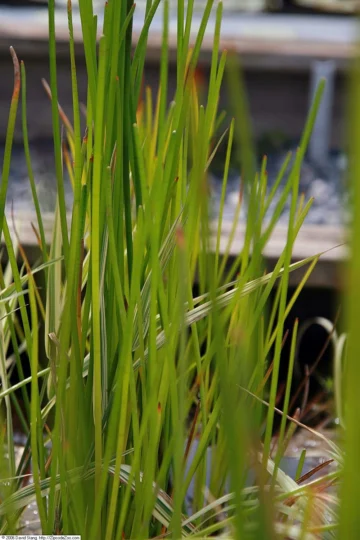
Chinese water chestnut, Eleocharis dulcis, produces crisp edible corms beneath a stand of rush-like stems. It can be grown in a contained water garden, but it is a water-dependent crop rather than a shortcut to dryland food production.

From the Namibian discussions
A saved article introduced the crop to the Namibian collection. It mixed growing information with broad claims about nutrition and invasiveness. This guide keeps the practical interest while distinguishing Eleocharis dulcis from unrelated plants also sold as “water chestnut”, including Trapa species.
Confirm the plant and the container
ABC Gardening Australia demonstrates E. dulcis in a shallow container. A contained trial makes harvest and observation easier than introducing plants into a pond or watercourse. Obtain correctly identified planting corms, a food-growing container and a supplier-supported growing method. Do not collect an unknown sedge because it resembles the photograph.
Set up a small growing area
- Choose a secure position where children cannot fall into the water and animals cannot overturn the container.
- Check that the container is intact and has not held harmful chemicals. Plan how water can be drained safely at harvest.
- Follow a species-specific method for the soil layer and water depth. Measure the initial fill and subsequent top-ups.
- Label planting date and corm source, and inspect regularly for leaks, mosquito breeding and unwanted seedlings.
Manage water as part of the crop
Use water of appropriate quality for food production. A container can lose water even when plants appear healthy; keep a weekly litre total. Do not use raw wastewater, add household chemicals to control insects or release spare plants into a natural wetland. Follow the mosquito-control guide for physical management of stored water.
Harvest for learning as well as food
Seasonal dieback can indicate the approach of harvest, but its timing needs to be interpreted for the cultivar and local season. Ask an experienced supplier how to recognise mature corms. Separate planting stock from food, clean produce carefully and use appropriate cooking and storage guidance. Weigh the usable crop and compare it with the water and space invested.
Namibian climate and microclimate
An exposed container in inland heat behaves differently from a sheltered garden in Perth. Wind increases losses and cold can shorten the growing season. Start only where the water budget can support the full crop.
Your first practical step
Try one contained planting and record every top-up. Decide beforehand what water cost would make the crop worthwhile for your household.
Watch and adapt
Publisher: ABC Gardening Australia
Country and context: Australia; exact filming locality not confirmed.
An edible water-garden lesson. Account for evaporation and water availability before copying a container system.
Watch container placement and harvest access. Perth’s seasonal pattern is not a planting calendar for all of Namibia; keep the crop contained and assess local water use.
Keep exploring
Sources and further reading
- ABC Gardening Australia: Water Plants
- USDA agriculture handbook: waterchestnut handling and botanical distinction
Have you tried this in Namibia? Share the site conditions, method and result—including what did not work—with the Living Earth community. Local observations help the next person adapt the idea.