Use this overview to choose a manageable mix of food plants, then follow the links to their individual guides. The original vegetable list is retained here, with tomatoes and cucumbers added and older links corrected. Inclusion is an invitation to assess a crop—not a claim that it needs little water everywhere in Namibia.
Choose by purpose and conditions
Begin with the food your household wants, the space you can maintain and the water available for the whole crop. A small bed producing useful food regularly can be more valuable than a large list of plants that receive too little care. Compare season, variety and microclimate before expanding.
The groups below are navigation aids, not fixed planting calendars. Some plants fit more than one purpose. Read the species guide for growing needs and safe use; particular caution is needed before eating unfamiliar wild plants or handling crops that require processing.
Leafy harvests
- Spinach
- Swiss chard
- Kale
- Cabbage
- Lettuce and salad greens
- Amaranth
- Purslane
- Spider plant — confirm the edible species
Roots, tubers and bulbs
Fruiting vegetables and legumes
- Tomatoes
- Cucumbers
- Okra
- Cowpeas
- Pumpkins
- Squash and marrows
- Bitter melon
- Chillies
- Peppers
- Watermelon
Other useful food plants in the original list
Use local evidence when choosing
Ask growers near you about the season, soil, variety and watering behind their results. A plant established beside a leaking tap is not evidence that it succeeds without irrigation. Keep a record of your own usable harvest and losses, including the water and labour required.
The earlier overview made broad claims that several crops needed minimal water or were universally suited to arid conditions. Those claims have been replaced with a site-based choice. Crop survival and a worthwhile food yield are different outcomes.
Plan a first planting
- Choose a small number of crops that your household will use.
- Match the crop’s growing season to frost, heat and the reliable water supply.
- Check mature spacing, root volume and support needs before buying seed.
- Stagger suitable plantings only where water and season permit.
- Record which crops earned their place before adding more.
Namibian climate and microclimate
Northern warmth, central-highland frost and coastal conditions lead to different choices. Shade, wind, reflected heat and soil also vary within one property. There is no single low-water planting list that fits every Namibian household.
Production chart and practical learning
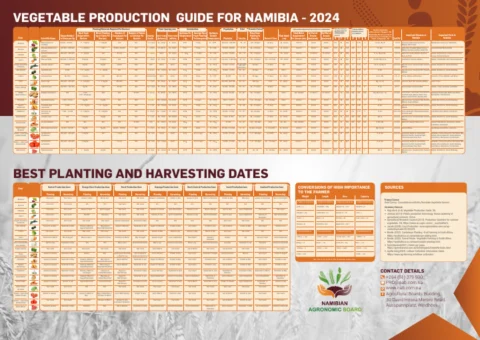
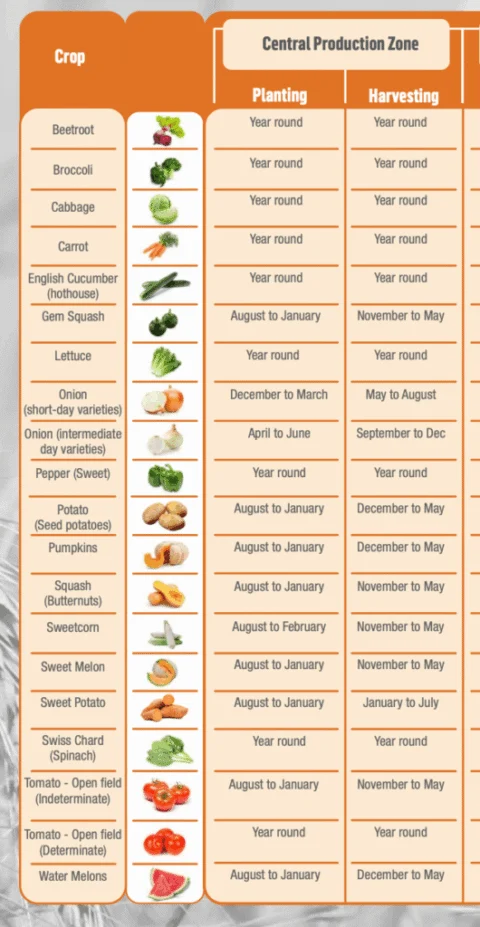
Read the NAB Vegetable Production Guide for Namibia, 2024 for a local reference, then check the individual crop and intended growing system. Commercial figures need adaptation to household-scale beds.
Start with the illustrated Potatoes, Tomatoes or Cucumbers guide for practical steps and selected videos.
Photographs and visual references from the original guide
These original references remain available for continuity. The linked images are not evidence for a particular yield, pest diagnosis or farm location.

Keep exploring
- Map the microclimates in your own garden
- Irrigation water quality: understand the test before planting
- Mulch
- Drip Irrigation
Help keep the overview complete
When a new food-plant guide is added, include it in the appropriate group here as well as its category. Keep useful entries where a guide is still needed, mark the gap clearly and add it to the editorial queue. Apply the same approach to the tree, animal and function-based overviews.
Have you tried this in Namibia? Share the variety, season, water, soil, method and result—including what did not work—with the Living Earth community. Your local experience helps others adapt the guide.
Documents to read or download