
Mopane, Colophospermum mopane, is a defining tree of many hot southern African landscapes, including parts of Namibia. Its value includes habitat, shade and its place in local livelihoods. Start by understanding an existing stand before deciding to plant or clear trees.
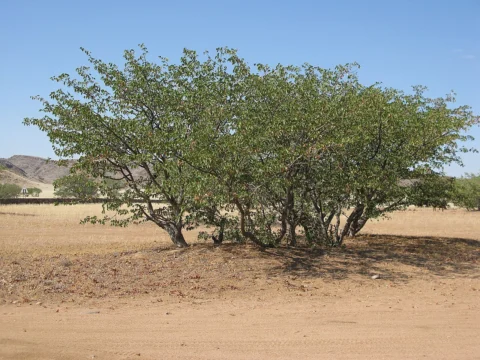

From the Namibian discussions
Mopane was requested in the local tree planting list. This was an expression of interest, not a recommendation for all Namibian gardens. Local observations of naturally growing trees can help identify which sites and forms are relevant to a proposed project.
Recognise the site relationship
SANBI describes the distinctive paired leaflets and adaptation to hot, relatively low-lying environments, with growth form varying from shrubs to substantial trees. It reports poor performance outside suitable warm conditions. The same species name does not imply the same eventual height on every soil.
Protect useful existing trees
Walk the site and mark mature trees, seedlings, paths and livestock pressure. Consider which trees already provide shade or shelter at useful times of day. Protection may be a better first investment than buying replacements. Establish who is responsible for the land and check applicable requirements before cutting or collecting material.
Design a modest planting trial
- Choose planting material from a reputable source and record its origin.
- Compare the proposed site with nearby natural mopane: soil, drainage, heat and exposure all matter.
- Protect seedlings from browsing and monitor establishment moisture, especially after planting.
- Record survival, crown development and dry-season leaf behaviour. Do not apply a generic pruning programme before understanding the growth at your site.
Think beyond a single product
Mopane supports mopane worms and other wildlife. A planting does not guarantee a harvest of edible caterpillars, and unfamiliar caterpillars should not be identified as food from the host tree alone. Keep habitat, household shade and any intended harvest in the same discussion. Do not assign a fertiliser value simply because the tree belongs to the legume family.
Namibian climate and microclimate
A warm Kunene or northern site differs from a cold inland hollow. Soil depth and seasonal drainage also affect the tree’s form. Observe local vegetation and winter exposure before treating mopane as a universal drought-proof replacement for other trees.
Your first practical step
Map and protect one useful existing mopane or seedling, then record its seasonal shade and growth before expanding a planting.
Watch and adapt
 Watch videoWatch: Build a Nursery & Grow Trees
Publisher: Community Forests International
Country and context: Exact filming country not confirmed; Swahili with English subtitles.
A general seedling-care lesson, also catalogued by World Agroforestry. It is not a species-specific growing demonstration.
The video demonstrates general nursery work, not a mopane-specific propagation treatment. Base seed treatment and planting timing on local nursery experience.
Keep exploring
Sources and further reading
Have you tried this in Namibia? Share the site conditions, method and result—including what did not work—with the Living Earth community. Local observations help the next person adapt the idea.