- type:: Plant
- scientific name:: Ricinus communis
- family:: Euphorbiaceae
- common names:: Castor oil plant, castor bean plant, castor-oil bush
- Namibia relevance:: Common alien plant in disturbed areas and ephemeral riverbeds; useful but risky
- main uses:: Castor oil, industrial oil, soil stabilisation, biomass, ornamental use
- main caution:: Highly toxic seeds and invasive behaviour
- Local Language Names
- Local names recorded or commonly used for castor oil plant in Namibia include:
- Oshiwambo: omalumono
- Otjiherero: omimunu
- Kavango languages: marumono
- Caprivi languages: mabono-bono
- Afrikaans: kasterolieplant, kasterolieboom, kasterolie, oliebos
- German: Rizinus, Wunderbaum, Christuspalme
- English: castor oil plant, castor oil bush, castor bean plant
- These names should be checked with local speakers before use on signage, training material or public labels, because spelling and pronunciation can vary between regions and language groups.
Overview
The castor oil plant is a fast-growing shrub or small tree best known for producing castor oil from its seeds. It is hardy, drought-tolerant once established, and often grows in disturbed places such as roadsides, dry riverbeds, abandoned fields and settlement edges.
For regenerative agriculture, the plant is interesting because it can grow in difficult conditions and produce a valuable oil crop. However, it must be treated with great caution. The seeds contain ricin, a highly poisonous natural toxin. The plant can also spread into riverbeds and disturbed landscapes, where it may become invasive.
In Namibia, castor oil bush is already recorded as widespread and established in many ephemeral riverbeds, with records going back to the Kuiseb River in 1837. (biodiversity.org.na) The Botanical Society of Namibia lists castor oil bush among problematic alien plants associated with watercourses. (Botsoc
)
Why It Matters
Castor oil plant sits in a difficult category: useful, resilient and economically interesting, but also poisonous and ecologically risky.
It matters because:
- It can survive in hot and dry environments.
- It produces seeds with a high oil content.
- Castor oil has many traditional, cosmetic, medicinal and industrial uses.
- The plant can grow where many softer crops struggle.
- It may become invasive, especially near watercourses.
- It’s an ideal biomass plant helping to establish agroforestry and food forests
- The seeds are dangerous to children, livestock and pets.
For Living Earth, the right approach is not to promote uncontrolled planting, but to understand the plant properly and manage it responsibly.
Description
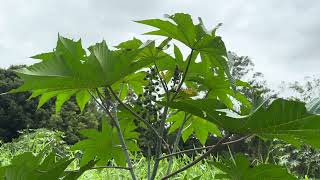
Castor oil plant is usually a large shrub, but in favourable conditions it can become a small tree.
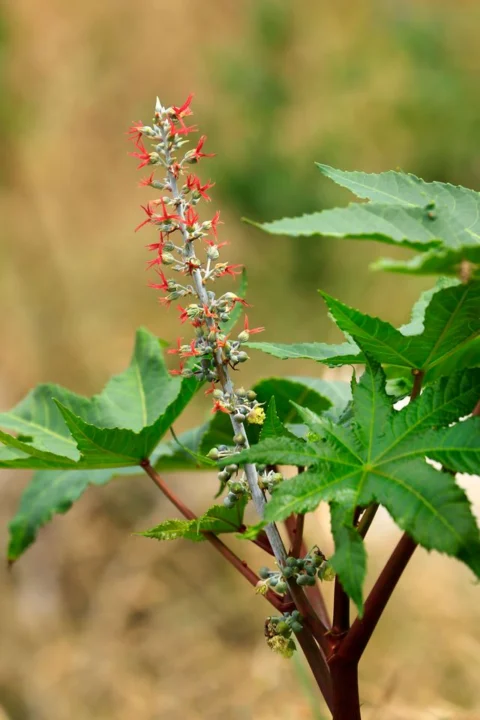
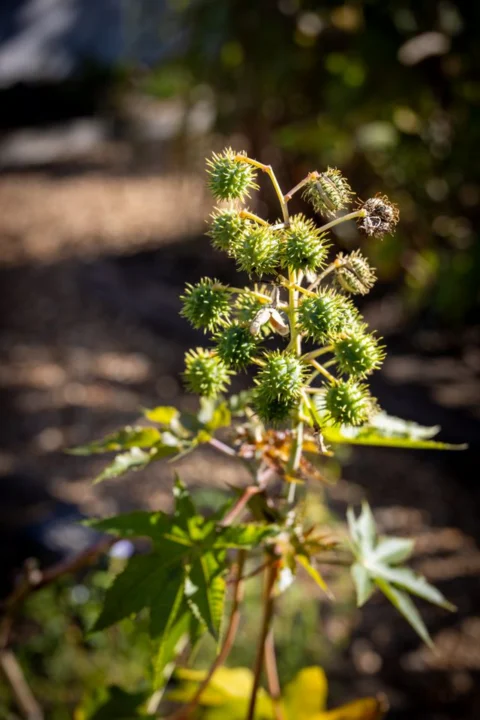
Typical features include:
- Large, deeply lobed leaves, often green or reddish-purple.
- Thick, hollow-looking stems.
- Upright flower clusters.
- Spiny seed capsules.
- Glossy, mottled seeds that look attractive but are highly dangerous.
The seeds are sometimes called “castor beans”, but they are not true beans. The plant is not part of the bean family.
Uses
Castor Oil
The best-known product is castor oil. The oil is pressed from the seeds and is used in soaps, cosmetics, traditional remedies, lubricants, coatings and industrial products. Properly refined castor oil does not contain ricin, because ricin is water-soluble and remains mainly in the seed cake rather than the oil. (Poison Control)
This does not mean the plant is safe to process casually. Seed handling and oil extraction should only be done with proper knowledge, protective measures and safe disposal of seed waste.
Industrial Oil Crop
Castor oil is valuable because it has special chemical properties that make it useful in industrial applications. It is used in products such as lubricants, paints, coatings, plastics, cosmetics and bio-based materials.
For arid and semi-arid regions, castor can be attractive because it needs less water than many conventional oil crops once established. However, commercial production should only be considered where there is a clear buyer, safe processing, and strong control to prevent spread.
Biomass and Shelter
The plant grows quickly and can provide temporary shelter, shade and wind protection. In some systems it may help protect young plants, but it should not be planted near rivers, drainage lines, schools, homes with small children, livestock areas or conservation-sensitive land.
Soil and Land Rehabilitation
Castor can grow on poor and disturbed soils, so it is sometimes considered for rehabilitation or pioneer planting. This must be approached carefully. A plant that grows well on disturbed ground can also become a weed if not managed.
Toxicity and Safety
The most important fact about castor oil plant is that the seeds are highly toxic. The seeds contain ricin, a poisonous protein that can be released when seeds are chewed or crushed. (Poison Control)
Possible poisoning symptoms can include burning in the mouth or throat, vomiting, diarrhoea, abdominal pain, dehydration and serious internal damage. Symptoms may be delayed for several hours or even longer. (Queensland Poisons Information Centre)
Safety rules:
- Do not allow children to play with the seeds.
- Do not plant castor oil plant in school gardens, playgrounds or public food gardens.
- Do not feed any part of the plant to livestock.
- Do not crush, grind or experiment with the seeds.
- Wear gloves when removing plants or handling seed capsules.
- Bag and safely dispose of seed heads before they spread.
- Do not compost mature seed capsules unless the composting system reliably destroys seeds.
- Keep it away from chickens, goats, cattle, horses, dogs and household areas.
This plant should never be treated as an ordinary garden plant.
Invasiveness in Namibia
Castor oil plant is not simply a useful crop. It is also a problematic alien plant in Namibia.
It is especially concerning along dry rivers and drainage lines. These areas are important because they hold moisture, support wildlife, recharge groundwater and often contain Namibia’s richest natural vegetation corridors.
Invasive alien plants can reduce biodiversity, change water flow, increase fire risk, and compete with indigenous vegetation. Namibia’s dry riverbeds and disturbed areas are particularly vulnerable to invasive alien plants. (Conservation Namibia)
For this reason, castor oil plant should not be spread casually. In many situations, removing it may be more appropriate than cultivating it.
Growing Conditions
Castor oil plant prefers warmth, sunlight and well-drained soil. It often grows quickly after rain and can survive dry periods once its roots are established.
It usually grows best in:
- Warm climates.
- Full sun.
- Disturbed or open soils.
- Seasonal moisture.
- Riverbeds, drainage lines and field edges.
It does not need rich soil, which is one reason it can become invasive.
Role in Permaculture
In permaculture, every plant is assessed by function, context and risk. Castor oil plant has potential functions, but also serious hazards.
Possible functions:
- Fast biomass production.
- Temporary shade.
- Wind protection.
- Oil crop potential.
- Pioneer plant in harsh conditions.
- Barrier plant where livestock and children cannot access it.
Major concerns:
- Poisonous seeds.
- Risk to livestock and children.
- Spread into riverbeds.
- Difficult safe processing.
- Poor fit for food gardens.
- Possible conflict with biodiversity goals.
In a Living Earth context, castor oil plant should be treated as a “high-caution useful plant”, not as a general recommendation.
Better Uses in Namibia
The most responsible uses may be limited and controlled.
Suitable contexts could include:
- Research plots.
- Controlled industrial oil crop trials.
- Farmer training on toxic and invasive plants.
- Removal and management education.
- Demonstration of why plant risk assessment matters.
Unsuitable contexts include:
- School gardens.
- Community food gardens.
- Home gardens with children.
- Livestock camps.
- Riverbeds.
- Conservation areas.
- Unmanaged roadside planting.
Management and Removal
Where castor oil plant is already growing in unwanted places, the priority should be preventing seed spread.
Practical removal steps:
- Remove young plants before they flower.
- Cut mature plants before seed capsules dry and burst.
- Wear gloves and long sleeves.
- Bag seed heads carefully.
- Uproot seedlings after rain when soil is soft.
- Recheck the site after the next rains.
- Do not leave seed capsules lying on the ground.
- Replace removed plants with safer indigenous or useful species.
For riverbeds and drainage lines, removal should ideally be followed by planting or encouraging indigenous vegetation, so that bare ground does not invite reinvasion.
Safer Alternatives
Where the goal is biomass, shade, wind protection, oil, pollinator support or soil improvement, safer alternatives should usually be considered first.
Depending on the site, alternatives may include:
- Moringa for leaves, biomass and light shade.
- Pigeon pea for food, nitrogen support and mulch.
- Cowpea for food and soil cover.
- Sunn hemp for biomass and soil improvement.
- Indigenous shrubs for habitat and erosion control.
- Fruit trees suited to the local water situation.
- Vetiver or other non-invasive grasses for erosion control, where appropriate.
The best alternative depends on the exact site, water availability and purpose.
Living Earth Recommendation
Castor oil plant should be understood, not casually promoted.
It has real value as an oil-producing plant and a hardy dryland species. But in Namibia, its poisonous seeds and invasive behaviour make it unsuitable for most community gardens, school gardens and household food systems.
Living Earth should treat castor oil plant as a cautionary example of regenerative decision-making: a plant is not automatically good because it is useful, drought-tolerant or natural. The right question is always: useful where, for whom, under what management, and with what risks?
Key Takeaway
Castor oil plant is powerful but risky. It can produce valuable oil and grow in harsh conditions, but its seeds are highly poisonous and the plant can spread into sensitive Namibian landscapes. Use only with strict control, and avoid planting it where children, livestock, watercourses or natural ecosystems could be affected.
Sources and Further Reading
- Atlas of Namibia: Castor-oil bush in Namibia.
- Botanical Society of Namibia: Alien plants.
- Conservation Namibia: Invasive alien species in Namibia.
- Poison Control: Castor beans and ricin.
- Queensland Poisons Information Centre: Castor oil plant toxicity.