
Mulberries can be propagated from cuttings, allowing a useful fruiting tree to be copied. The method’s success varies with species, variety, wood condition and nursery care. Start with a healthy known tree and a small labelled batch.
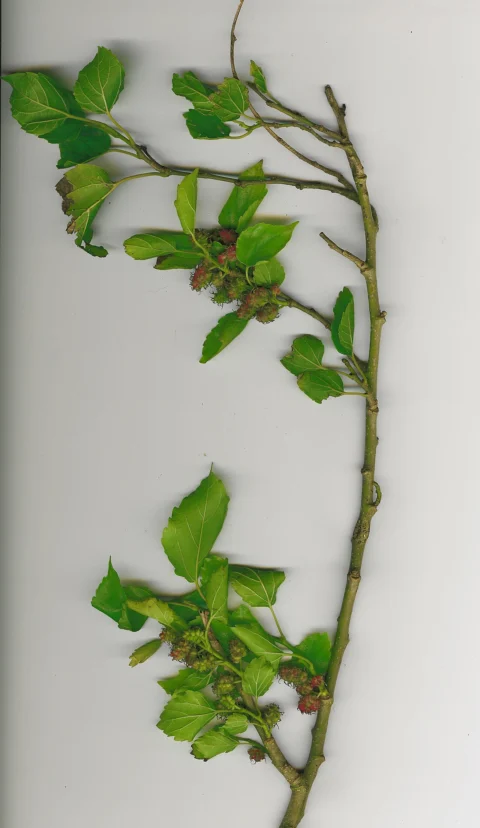
.jpg)
From the Namibian discussions
A Namibian grower reported very high success from sticks taken just before spring pruning. Their medium was roughly one part sifted river sand to two parts horse-bedding compost, kept moist. Another contributor noted mulberries doing well in a frosty Gobabis setting. These are worthwhile local experiences, not a guarantee for every compost or mulberry.
Choose healthy parent material
RHS guidance includes hardwood cuttings as a mulberry propagation method. Ask permission to collect from a healthy productive tree. Label its identity and fruiting season; an unnamed local selection can still be recorded honestly without inventing a cultivar name.
Prepare a small batch
- Use clean, sharp tools and sound mature shoots appropriate to a hardwood-cutting method.
- Keep the base and tip orientation clear and protect cut material from drying out.
- Insert cuttings into a suitable free-draining propagation medium and label the batch.
- Keep the medium moist and the cuttings sheltered while checking for decay or excessive drying.
Test the medium, not just the recipe
The local sand-and-compost mixture is an experience to try cautiously. Compost batches differ in maturity and salinity; river sand collection also needs a suitable permitted source. Compare a few cuttings with a reliable nursery medium before putting all material into an unfamiliar mix. New leaves alone do not prove that sufficient roots have formed.
Move on when roots can support the plant
Avoid repeatedly pulling cuttings out to inspect them. Once established, pot on or plant out carefully and harden the plants gradually. Record how many were inserted, rooted and survived transplanting. Those three counts make “high success” useful to the next grower.
Namibian climate and microclimate
Cold-season timing varies between the coast, highlands and warmer northern areas. Watch the parent tree’s growth stage rather than copying a British month. Hot wind can dry cuttings rapidly even while their medium is moist.
Your first practical step
Take a small labelled batch from a healthy local tree and record rooting and transplant survival separately.
Watch and adapt
Watch: Soft and Hardwood Cuttings
Publisher: ABC Gardening Australia
Country and context: Australia; exact filming locality not confirmed.
Includes mulberry material and explains differences in wood maturity. Adjust seasonal timing and moisture for Namibia.
The practical propagation lesson is supporting guidance. Keep the local mulberry trial’s timing and medium separate from any different species shown.
Keep exploring
- Mulberry
- Harden seedlings for sun, wind and real garden conditions
- Fruit-tree rootstocks: ask what is beneath the graft
Sources and further reading
Have you tried this in Namibia? Share the site conditions, method and result—including what did not work—with the Living Earth community. Local observations help the next person adapt the idea.