
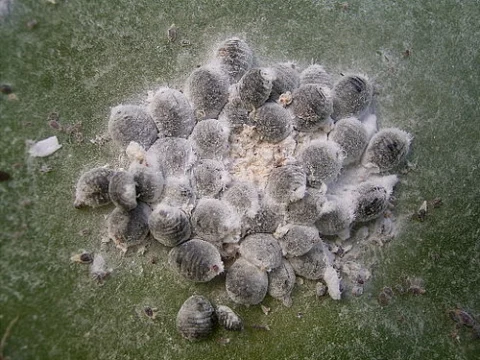
Cochineal
Cochineal is a small, sap-sucking insect that infests cacti, particularly species of Opuntia (commonly known as prickly pear or nopal). While historically valued for its vivid red dye, in gardens and farms it is considered a serious pest capable of damaging or killing cactus plants if left untreated.
Identification and Symptoms
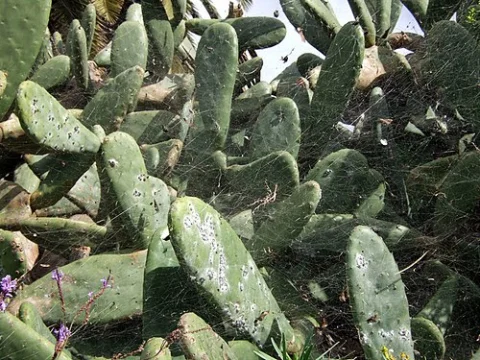
Cochineal insects appear as white, cottony clumps on cactus pads. When crushed, they release a bright crimson or purplish-red liquid, which is the natural dye known as carmine. Infested plants often show:
- Yellowish or pale patches on the pads (due to sap loss).
- Sticky residue that attracts ants.
- Drying and shrivelling of pads in severe infestations.
The insects form colonies under the cottony wax layer, feeding on plant juices and weakening the host.
Spread and Causes
Cochineal spreads easily through:
- Ants, which farm and protect the insects for their sweet secretions.
- Birds and wind, which carry the tiny crawlers between plants.
- Neighbouring infested plants, especially in urban settings or shared gardens.
As one gardener reported:
“I had the plants in pots at first in town, and the neighbour had a sick plant. I think it spread from there to my plants. After I treated mine and was sure they were clean, I took them to the plot outside of town and planted them — two years later, they’re still clean.”
This demonstrates how proximity to an infested neighbour’s cactus can cause new outbreaks.
Treatment and Control
1. Home Remedy Method (Proven in Namibia):
A practical and effective method shared by local growers combines household ingredients:
- White vinegar (acidic cleaning agent)
- Sunlight liquid (mild dish soap)
- Purple spirits (methylated spirits)
Instructions:
- Mix equal parts of vinegar and water, add a small amount of Sunlight liquid, and a splash of purple spirits.
- Spray the affected pads thoroughly.
- After spraying, use a soft hand brush to gently clean off the insects and cottony residue.
- Rinse lightly and repeat the process every few days until all signs are gone.
The gardener who applied this method reported:
“The Cochineal made yellowish marks on the leaves, but they are growing beautifully now.”
2. Severe Infestations:
In some cases, infestations become too entrenched to treat effectively. One grower noted:
“I had a small plantation which got infested heavily. The only way I could stop it was to take everything out, burn the plants and start anew! So look out for infested plants near your plants and stop the cochineal there BEFORE it reaches your healthy plant.”
Burning infected material and isolating healthy plants remains a last-resort but highly effective control measure.
3. Prevention:
- Inspect new plants carefully before bringing them home.
- Keep ants away, as they transport and protect cochineal.
- Isolate any suspect plants and treat early.
- Regularly wash cactus pads with a strong spray of water to remove dust and eggs.
Natural Enemies and Ecological Notes
In natural ecosystems, cochineal populations are often kept in check by predators such as ladybirds, lacewing larvae, and parasitic wasps. Encouraging biodiversity around cactus plantings can help prevent outbreaks.
Interestingly, cochineal insects (Dactylopius coccus) have been used for centuries to produce natural red dye for textiles, food, and cosmetics — particularly in South America and later in Europe.
External Links
- University of Arizona: Cochineal Scale on Prickly Pear
- Kew Gardens: Cochineal and Carmine Dye
- Invasive Cochineal in Southern Africa (SANBI report)
Summary
Cochineal is both a pest and a historical resource. For gardeners and farmers, early detection and consistent cleaning remain the best defences. Household remedies using vinegar, soap, and spirits have proven effective, especially when followed by thorough brushing and isolation of plants. Long-term success depends on monitoring surrounding plants and eliminating sources of reinfestation.
Tags: #Pests #Cactus #Namibia #Regeneration #OrganicGardening #PestControl