
Solar cooking uses sunlight as a heat source. It can reduce fuel use for suitable meals when the weather and daily routine cooperate, while another cooking option covers unsuitable conditions.
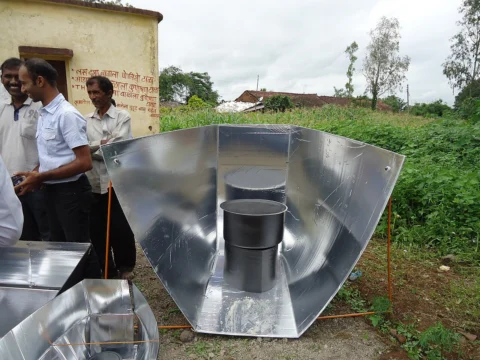
Photo: प्रतिभा आनंद फाटक · Original image · CC BY-SA 4.0. Wikimedia display-size version; no crop or content edits.

From the Namibian discussions
The Namibian discussion expressed interest in a solar stove and included firsthand experience with a solar dryer. The dryer’s builder reported good results but said it needed moving for sunlight and that winter performance depended on conditions. That is valuable local solar-use experience; a dryer’s performance is not evidence that a cooker reaches safe cooking temperatures.
Cooking and drying are different jobs
A cooker needs to heat food adequately; a dryer removes moisture under an appropriate food-preservation method. Do not interchange temperatures, timings or equipment merely because both use the sun.
Choose a manageable first use
- Choose a cooker with clear operating instructions and a stable place to use it.
- Check how it must face the sun and how often it needs adjustment.
- Choose a simple meal that fits those instructions and the available sunny period.
- Have a backup way to finish cooking if conditions change.
Solar Cookers International describes several cooker approaches and stresses the effect of shade and clouds. A hot day is not the same as reliable direct sunshine at the cooking surface.
Keep food handling and heat control practical
Use a suitable food thermometer and follow food-specific cooking guidance. Do not judge safety from the outside of a pot or leave partly cooked perishable food sitting warm through an interruption. Keep hot surfaces and concentrated sunlight away from children and eyes; follow the cooker’s instructions for handling and repositioning.
Measure the benefit
Record the dish, quantity, starting time, cloud, wind, adjustments and backup fuel used. Compare several ordinary meals before making savings claims. A method that requires supervision at an inconvenient time may suit a community kitchen differently from a household.
Namibian conditions and microclimate
Coastal fog, inland wind, moving shade and winter sun angle change the useful cooking window. A sheltered site must still receive the necessary sunlight. Try the position at the hours when meals are actually prepared, not only at midday on the best day.
Try it locally and share what happens
Borrow or trial a cooker and keep a record of three meals, including an imperfect-weather day. Share the cooker type and conditions with the result, so another household can judge whether it fits.
Watch, understand, adapt
Solar cooking at Kakuma Refugee Camp
Country and context: Kenya — Kakuma, shared by Solar Cookers International with a film by TEALEAVES.
A community-use example showing how solar cooking fits people’s routines.
Apply it locally: Kakuma’s dry setting offers useful comparisons, but your fog, wind, meal sizes and winter sunlight may differ. This film does not replace the operating instructions for your cooker.
Keep exploring
Food preservation · Managing fire risk